Category:
Book ReviewsThe German Ward Review: Pip Williams' Most Divisive Novel Yet
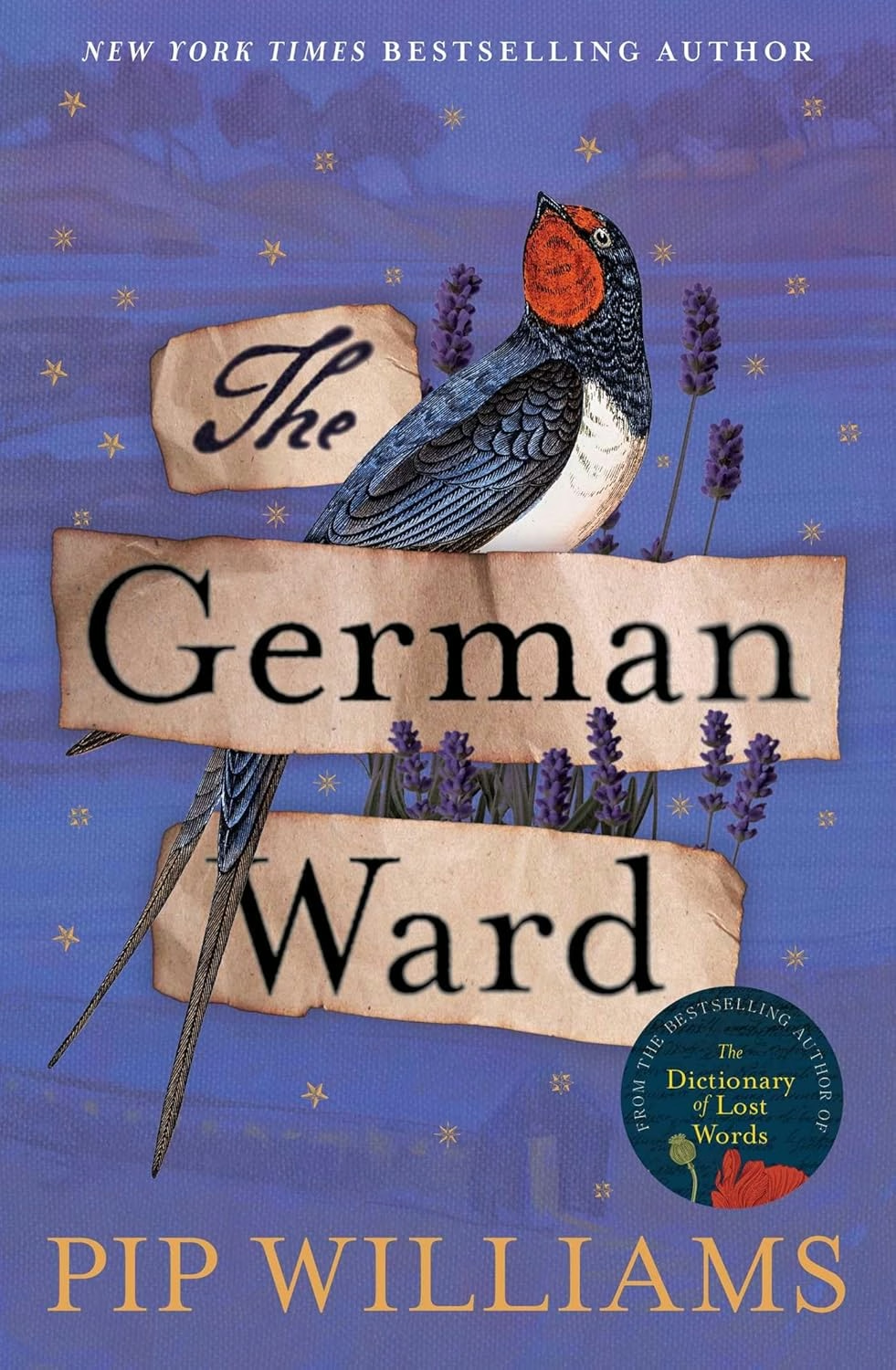
Pip Williams' The German Ward is a beautifully crafted historical fiction that explores forbidden love during World War I, yet it represents a calculated creative choice that will either captivate you or leave you frustrated. This is not a subtle book—it announces its intentions loudly and executes them with technical mastery. The question isn't whether Williams can write; it's whether you're ready for another dual-timeline narrative about overlooked women and dangerous romance set against the machinery of war.
What The German Ward Is Actually About
The novel operates on three interconnected timelines, though the primary story belongs to Tilda Taylor, an English Red Cross nurse working in the military hospitals at Étaples, France, in 1915. Tilda is no ordinary VAD (Voluntary Aid Detachment member)—she's independent, rule-breaking, and dismissive of authority. When she's transferred to the German ward, where enemy prisoners of war receive medical care, she encounters Hugo Hemming, a German doctor imprisoned and forced to continue his medical work. Their connection is immediate and dangerous.
Parallel to their story runs that of Iso Rae, a real Australian artist whose sketches documented life around the British military hospitals during WWI. More than a century later, Eva, an adjunct professor researching Rae's work, discovers something hidden in Iso's drawings—evidence of an intimate secret that compels her to unravel the mystery of who these lovers were and what became of them.
For those familiar with Williams' previous work, The Bookbinder of Jericho, Tilda's appearance here creates an interesting thread of continuity. She's aged into a different woman, yet her essential character—that refusal to bow to convention—remains intact.
The Writing: Technical Brilliance Meets Familiar Territory
Williams demonstrates why she's become one of Australia's most celebrated literary voices. Her prose is sensual and precise, moving between the visceral chaos of wartime hospitals and the quiet intensity of forbidden attraction. The rendering of Étaples—the exhaustion, fear, and humanity of those working among the wounded—is genuinely impactful. You feel the strangeness and moral weight of caring for men classified as enemies.
The development of Tilda and Hugo's relationship is deliberately restrained. Williams builds tension through glances, small acts of defiance, and the constant awareness that discovery means catastrophe. There's desire and tenderness, yes, but also a palpable fear that elevates the romance beyond simple attraction. The author understands that the most compelling love stories are those where the stakes are highest.
However—and this is where The German Ward review becomes more complicated—Williams is working within a well-established literary template. The dual timeline structure, the overlooked female artist, the wartime setting, the discovery of hidden drawings that unlock the past. These elements have become almost formulaic in contemporary historical fiction. Williams executes them expertly, but she's not reinventing the form.
What Works Brilliantly
The novel's greatest strength lies in its exploration of humanity during dehumanizing circumstances. Williams uses the German ward as a crucible for examining duty, compassion, loyalty, and prejudice. The most confronting scenes—moments where the reality of caring for "the enemy" creates genuine moral friction—are where the book achieves real power.
The present-day storyline through Eva's research provides genuine perspective. Rather than simply telling readers what Tilda and Hugo's relationship meant, Williams allows us to interpret it through Iso's sketches, through Eva's detective work, through the gaps and silences. This layering creates depth that a straightforward narrative might not achieve.
The historical research is evident without becoming didactic. Williams draws inspiration from the real Iso Rae, whose documentation of life around the British military hospitals at Étaples is held in archives, grounding the fiction in historical fact. This attention to detail creates authenticity that readers can feel, even if they don't consciously recognize it.
Where It Stumbles
The novel's length works against it in places. At over 400 pages, there are sections—particularly in the middle—where the pacing becomes dreary. Some readers report finding certain descriptive passages unnecessarily graphic or nauseating, suggesting Williams occasionally indulges in detail that doesn't serve the narrative.
More significantly, The German Ward review must acknowledge that this is fundamentally a familiar story told in a familiar way. If you've read widely in contemporary historical fiction—particularly Australian literary fiction of the past decade—you'll recognize the architectural blueprint. The overlooked woman. The secret history. The dual timeline. The Australian artist. The present-day academic piecing together the past. These are no longer fresh elements; they've become the default setting for this genre.
There's also a question about whether the forbidden romance itself carries genuine weight or whether some of its appeal derives from the thrill of transgression itself. Williams eventually addresses this directly, but readers may feel the tension between desire driven by danger versus desire rooted in genuine connection.
Who Should Read This (And Who Definitely Shouldn't)
The German Ward is essential reading if you:
- Love Williams' previous work and want to see her at the height of her technical abilities
- Are drawn to intimate historical fiction that prioritizes emotional truth over plot spectacle
- Find the intersection of art, history, and hidden stories compelling
- Appreciate novels that trust readers to interpret meaning through gaps and silences
- Enjoyed books like The Nightingale by Kristin Hannah or All the Light We Cannot See by Anthony Doerr, but want something more psychologically complex
You should probably skip it if you:
- Are fatigued by dual-timeline narratives and feel they've become an overused literary device
- Want plot-driven narratives with clear resolutions over atmospheric, introspective storytelling
- Are tired of the "overlooked woman in history" template, even when executed beautifully
- Prefer faster pacing and less descriptive density
- Expect each new literary release to genuinely innovate rather than refine existing forms
The Divisive Reality
This The German Ward review must acknowledge that reader responses have been notably polarized. Some readers call it Williams' masterpiece—her best work yet, demonstrating her talents at their peak. Others feel it's a competent but ultimately predictable entry in an increasingly crowded subgenre, suggesting that Williams' reputation guarantees bestseller status regardless of whether each book breaks new ground.
Both perspectives contain truth. Williams is undeniably skilled. The novel is beautifully constructed. But it's also working within established parameters rather than challenging them. Whether that matters depends entirely on what you want from your reading.
Is It Worth Reading?
Yes—but with caveats. The German Ward is absolutely worth reading if you appreciate literary craftsmanship, historical depth, and emotional complexity. It's a book that respects your intelligence and trusts you to find meaning in what's left unsaid. The love story between Tilda and Hugo is genuinely moving, and the framing device of Iso's sketches creates a satisfying narrative architecture.
However, it's not a transformative reading experience. It won't change how you think about the novel as a form. It won't introduce you to new narrative possibilities. What it will do is deliver exactly what you expect from Pip Williams—beautiful prose, a carefully researched historical setting, and characters whose emotional lives feel authentic and urgent.
Final Verdict
7.5/10 — The German Ward is a skilled execution of a familiar formula that delivers genuine emotional resonance but doesn't venture beyond the established boundaries of contemporary historical fiction.