Category:
Book ReviewsBloody Sands Review: Epic Fantasy That Demands Your Attention
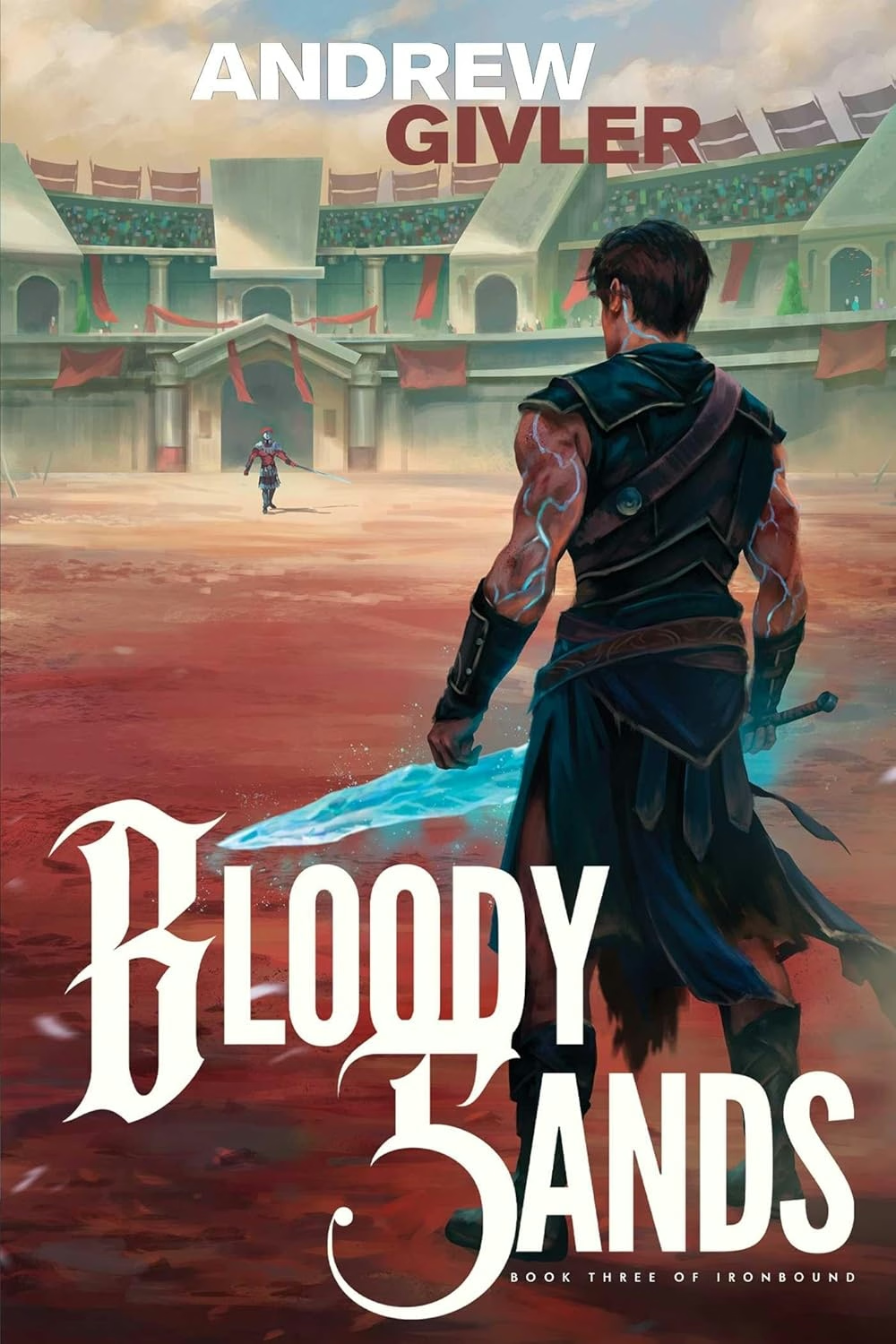
Andrew Givler's Bloody Sands is a rare beast in the progression fantasy landscape—a third installment that somehow raises the stakes higher than its predecessors while simultaneously exposing the series' most glaring weakness: a protagonist who struggles with agency in ways that divide readers completely.
Let's get straight to it. This Bloody Sands review will likely resonate differently depending on your tolerance for introspective protagonists who repeatedly choose servitude over freedom. If you can embrace that tension, you're looking at one of 2024's most layered fantasy epics. If not, you'll find yourself frustrated by page 200.
What Bloody Sands Actually Is
Bloody Sands continues the Ironbound series with Castor fighting through an arena setting—think gladiatorial combat meets high-stakes magical progression. The narrative weaves together Roman-inspired military fantasy, Greek mythology callbacks, and remnants of an advanced fallen civilization, all filtered through a Norse mythology lens that recalls the aesthetic of God of War.
The plot centers on Castor's attempt to ascend his power one final time to challenge the Rusted Empire's corruption. Political intrigue spirals outward from a core of personal conflict, creating nested layers of schemes and counter-schemes that reward careful attention.
The Strengths That Make This Book Sing
Givler's world-building operates on multiple levels simultaneously. The revelation that everything readers believed about the gods' downfall was a lie lands with genuine impact—this isn't throwaway lore, it's foundational to understanding the entire series. Readers consistently praise the complexity of this mythological reframing, which blends historical fantasy with speculative worldbuilding in ways that feel earned rather than imposed.
The action sequences are genuinely exceptional. Multiple readers describe fights as "some of the coolest displays of power" they've encountered, with combat that escalates meaningfully across the narrative. This matters because progression fantasy often struggles with making power growth feel visually dynamic—Andrew Givler's Bloody Sands doesn't have that problem.
The found family and brotherhood elements resonate deeply. Castor's relationships with mentors, allies, and House Pelias create emotional stakes that transcend typical fantasy romance. Readers note the emergence of romance elements that, when they work, feel like genuine character development rather than plot obligation.
The prose carries weight. Givler refuses to shy away from darkness, moral ambiguity, and the psychological toll of violence. This seriousness permeates every page, creating an atmosphere that rewards immersion.
Where This Book Fractures Reader Opinion
Here's the central tension: Castor's repeated willingness to accept servitude—metaphorical or literal—as his default state. By book three, this pattern feels less like character complexity and more like stagnation to some readers. One thoughtful reviewer noted that despite growing in raw power, Castor gains no meaningful psychological freedom, repeatedly seeking the next dominus to serve rather than charting his own course.
This connects to a broader critique: Castor's passivity in moments where strategic thinking should kick in. Readers observe that he often accepts surface-level explanations when careful analysis would reveal deeper truths. This isn't unreliable narration—it's presented as the character's genuine limitation. For readers seeking protagonists who actively solve problems rather than react to them, this becomes exhausting by the third volume.
The romance subplot particularly divides opinion. The emotional intensity between Castor and his romantic interest escalates dramatically from book two to book three, but the developmental steps feel compressed or skipped. Readers question whether sufficient page time was devoted to building this connection, or whether it's simply expected to materialize between installments.
Technical execution also draws criticism. Some readers note grammatical errors and moments of excessive self-repetition that suggest the manuscript could have benefited from additional editorial passes. Rushed pacing in certain sections creates tonal whiplash against the book's generally deliberate prose style.
The Comparison Framework
If you loved Red Rising for its arena brutality and power progression, you'll find similar DNA here. If Arcane Ascension appealed to you for its intricate magic systems and character growth, Bloody Sands delivers on that front. However, where Will of the Many excels at giving protagonists agency within constrained circumstances, Givler's protagonist sometimes struggles to even recognize his constraints clearly enough to work within them.
Who Should Read This
Perfect for: Readers who prioritize world-building complexity and aren't bothered by protagonists who struggle with agency. Fans of found family narratives, military fantasy, and mythology-rich settings. Anyone who enjoyed the first two Ironbound books—the ending guarantees you'll need book four.
Proceed with caution: Readers who need protagonists driving their own narratives. Those seeking tighter editorial control and cleaner prose. Anyone fatigued by extended introspection without corresponding external action.
The Writing & Style Question
Givler's prose is deliberately heavy, favoring psychological depth over accessibility. Long passages of self-recrimination and identity crisis create atmosphere but can feel repetitive when similar emotional beats recur across all three books. The seriousness is intentional—this isn't a book that winks at the reader or offers tonal relief. That commitment is admirable, though it occasionally tips into self-parody when the same internal conflicts surface for the third or fourth time.
The dialogue crackles with tension. Character voices remain distinct, and moments of revelation land with genuine impact. Givler clearly understands how to build dramatic momentum through conversation and internal conflict.
Is Bloody Sands Worth Reading?
Absolutely, with the caveat that you're committing to a specific type of fantasy experience. This is Bloody Sands review territory where the answer depends entirely on your preferences. If you value intricate plotting, complex world-building, and don't require protagonists to be proactive agents of their own destiny, this is essential reading. If you need characters who actively resist their circumstances and chart independent courses, you'll find yourself frustrated.
The book delivers on its promise of raising stakes and deepening mystery. The ending genuinely lands—readers describe being left "slack jawed" and confirm that book four (arriving in 2027) is now mandatory reading. In a genre saturated with competent but forgettable entries, Bloody Sands commands attention through sheer ambition and complexity.
Final Verdict
8/10 — A layered, ambitious progression fantasy that sacrifices some accessibility for depth, marred by editorial inconsistency but elevated by genuine worldbuilding innovation and stakes that feel earned.