Category:
ThrillerYou'll Be Sorry Review: Atmospheric But Uneven
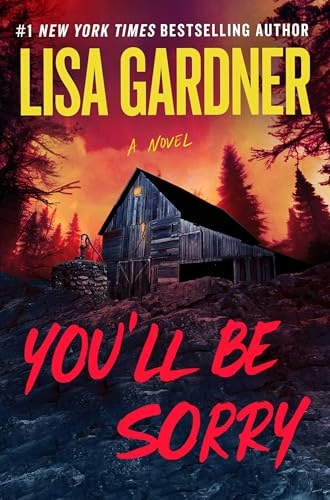
Prices can sometimes be lower on bigger marketplaces, but this link helps independent bookstores and local reading communities.
Lisa Gardner's latest standalone thriller, You'll Be Sorry, arrives with an intriguing premise: a newlywed couple purchases an abandoned lodge in rural New Hampshire, only to discover it's the site of a decades-old family disappearance. The setup promises classic locked-room mystery tension combined with intimate character drama. Yet this novel delivers an experience that's far more polarizing than Gardner's established fanbase might expect—one that excels in atmospheric dread while stumbling on narrative clarity and pacing consistency.
The Setup: Mystery Meets Marriage Drama
Raquel and Theo Collins appear to have it all: wealth, beauty, and a whirlwind romance that culminated in marriage within months. But beneath their polished exterior lies emotional distance born from unspecified tragedy. They retreat to the Dixon family lodge—a stunning mountain property frozen in time since the entire Dixon family vanished one August night in 1994, leaving only bloody footprints and unanswered questions.
When a stray dog discovers a skeleton in an old well on the property, the past literally surfaces. Local police chief Amanda Grady, following in her late father's footsteps, must navigate the collision between the town's buried trauma and this new family's arrival. The premise is genuinely compelling—a small community where everyone knows everyone's business suddenly confronted with fresh evidence of an old wound.
What Works: Atmosphere and Character Depth
Gardner excels at building dread. Readers consistently report experiencing genuine tension in the novel's first half, with multiple reviewers describing physical reactions—goosebumps, a sense of foreboding, the inability to put the book down. The author's signature skill lies in making readers inhabit each moment with visceral intensity, and that talent is fully deployed here.
The characterization of Amanda Grady emerges as a genuine strength. A female police chief navigating small-town politics while honoring her father's legacy provides compelling character work that transcends typical thriller mechanics. The relationship between Raquel and Theo also offers more nuance than standard couple-in-peril dynamics—their marriage feels tested by real emotional distance, not just external circumstances.
The audiobook narration by Hillary Huber reportedly elevates the experience further, with atmospheric production choices (intentional background noise, echo effects) that enhance the creepy factor. For audio listeners, this becomes a genuinely immersive experience.
Where It Falters: Narrative Confusion and Pacing
Here's where You'll Be Sorry divides its audience. Multiple readers report confusion during the middle sections—not the good kind of mystery confusion where clues remain deliberately obscured, but the frustrating kind where narrative threads become difficult to follow. The pacing, which starts strong, becomes inconsistent enough that some readers lose investment before reaching the resolution.
This inconsistency appears tied to how Gardner juggles multiple timelines and perspectives. The 1994 disappearance, the present-day investigation, the Collinses' personal secrets, and the town's collective suspicions all demand narrative space. When that space isn't managed with surgical precision, readers feel the strain. For a thriller where clarity of plot is essential to maintaining tension, this represents a significant misstep.
The novel's second half reportedly struggles to maintain the momentum established in its opening act. That early sense of dread—which several readers described as almost overwhelming—doesn't translate into a payoff that justifies the investment.
The Comparison Context: Where This Stands
If you've read Lisa Jewell, Tana French, or Karin Slaughter, you have reasonable expectations for what a contemporary psychological thriller should deliver. You'll Be Sorry operates in that same space—small-town secrets, layered mysteries, character-driven tension. Yet where those authors maintain narrative clarity even amid complexity, Gardner's execution here occasionally falters.
The novel most closely resembles a locked-room mystery with an expanded cast—more akin to Agatha Christie's approach adapted for modern sensibilities. That's not inherently problematic, but it requires meticulous plotting that some readers felt was missing.
Who Should Read This—And Who Shouldn't
Perfect for: Established Lisa Gardner fans willing to accept an uneven entry in her catalog. Readers who prioritize atmosphere over plot mechanics. Those who enjoy small-town mystery settings and don't mind slower, character-focused pacing. Audiobook listeners who appreciate immersive production.
Skip if: You need crystal-clear narrative progression and consistent pacing throughout. You've been disappointed by Gardner's previous work and want reassurance before investing. You prefer mysteries where every plot thread resolves with satisfying clarity. You find yourself frustrated by confusion during crucial plot moments.
Is You'll Be Sorry Worth Reading?
Yes—with caveats. This You'll Be Sorry review reflects genuine merit in its atmospheric construction and character work, even as it acknowledges legitimate structural weaknesses. The novel isn't a failure; it's an ambitious attempt that succeeds in moments and stumbles in others. For Gardner devotees, it's worth experiencing despite its flaws. For casual thriller readers, it's worth trying, but you should know what you're getting: a book that's genuinely eerie for roughly half its runtime, then becomes harder to navigate.
The central mystery—what happened to the Dixon family thirty years ago—proves interesting enough to sustain interest, but not so expertly revealed that you'll forget the confusion along the way. Gardner's You'll Be Sorry ultimately reads as a talented author experimenting with structure and not quite nailing the execution, which is more interesting than it sounds but less satisfying than it promises.
Final Verdict
Rating: 6.5/10 — Atmospheric and character-rich, but narrative inconsistency undermines what could have been a standout thriller.