Category:
Book ReviewsYou Won't Get Free of It Review: Unflinching & Unforgettable
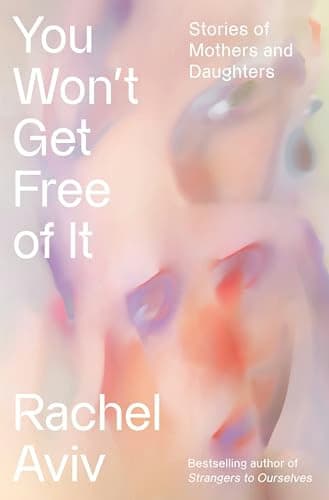
Prices can sometimes be lower on bigger marketplaces, but this link helps independent bookstores and local reading communities.
Rachel Aviv's You Won't Get Free of It is a masterclass in intimate reportage that refuses easy answers. This collection of six interconnected essays explores the mother-daughter relationship with such surgical precision that you'll find yourself questioning your own family dynamics long after finishing. Aviv doesn't sentimentalize these bonds—she excavates them, revealing the ways maternal sacrifice can become maternal harm, and how daughters internalize their mothers' unspoken wounds.
The book's central thesis arrives quietly but devastatingly: the relationships we believe should be our greatest refuge often become our deepest source of pain. Aviv circles this truth from multiple angles, never landing on a single interpretation, which is precisely what makes You Won't Get Free of It so intellectually rigorous and emotionally demanding.
What This Book Actually Explores
Unlike typical mother-daughter memoirs that trace a linear path toward reconciliation, Aviv's collection resists narrative closure. Five of the six essays originally appeared in The New Yorker, and Aviv has reconceived them for this volume with a crucial shift in perspective—she's now writing as a mother herself, not just a daughter, and that dual consciousness permeates every page.
The opening essays establish Aviv's methodology: deep archival research, extensive interviews, and a willingness to sit with contradictions. One essay follows a young teacher experiencing recurring fugue states—periods where she vanishes from her own life—and her mother's desperate attempts to locate her. Another profiles a psychologist who studies memory malleability, examining how her own maternal relationship may have shaped her controversial work in high-profile legal cases.
But it's the final essay, "Munro," that anchors the collection's moral weight. Aviv investigates acclaimed writer Alice Munro's family history, specifically the revelation that Munro's youngest daughter was sexually abused by Munro's husband—abuse that Munro initially dismissed, then later recast through her fiction. Aviv draws devastating parallels between Munro's literary themes of denial and family erasure and her lived reality, asking whether art can simultaneously expose and obscure family trauma.
The Writing: Precision Without Coldness
Aviv's prose operates at a level that justifies her New Yorker byline. She writes with the clarity of a journalist and the empathy of a novelist, never allowing either impulse to dominate. Her sentences are lean but never sparse—each one carries weight. She describes complex psychological phenomena without resorting to jargon, making neuroscience and trauma accessible without diluting its complexity.
What distinguishes Aviv's style is her refusal to narrate from a position of moral certainty. When describing a mother's choices—even devastating ones—Aviv holds space for the mother's own constraints, her own suffering, her own limited options. This creates profound discomfort. You can't simply judge these mothers. You're forced to understand them, which is far more unsettling.
The collection's brevity (under 200 pages) means Aviv has perfected the art of compression. No essay wastes a single detail. Every anecdote, every interview excerpt, every moment of reported dialogue serves her larger investigation into how families know and unknow each other.
What Genuinely Works
The thematic coherence across seemingly disparate stories is remarkable. Aviv has identified genuine patterns in how mother-daughter dynamics perpetuate themselves across generations—how a mother's untreated trauma becomes a daughter's inheritance, how silence calcifies into family mythology.
The Alice Munro essay alone justifies the book's existence. Aviv's analysis of how Munro's fiction both conceals and reveals family secrets, how the writer's celebrated stories about female autonomy and hidden lives took on new meaning after the abuse revelation, is the kind of literary criticism that changes how you read a writer's entire body of work. Aviv doesn't condemn Munro; she traces the architecture of denial with such precision that condemnation becomes unnecessary.
The collection's refusal to offer redemptive arcs is also its greatest strength. These are not stories of mothers and daughters learning to understand each other. They're stories of permanent rupture, complicated survival, and the ways families persist despite—or because of—their dysfunction. This honesty is rare in contemporary nonfiction.
Where It Stumbles
The collection's resistance to easy interpretation, while philosophically admirable, occasionally frustrates. One reader's complaint about struggling to identify Aviv's "main point" isn't entirely unfair. The book's thesis is deliberately elusive—Aviv seems more interested in complicating our understanding of motherhood and daughterhood than in advancing a singular argument.
This approach works beautifully for readers primed to sit with ambiguity, but it may alienate those seeking narrative momentum or psychological resolution. The book doesn't answer questions so much as deepen them, which is intellectually honest but emotionally demanding.
Additionally, the collection's focus on pathology and dysfunction—mental illness, sexual abuse, abandonment, memory distortion—means there's little representation of uncomplicated or simply functional mother-daughter relationships. Aviv's territory is deliberately dark. If you're seeking stories of ordinary maternal love, this isn't your book.
Who Should Read This (and Who Shouldn't)
You Won't Get Free of It is essential reading for anyone interested in how family systems perpetuate themselves, how trauma operates across generations, and how narrative shapes family identity. It's particularly valuable for writers, therapists, and anyone with a complicated maternal relationship who's intellectually ready to examine that complexity without seeking resolution.
It's also perfect for readers who loved Aviv's previous work, Strangers to Ourselves, or who appreciate New Yorker-style reportage that privileges depth over breadth. If you enjoyed collections like Maggie Nelson's The Red Parts or Deborah Eisenberg's essay work, Aviv's style will resonate.
Avoid this book if you're seeking comfort, inspiration, or conventional narrative satisfaction. It's not a self-help book disguised as memoir. It won't help you "heal your relationship with your mother." It will, however, help you understand why such healing is far more complicated than wellness culture suggests.
The book is also not for readers early in their own trauma processing. Aviv's unflinching examination of abuse and maternal failure requires emotional readiness. This is mature reading for a reason.
The Verdict: Why You Won't Get Free of It Matters
Is You Won't Get Free of It worth reading? Yes, but with caveats. This is not an easy book, and it's not designed to be. Aviv has created something rarer than a well-written collection of essays—she's created a genuinely important investigation into how families operate as systems of knowing and unknowing.
The book's title, drawn from a line about the inescapability of family bonds, captures Aviv's central insight: we cannot free ourselves from these relationships, so we must understand them more deeply. You Won't Get Free of It offers exactly that kind of understanding—not redemptive, not simple, but real.
Rachel Aviv's You Won't Get Free of It stands alongside contemporary collections like Leslie Jamison's work in its willingness to complicate rather than simplify human connection. It's the kind of book that stays with you, reshaping how you read other mothers' and daughters' stories—including your own.
Final Score: 8.5/10
Justification: A intellectually rigorous, beautifully written collection that asks hard questions about family and refuses easy answers—essential for thoughtful readers, though not for everyone seeking comfort.