Category:
Book ReviewsWolf by Lara Taveirne Review: Grief as Literature
Prices can sometimes be lower on bigger marketplaces, but this link helps independent bookstores and local reading communities.
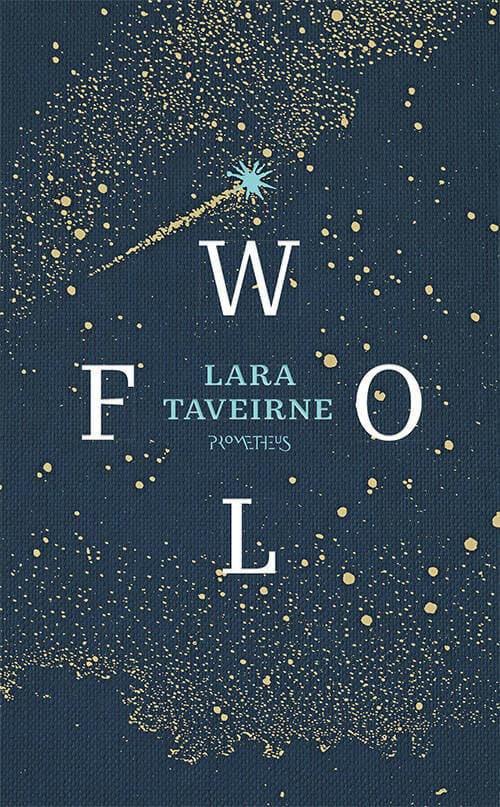
Lara Taveirne's Wolf is a deceptively simple premise wrapped around one of contemporary literature's most complex emotional investigations: a sister reconstructing her younger brother's final journey after his suicide, ten years after his death. This is not a mystery novel, though Wolf's body is discovered in a Lapland forest with his diary clutched beneath his clothes. It's not a true crime narrative, despite the dramatic circumstances. Instead, Wolf by Lara Taveirne is something rarer—a literary excavation of how we construct meaning from loss, told by someone who understands that stories, not answers, are what sustain us through grief.
Quick Verdict
This is an exceptional work of autofiction that transcends its tragic premise through rigorous prose, emotional honesty, and a willingness to sit in ambiguity. Wolf is worth reading if you're prepared for a book that refuses easy catharsis, though it demands emotional investment from readers seeking conventional narrative satisfaction. The writing is luminous, the structure is ingenious, and the emotional impact lingers long after the final page.
What This Book Actually Is
The synopsis alone sells Wolf short. Yes, Wolf—the youngest of five children, the afterthought in a chaotic, warm household—disappears at eighteen and is found dead months later in the frozen north. But Taveirne's book isn't about solving that mystery or understanding Wolf's motivations. Instead, it's about Lara's three separate journeys: backward into childhood in their boisterous family home, alongside Wolf on his final voyage through his diary entries, and forward through her own grief and the process of writing itself.
This is autofiction at its most intellectually rigorous. Taveirne doesn't pretend to have answers about her brother. She openly acknowledges the gaps, the redacted sections of Wolf's diary her father removed, the impossibility of truly knowing another person—even one you grew up with. The book becomes a meditation on how literature fills these gaps, how fiction and reality blur when a writer tries to resurrect someone through language.
The Writing: Precision Meets Vulnerability
Taveirne's prose operates on a principle of controlled intensity. Short, declarative sentences puncture longer meditative passages. White space forces you to pause, to breathe, to absorb. This isn't ornamental writing—every stylistic choice serves the emotional architecture of the book.
The structural interweaving of three timelines (childhood, Wolf's journey, Lara's present reckoning) creates a braided narrative that mirrors how grief actually works: not linearly, but in spirals and sudden ruptures. One moment you're in the raucous kitchen of their childhood; the next, you're reading Wolf's sparse observations from northern Sweden; then you're back with adult Lara, trying to make sense of both.
What's particularly striking is Taveirne's refusal to sentimentalize. She doesn't make Wolf into a saint or a cautionary tale. He's rendered with all the contradictions of a real person: sometimes funny, sometimes cruel, sometimes unbearably vulnerable, sometimes insufferably arrogant. This specificity—this resistance to mythologizing—is what makes the book feel so achingly true.
What Works Brilliantly
The book's central conceit—that a sister can only ever write an approximation of her brother, that the act of narration is itself an act of invention—is handled with intellectual sophistication and emotional grace. Readers have noted that Taveirne somehow makes you feel the presence of Wolf most powerfully through his absence, through what remains unsaid.
The scenes depicting the family's response to Wolf's disappearance and death are devastatingly effective. One reader cited a particular passage about the line of people greeting the family after the funeral—each handshake representing a different era of their lives, each one a small death of their former selves. This is the kind of observation that stops you mid-page.
The book also succeeds as a love letter to literature itself. Taveirne writes about how stories sustained her through the unsurvivable, how fiction offered what reality could not. This meta-layer—a book about writing a book about loss—could easily collapse into self-indulgence, but instead it feels necessary and true.
Where Some Readers Stumble
Here's the honest tension: Wolf is not a book for readers seeking resolution or psychological explanation. If you want to understand why Wolf did what he did, you'll be frustrated. Taveirne deliberately refuses to provide this. She argues—convincingly—that such explanations are fictions anyway, comforting narratives we construct to make sense of the senseless.
The book's deliberate ambiguity and fragmentation, which create its power, also mean it's demanding. This isn't a page-turner. It requires active, contemplative reading. Some readers report needing to read it twice—once at speed, swept along by the emotional current, and once slowly to catch what they missed in their initial rush.
The diary sections, while sparse and affecting, are necessarily limited in scope. Wolf's voice remains somewhat distant, which is precisely the point, but it means readers seeking direct access to his interiority will feel its absence keenly.
Who Should Read This
Wolf is essential for readers who: appreciate literary fiction over plot-driven narratives; have experience with grief and recognize its non-linear nature; are interested in autofiction and the ethics of writing about real people; value prose that takes risks; and understand that some books aren't meant to comfort so much as to witness.
It's also valuable for writers, particularly those wrestling with how to write about personal tragedy without exploiting it, how to honor real people through the distorting lens of narrative.
You should probably skip Wolf if: you need clear answers and narrative closure; you prefer plot momentum to emotional precision; you find fragmented structures frustrating; or you're looking for a self-help book about processing grief.
The Comparative Context
If you've read and loved Jenny Offill's Dept. of Speculation or Karl Ove Knausgård's My Struggle series, you'll recognize the autofictional territory Wolf occupies. Like those works, it mines the gap between lived experience and representation. But where Offill works in fragments and Knausgård in overwhelming accumulation, Taveirne uses architectural precision—the three journeys are carefully balanced, each illuminating the others.
The Dutch/Flemish literary context matters here too. Wolf sits within a tradition of Northern European literature that privileges emotional authenticity over plot mechanics, that trusts readers to sit with ambiguity. It's in conversation with writers like Arnon Grunberg and Hanne Orstavik, who similarly refuse easy answers.
The Verdict
Wolf is one of those rare books that justifies the hype surrounding it. It's become a bestseller and cultural phenomenon in the Dutch-speaking world for good reason—it speaks to something profound about how we live with loss, how we tell stories to survive, how literature becomes a form of love when direct communication fails.
This is a book that trusts its readers. It doesn't explain itself. It doesn't provide therapeutic resolution. Instead, it offers something more valuable: the companionship of a brilliant writer thinking through the unsurvivable in real time, on the page.
Final Score: 9/10 — A masterwork of autofiction that transforms personal tragedy into universal meditation on grief, language, and the irreducible mystery of other people.