Category:
Book ReviewsWill and Attention: A Memoir Review - Brilliant but Demanding
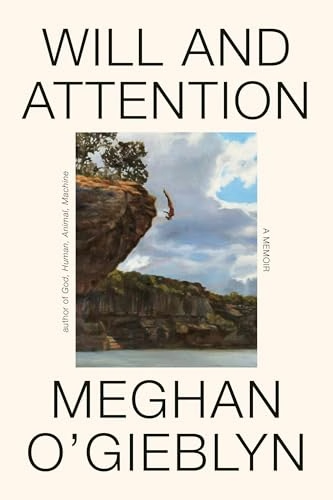
Prices can sometimes be lower on bigger marketplaces, but this link helps independent bookstores and local reading communities.
Meghan O'Gieblyn's Will and Attention: A Memoir is a philosophically dense spiritual autobiography that tackles addiction, faith, and the paradox of self-control with intellectual rigor—but it comes at the cost of emotional accessibility. This is a book that rewards careful readers willing to engage with Simone Weil's philosophy and existential questions, yet simultaneously frustrates those seeking the intimate, specific details that make memoir resonate. The central tension of O'Gieblyn's work isn't just her subject matter; it's the book itself: a meditation on paying attention that asks readers to abandon conventional narrative expectations.
What This Book Actually Does
In her late thirties, O'Gieblyn found herself returning to addictions she believed she'd overcome—drinking in particular, and a brief flirtation with Catholicism through a friendship with a priest. Rather than offering a straightforward recovery narrative, she uses these personal crises as launching points for a deeper philosophical inquiry. The book's architecture is unconventional: O'Gieblyn moves between memoir fragments, literary analysis, and extended philosophical discussion, using Weil's essay "Attention and Will" as her organizing principle.
The core argument is provocative: willpower alone cannot solve our recurring patterns of self-sabotage. Instead, O'Gieblyn suggests that genuine change requires a quality of attention—a receptive, almost spiritual awareness that transcends mere force of will. This distinction between attention and will becomes the book's philosophical spine, explored through thinkers ranging from Buddha to Schopenhauer, from Augustine to Wittgenstein.
The Writing: Precise and Layered
O'Gieblyn's prose is undeniably beautiful. Her sentences are carefully constructed, her arguments elegantly developed. She demonstrates genuine intellectual sophistication without becoming pedantic—at least not in the early sections. The way she weaves philosophical concepts into her personal narrative shows a writer in complete command of her craft.
However, this precision comes with a cost. Will and Attention reads less like a traditional memoir and more like a philosophical essay with autobiographical moments inserted as illustrations. O'Gieblyn herself acknowledges this tension partway through, noting that she "went to the bookshelf" searching for answers rather than examining her own lived experience. She recognizes this as "my whole problem," yet continues this pattern throughout the remainder of the book.
What Actually Works Here
The book's intellectual ambition is genuinely refreshing in the memoir landscape. O'Gieblyn refuses the comfortable arc of addiction-recovery-redemption that readers have encountered countless times. Instead, she insists on complexity: the messiness of desire, the way knowledge doesn't prevent repetition, the strange pull of faith even for those who've renounced it.
Her treatment of Simone Weil is particularly compelling. Weil was a philosopher and political activist who embodied the very paradoxes O'Gieblyn explores—struggling with faith, torn between action and contemplation, ultimately starving herself in solidarity with occupied France. Using Weil as a philosophical guide while acknowledging her tragic life creates productive tension. O'Gieblyn doesn't simply adopt Weil's framework; she interrogates it, asking whether attention divorced from conventional therapy or practical intervention is actually sustainable.
For readers who loved her essay "Backsliding"—which examined why we return to harmful patterns despite intellectual understanding—this book expands those ideas into a full philosophical system. The question "Why do I keep doing this?" receives a sophisticated answer grounded in neuroscience, philosophy, and theology rather than pop-psychology platitudes.
Where It Falls Short
The book's greatest weakness is precisely what some readers find most intellectually interesting: the near-total absence of conventional memoir specificity. O'Gieblyn provides minimal detail about her actual life—her family, her relationships, the texture of her daily experience. When she does offer personal anecdotes, they often serve as mere springboards for philosophical detours.
This creates a strange reading experience. You learn that O'Gieblyn returned to drinking and briefly considered Catholicism, but you learn very little about why these specific moments mattered, what they felt like, or how they shaped her beyond their philosophical implications. A reader seeking intimate self-examination will find themselves perpetually redirected to the pages of dead philosophers.
The final third of the book becomes increasingly abstract. While O'Gieblyn's arguments remain intellectually coherent, the emotional stakes diminish. The book that began with urgent personal crisis gradually dissolves into pure philosophy, leaving you wondering whether the author has genuinely worked through her struggles or simply intellectualized them away.
Additionally, the reliance on Weil as a guiding light is troubling. Weil's life ended in self-imposed starvation. Her philosophy, while profound, emerged from a deeply tormented consciousness. Using her as a model for attention and will feels potentially dangerous—especially in a book ostensibly about overcoming destructive patterns.
The Comparison Question: How Does It Stack Up?
If you've read Cheryl Strayed's Wild or Elizabeth Gilbert's Eat, Pray, Love, Will and Attention operates in an entirely different register. Those books center the author's emotional journey; this one subordinates it to philosophical inquiry. It's closer in spirit to Anne Carson's Autobiography of Red or Chris Kraus's I Love Dick—books that blur genre boundaries and demand active intellectual participation.
Compared to other recent philosophical memoirs like Maggie Nelson's The Red Parts, O'Gieblyn's work is more traditionally structured but less formally innovative. Nelson's fragmented approach creates its own kind of attention; O'Gieblyn's more conventional narrative framework paradoxically distances the reader from intimate connection.
Who Should Read This
Perfect for: Readers who loved O'Gieblyn's essay collection On the Threshold of the Promised Land. Philosophy enthusiasts willing to engage with dense intellectual material. Anyone genuinely interested in the psychology of addiction and relapse. People drawn to spiritual autobiography but skeptical of easy answers. Readers who appreciate formal experimentation and genre-bending.
Will likely frustrate: Those seeking traditional narrative memoir. Readers who prefer books that provide clear answers or practical recovery strategies. Anyone expecting emotional catharsis. People who value specificity and concrete detail over abstraction. Those who find extended philosophical discussion tedious rather than illuminating.
The Verdict
Will and Attention is a genuinely important book that asks essential questions about self-determination, desire, and spiritual seeking. O'Gieblyn's intellectual ambition and prose quality are consistently impressive. However, the book's commitment to philosophy over personal narrative creates a fundamental tension that never fully resolves. You're reading a philosophical treatise that wears memoir clothing, and that dissonance becomes increasingly apparent as the book progresses.
Is Will and Attention: A Memoir worth reading? That depends entirely on what you value. If you want to think deeply about the nature of will and attention, absolutely. If you want to know Meghan O'Gieblyn—the specific, embodied person living through these crises—you'll find yourself perpetually disappointed. The book succeeds brilliantly at what it attempts, but what it attempts is fundamentally different from what the memoir genre typically promises.
For a Will and Attention review that grapples honestly with its strengths and limitations, this book demands readers meet it on its own terms: as a philosophical inquiry that happens to use autobiography as its method, not as autobiography that happens to employ philosophy.