Category:
Self-HelpWhy Has Nobody Told Me This Before? Review
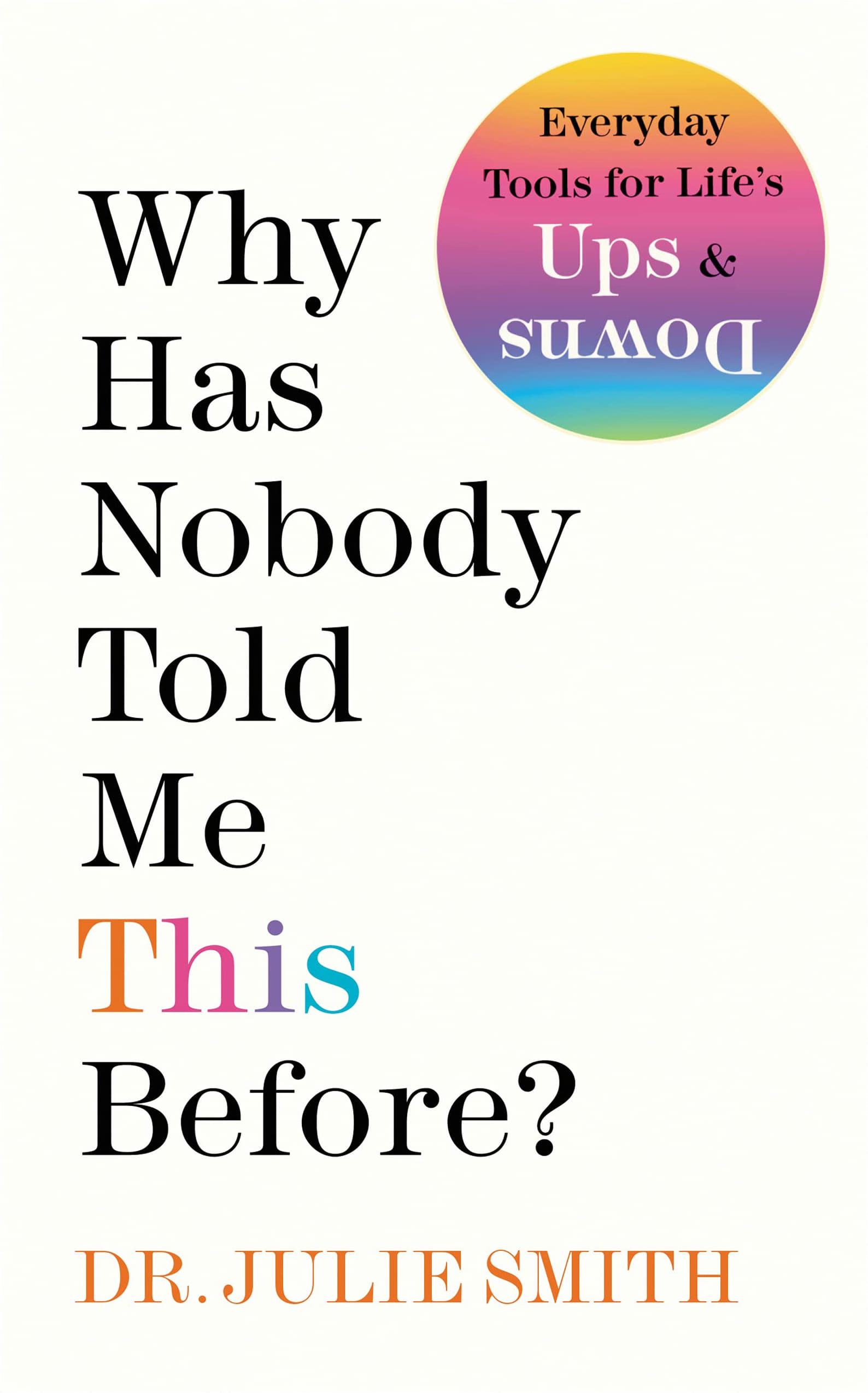
Prices can sometimes be lower on bigger marketplaces, but this link helps independent bookstores and local reading communities.
Quick Verdict
Why Has Nobody Told Me This Before? by Dr. Julie Smith is a pragmatic, accessible mental health toolkit that delivers genuine value—but only if you're willing to skip the theory and embrace bite-sized practical advice. This isn't a revolutionary read; it's a well-organized collection of therapeutic techniques presented with refreshing clarity. At 3.85/5 stars across 52,000+ ratings, the book polarizes readers: some call it life-changing, others find it repetitive and overly simplified. The real question isn't whether Smith's advice is novel—it isn't—but whether you need a therapist's guidance repackaged for your commute.
What This Book Actually Is
Dr. Julie Smith built her reputation as a clinical psychologist and social media sensation by distilling complex therapeutic concepts into digestible, shareable content. This debut book takes that approach and expands it into eight thematic chapters covering anxiety, depression, grief, self-doubt, motivation, stress, fear, and meaning. Rather than drowning readers in neuroscience, Smith positions herself as a practical guide: here's what doesn't work, here's what does, now go apply it.
The structure matters here. Smith explicitly tells readers to skip chapters irrelevant to their current struggles—a refreshing admission that not every self-help book needs to be read cover-to-cover. Each chapter uses visual markers: lightbulb icons for insights, wrench icons for actionable tools. It's designed for dipping in and out, not linear consumption.
The Writing Style: Clear, But Formulaic
Smith writes with the clarity of someone trained to explain psychological concepts to anxious patients, not academics. Short sentences. Direct language. No unnecessary jargon. This accessibility is both the book's greatest strength and its most significant limitation.
The prose never stumbles, but it also never surprises. There's a sameness to the structure—problem identified, reframe suggested, tool provided, repeat. Readers accustomed to the literary ambition of memoirs or the narrative drive of narrative nonfiction may find this workbook-like approach sterile. Yet for someone in genuine psychological distress seeking immediate guidance rather than beautiful prose, that directness is precisely the point.
What Actually Works Here
Smith's most valuable contribution isn't any single technique—most of her tools aren't new—but rather how she reframes emotional experience. Her distinction between sadness, boredom, anxiety, and frustration is subtle but transformative. Instead of collapsing all negative states into "feeling bad," Smith teaches readers to diagnose their emotional state with precision. This specificity matters because different emotions require different interventions.
Her philosophy around emotional acceptance resonates deeply: don't stop bad feelings, let them flow through you while you identify their source. This stands in stark contrast to the toxic positivity that dominates self-help publishing. Smith isn't selling happiness; she's selling resilience and understanding. That distinction matters.
The chapter on self-criticism contains perhaps the book's most memorable line: "If you want a man to get up off the ground, you have to stop beating him." It's deceptively simple, yet captures how self-directed cruelty sabotages recovery. Smith consistently reminds readers that self-compassion isn't weakness—it's prerequisite maintenance for mental health.
The emphasis on values-alignment also lands well. Smith suggests identifying what you actually value, then auditing your thoughts and behaviors against those values. It's not groundbreaking cognitive behavioral therapy, but it's grounded and applicable.
Where This Book Stumbles
The repetition is real. Exercise, nutrition, gratitude practices, and sleep hygiene appear across multiple chapters. For readers consuming the book sequentially, this becomes tedious. Smith's defense—that chapters function as standalone resources—is valid but incomplete. Better editing could have eliminated redundancy while preserving accessibility.
More problematically, Smith occasionally oversimplifies complex psychological territory. Depression isn't solved by routine and gratitude lists, though both may help. Anxiety disorders don't respond uniformly to the same breathing techniques. Smith acknowledges she offers "no cures," only tools for perseverance, but some readers expecting deeper clinical insight will feel shortchanged.
The book also assumes a certain baseline of psychological literacy. Readers entirely new to therapy concepts might find even Smith's simplified explanations sparse. Conversely, anyone with substantial therapy experience will recognize these as foundational techniques, not revelations.
The Pandemic Context Question
This book arrived during a specific historical moment—peak pandemic psychological strain—which inflected how readers received it. Several five-star reviews explicitly reference the book as a lifeline during isolation and lockdown. That context matters. A reader in acute psychological crisis during 2020-2021 needed something, and Smith's practical toolkit filled a gap when traditional therapy was inaccessible.
Read in 2024, outside that crisis moment, the book functions differently. It's solid foundational advice, not emergency intervention. This isn't a criticism of the book itself, but rather an acknowledgment that timing shapes reception.
Who Should Actually Read This
Perfect for: First-time therapy readers seeking practical mental health tools without theoretical overload. Anyone struggling with anxiety, depression, or grief who wants immediate, applicable strategies. Readers who appreciate modular, skip-around structures. People on social media who've already encountered Smith's content and want it in comprehensive form. Anyone preferring pragmatism to literary ambition in their self-help.
Will likely disappoint: Experienced therapy consumers seeking novel approaches or deeper clinical insight. Readers wanting narrative-driven memoir or philosophical depth. Anyone expecting revolutionary mental health breakthroughs. Perfectionist readers bothered by repetition and oversimplification. Those seeking clinical rigor and evidence-based specificity.
Comparison to Similar Books
Unlike Brené Brown's Dare to Lead, which weaves narrative and research into emotional storytelling, Smith's approach is purely utilitarian. Unlike Mark Manson's The Subtle Art of Not Giving a F**, which uses irreverent humor to make psychology accessible, Smith maintains professional distance. She's closer to a workbook than either—think Feeling Good by David D. Burns or The Body Keeps the Score by Bessel van der Kolk, but more condensed and less research-heavy than either.
The honest comparison: Smith occupies the middle ground between clinical textbooks and pop psychology. She's more substantive than typical wellness content, less demanding than actual therapy training materials.
The Verdict
Why Has Nobody Told Me This Before? review score: 7/10
This book delivers genuine utility without pretension. It's not revolutionary, but it's honest about its limitations and genuinely helpful for its intended audience. Smith's clinical background shows in her precision and refusal to oversell solutions. The accessibility is real; the tools work; the writing is clear.
Is Why Has Nobody Told Me This Before? worth reading? That depends entirely on your starting point. If you're new to mental health concepts and struggling with anxiety, depression, or grief, absolutely yes. If you've already consumed substantial therapy or self-help literature, you'll recognize most frameworks—but Smith's particular presentation might still offer value as a refresher or reference guide.
The book's true strength isn't that it tells you something nobody's told you before. It's that it tells you something you probably needed to hear, in language you'll actually understand, packaged for the moments you need it most. In an oversaturated self-help market, that's surprisingly rare.
Final Thoughts
Dr. Julie Smith's debut succeeds because she respects her reader's intelligence while refusing to assume their psychological literacy. That balance—practical without being patronizing, accessible without being shallow—explains both the enthusiastic five-star reviews and the lukewarm three-star dismissals. You're not buying revolutionary insight; you're buying a competent therapist's toolkit in book form. For many readers, that's exactly what they need.