Category:
Thriller"What She Saw" Review: Burton's Polarizing Thriller
Prices can sometimes be lower on bigger marketplaces, but this link helps independent bookstores and local reading communities.
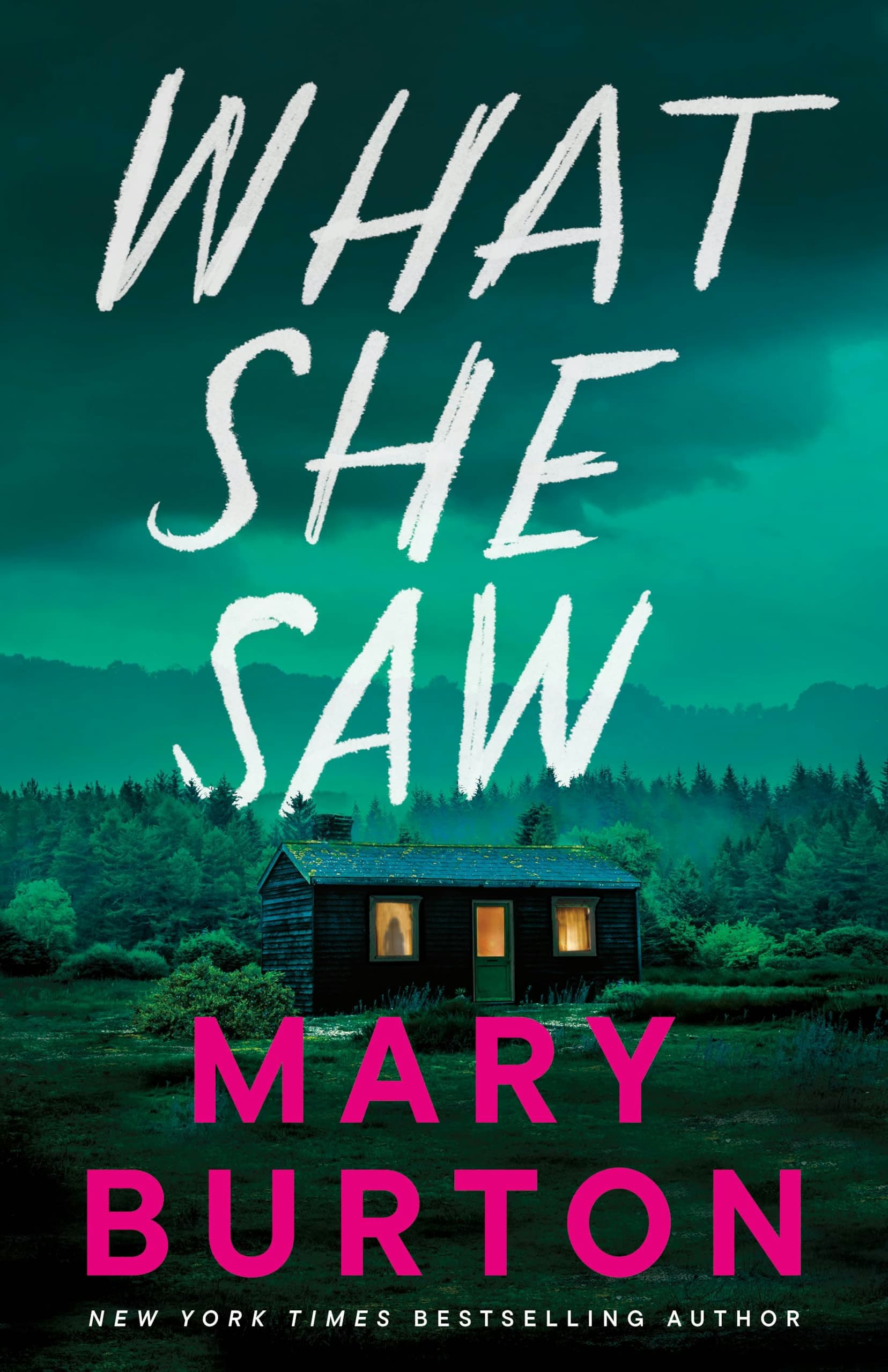
Mary Burton's What She Saw is a cold case mystery that arrives with genuine intrigue but stumbles on the execution—a book that will captivate some readers while frustrating others with its glacial pacing and narrative indulgence. This New York Times bestselling author has crafted a premise with real teeth: an investigative reporter returns to a small Virginia mountain town thirty years after her mother vanished during a music festival, determined to find the bodies of four murdered women and expose the truth that law enforcement seemingly buried. The problem is that Burton takes her sweet time getting anywhere, and not everyone will have the patience for her particular brand of mystery-telling.
What What She Saw Is Actually About
Sloane Grayson is a cold case journalist with a personal stake in the mystery she's investigating. Three decades ago, four women disappeared during a music festival in a small Virginia town. A man was convicted of their murders, but the bodies were never recovered—a detail that gnaws at Sloane because her own mother was one of the victims. With the original sheriff long dead, Sloane returns to town to question families, witnesses, and even the incarcerated man who maintains his innocence.
The narrative unfolds across multiple timelines, jumping between the present-day investigation and flashbacks that slowly reveal what actually happened during that fateful festival. Burton structures the story with dual perspectives, primarily following Sloane's contemporary investigation while occasionally shifting to Sheriff CJ Taggart's viewpoint from the past. It's an ambitious framework designed to build suspense through revelation, but as reader responses reveal, this approach doesn't work equally well for everyone.
The Writing Style: Detailed to a Fault
Burton's prose is meticulous and atmospheric. She excels at creating a sense of place—the small-town setting feels lived-in and specific, grounded in real geography that readers familiar with the region immediately recognize. Her characterization of Sloane is particularly strong: a woman shaped by both her mother's empathy and her father's sociopathic detachment, she's capable of bending rules and pushing boundaries in ways traditional protagonists wouldn't.
However, this same attention to detail becomes a liability. Burton includes extensive descriptions, tangential character introductions, and procedural minutiae that, while realistic, frequently derail narrative momentum. The audiobook narration—featuring multiple voice actors including Samara Naeymi and James Anderson Foster—is reportedly excellent, which suggests the prose might flow better in audio format than on the page. Some readers found the pacing manageable; others abandoned the book before reaching the midpoint, describing it as "the book equivalent of old man river."
What Works: The Mystery Framework and Character Complexity
When What She Saw functions at its best, it's genuinely engaging. The dual timeline structure, despite its drawbacks, creates legitimate mystery—readers genuinely don't know who orchestrated the murders or why the case remains unsolved. Burton resists easy answers. The incarcerated man claiming innocence isn't immediately revealed as a liar, and the town's "closure" from thirty years ago feels fragile and potentially false.
Sloane herself is the book's greatest asset. She's intelligent, driven, and morally flexible in ways that feel earned rather than imposed. The subtle romance subplot doesn't overwhelm the mystery, and Burton smartly allows family trauma to remain the emotional core. Readers who stayed with the book consistently praised the satisfying conclusion and the way twists accumulated organically rather than feeling arbitrary.
The reference to the film Sole Survivor adds an intriguing layer for those familiar with that real-world aviation mystery, suggesting Burton did her research on how unsolved cases function in cultural memory.
What Doesn't Work: Pacing, Repetition, and Logical Gaps
The central complaint across multiple reader responses is straightforward: the book moves too slowly. This isn't a matter of preference—it's a structural issue. Chapters that could convey information in ten pages stretch across twenty, with tangential details about secondary characters who barely register by the novel's end. One reader noted they should have kept a character list, which speaks to Burton's tendency to introduce numerous supporting players without giving them sufficient narrative weight.
Repetition compounds the pacing problem. Key plot points are revisited multiple times, and Sloane's investigative steps often feel redundant. More problematically, some readers found the resolution unsatisfying—not because it was surprising, but because it felt unmotivated. One reviewer questioned why no one checked an obvious location (a mineshaft) for thirty-one years, a plot hole that undermines the mystery's internal logic.
There's also the matter of the ponytail obsession—yes, multiple readers genuinely noted that virtually every female character sports a ponytail, which becomes distracting rather than characterizing.
How What She Saw Compares to Similar Thrillers
If you've read The Girl on the Train by Paula Hawkins or The Silent Patient by Alex Michaelides, you'll recognize Burton's approach: an unreliable or psychologically complex protagonist investigating a crime that intersects their personal history. However, Burton's pacing is considerably slower than either of those bestsellers. Hawkins and Michaelides prioritize narrative velocity; Burton prioritizes atmospheric detail and procedural authenticity.
For readers who loved Tana French's Dublin Murder Squad series, What She Saw might feel more rewarding—French also uses multiple timelines and resists easy resolution. But even French maintains tighter pacing. Burton's book is closer in structure to a police procedural that happens to be written by a mystery novelist, rather than a thriller designed for maximum page-turning momentum.
Who Should Read This Book—And Who Won't
Read What She Saw if you:
- Love true crime and appreciate realistic investigative detail
- Enjoy dual timeline narratives that gradually reveal what actually happened
- Prefer character depth over plot velocity
- Have patience for books that take their time establishing atmosphere
- Appreciate morally complex protagonists who don't follow conventional rules
- Enjoy audiobooks (the narration is genuinely praised)
Skip What She Saw if you:
- Demand fast pacing and immediate stakes
- Dislike dual timeline structures
- Get frustrated by repetition or tangential character introductions
- Prefer thrillers that prioritize plot momentum over procedural detail
- Want a climactic, high-stakes finale
- Have limited reading time and need maximum payoff per page
This book's 4.0 average rating across nearly 50,000 ratings tells the story: it's genuinely well-regarded, but it's not universally beloved. The gap between five-star and two-star reviews isn't about quality—it's about whether readers' patience matched Burton's pacing.
Is What She Saw Worth Reading?
Yes, if you're willing to invest in Burton's particular approach. Mary Burton's What She Saw delivers a genuine mystery with a satisfying resolution and a protagonist worth spending time with. The book earns its acclaim, even if it doesn't earn it quickly. For readers who devoured it in a single sitting or listened through the excellent audiobook, it's a compelling page-turner. For readers who abandoned it at 30%, it's a cautionary tale about premise-to-execution mismatch.
The honest answer: What She Saw is worth reading if slow-burn mysteries with atmospheric detail appeal to you more than plot-driven thrillers. It's not worth your time if you need narrative momentum to stay engaged. There's no middle ground here—readers either love Burton's methodical approach or resent it.
Final Verdict
7/10 — A well-crafted mystery undermined by its own deliberate pacing, rewarding for patient readers but frustrating for those seeking thriller momentum.