Category:
Book ReviewsWhat Doesn't Kill You Makes You Hotter: Honest Review
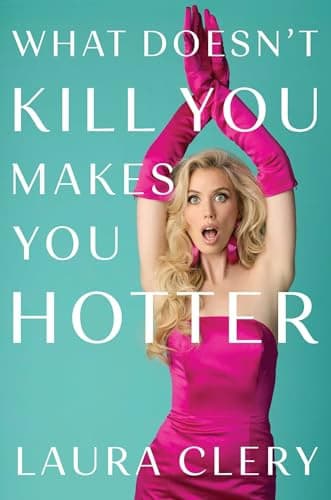
Prices can sometimes be lower on bigger marketplaces, but this link helps independent bookstores and local reading communities.
Laura Clery's "What Doesn't Kill You Makes You Hotter" arrives with significant hype and a 4.06-star rating across over 500 reviews—but those numbers mask a deeply polarizing memoir that critics either embrace as refreshingly raw or reject as exploitative and self-indulgent. This is not a book that inspires lukewarm reactions. Readers either find Clery's unflinching account of domestic violence, addiction, and chaotic motherhood genuinely moving, or they find it narcissistic, poorly written, and troublingly invasive toward her children's privacy.
Quick Verdict
Skip this unless you're already invested in Clery's social media presence. While the book contains moments of genuine vulnerability, it rehashes freely available content, prioritizes shock value over substance, and raises serious ethical questions about how much of your children's trauma should become monetized entertainment. The writing lacks the sophistication needed to justify its serious subject matter.
Rating: 4/10 — Occasionally moving but fundamentally compromised by exploitation concerns and weak execution.
What This Book Actually Is
Clery frames "What Doesn't Kill You Makes You Hotter" as a comprehensive memoir spanning childhood, her rise on social media, marriage to Stephen Clery, domestic violence, addiction, and motherhood. The subtitle suggests a transformation narrative—that surviving hardship leads to growth and resilience. What readers actually get is something messier: a collection of anecdotes loosely connected by the recurring theme of chaos, told in a voice that oscillates between self-deprecating humor and defensive justification.
The book covers legitimate territory: her parents' divorce, her ex-husband's abusive behavior, her children's struggles with autism and behavioral issues, and her own journey through substance use and recovery. These are important stories. The problem isn't the subject matter—it's how Clery chooses to tell it.
The Core Problem: Privacy vs. Profit
The most damning criticism in reader responses isn't about Clery's writing or humor—it's about her children. She shares their legal names, images, and deeply personal details about their trauma, behavioral meltdowns, and experiences during their parents' violent dissolution. These children didn't consent to having their digital footprint cemented in a widely distributed memoir before they reach adulthood.
One particularly sharp observation from readers: "Their future classmates and potential employers will have access to all of this stuff." This isn't a minor concern—it's a fundamental ethical breach that undermines the entire project. When a parent monetizes their children's suffering for content, the question shifts from "Is this a good book?" to "Should this book exist at all?"
Clery has built her brand on oversharing across multiple platforms, and this book simply extends that strategy into print. But there's a difference between a parent's TikTok and a permanent, published record.
Writing Quality and Style
Laura Clery's "What Doesn't Kill You Makes You Hotter" suffers from fundamental prose problems that readers consistently identify. The writing is self-indulgent without being insightful, humorous without being funny, and exhausting rather than engaging.
The humor relies heavily on announcing its own punchlines. Clery tells readers why something is funny rather than letting the absurdity speak for itself. Readers describe the experience as "being trapped in a conversation with someone who thinks they're the funniest person in the room while everyone else is desperately seeking an exit." This isn't an exaggeration—it's a precise description of the book's central problem.
Chapters drag despite containing minimal plot development. Stories feel unrelated, connected only by the repetitive assertion that Clery's life is chaotic. The memoir structure collapses into a circular narrative: "Look how crazy things are, here's another crazy thing, look how crazy things are." After 56%, many readers hit a wall and simply stopped reading.
Where the Book Actually Works
To be fair, "What Doesn't Kill You Makes You Hotter" contains moments that transcend its limitations. Clery demonstrates genuine vulnerability when discussing domestic violence, particularly when acknowledging the cyclical nature of abuse and the difficulty of leaving. Her honesty about the gap between her social media persona and her actual life occasionally cuts through the noise.
Readers who connected with the book often cite specific passages about survival, resilience, and the messy reality of motherhood. When Clery stops performing and simply speaks, her voice carries weight. The problem is that these moments are scattered throughout a book that prioritizes entertainment over authenticity.
The book's best quality is its willingness to contradict itself—to show Clery making questionable choices, forgiving people who don't deserve forgiveness, and repeating patterns she recognizes as destructive. This honesty has value, but it's undermined by the question: "Why are we reading about this in a published memoir instead of working through it in therapy?"
The Domestic Violence Narrative Problem
One reader, identifying as a domestic violence survivor, articulated a crucial tension: Clery describes horrific abuse from her ex-husband throughout the book, yet appears to welcome him back into her life on social media. The contradiction is heartbreaking and confusing.
This creates a narrative problem that goes beyond writing quality. If Clery's story is genuinely about survival and breaking cycles, the ending should reflect that growth. Instead, the book documents abuse, recovery, and then... reconciliation. Or at least, continued contact that contradicts the book's implicit message about moving forward.
A friend's line haunts the narrative: "At this point, you're a volunteer, not a victim." This observation contains more wisdom than most of the book's 300+ pages. The tragedy is that Clery seems to understand this intellectually while remaining unable or unwilling to act on it—and now that contradiction is published for her children to eventually read.
Who Should Read This Book
Perfect for: Existing fans of Clery's social media content who want deeper dives into her stories. People who enjoy celebrity memoirs that prioritize entertainment over literary craft. Readers interested in social media culture and how influencers monetize their personal lives.
Will actively hate this: Anyone concerned about children's privacy and digital consent. Readers seeking substantive memoir writing in the vein of Cheryl Strayed or Glennon Doyle. Domestic violence survivors looking for empowering narratives about breaking cycles. Anyone who values craft in nonfiction writing. Teachers and child development professionals who recognize the potential harm of publicly documenting children's behavioral and developmental struggles.
The Bigger Picture: Influencer Memoirs and Ethics
Clery's book arrives during a moment when influencer memoirs have become a publishing category. The formula is familiar: build a massive social media following, then convert that audience into book sales. The content often overlaps significantly—what you can read free on Instagram becomes what you pay for in hardcover.
This raises legitimate questions about value, consent, and the commodification of personal trauma. Unlike traditional memoir, which often offers new insights or previously untold stories, influencer memoirs frequently repackage existing content with minimal additional context or analysis.
"What Doesn't Kill You Makes You Hotter" exemplifies this problem. Readers note that "all content in this book is publicly and freely available on her multiple social media pages." You're not getting exclusive access to Clery's inner life—you're paying for a compilation.
Final Verdict: Is It Worth Reading?
No. "What Doesn't Kill You Makes You Hotter" is not worth your time or money. The book lacks the writing quality to justify its subject matter, recycles freely available content, and raises serious ethical concerns about children's privacy and consent.
If you're interested in Clery's story, her social media presence provides the same information at no cost. If you're looking for a genuinely moving memoir about surviving abuse and finding resilience, read something by an author who has invested in craft and reflection—not just confession.
The book's fundamental problem isn't that it's too honest or too dark. It's that it mistakes oversharing for authenticity and shock value for substance. Clery has lived through genuinely difficult experiences, and she deserves compassion. But compassion doesn't require purchasing a book that exploits her children's trauma for entertainment.
The title promises that what doesn't kill you makes you hotter. The reality is that what doesn't kill you might just make you a cautionary tale about the dangers of monetizing your family's pain.