Category:
Book ReviewsWe Will Be Jaguars Review: Essential Reading
Prices can sometimes be lower on bigger marketplaces, but this link helps independent bookstores and local reading communities.
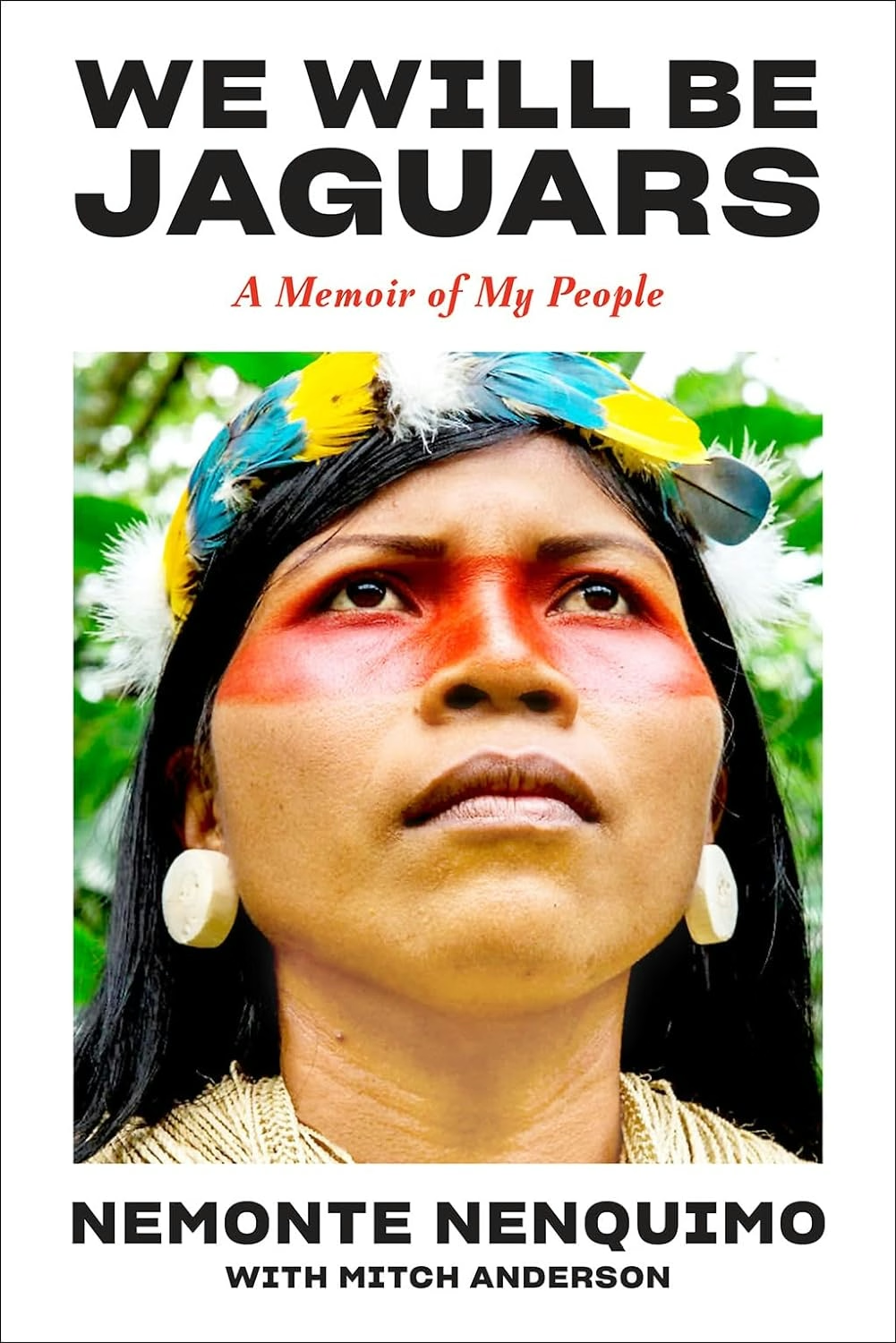
Nemonte Nenquimo's We Will Be Jaguars is a rare memoir that functions simultaneously as personal testimony, environmental manifesto, and indictment of Western colonialism. This is not a comfortable book, nor should it be. Published to widespread acclaim, Nenquimo's account of her journey from a Waorani child in Ecuador's Amazon to one of the world's most influential climate activists demands to be read—even when it breaks you in the process.
The central tension that defines this memoir is deceptively simple: a young girl caught between two worlds, forced to choose which one deserves her loyalty. Nenquimo was born into a culture that had remained largely isolated from the outside world until the 1950s, when evangelical missionaries arrived promising salvation. By her teenage years, she had been baptized, educated in the city, and exposed to Western materialism. Yet her ancestors visited her in dreams, calling her back. What makes We Will Be Jaguars extraordinary is how Nenquimo refuses to make this a simple redemption narrative. Instead, she exposes the mechanisms of cultural erasure—how colonialism operates not just through violence, but through seduction, through the promise of straight teeth and Western clothes.
What This Memoir Actually Accomplishes
We Will Be Jaguars succeeds where many indigenous narratives fail: it centers Waorani agency and intellectual tradition rather than positioning indigenous peoples as victims awaiting rescue. Nenquimo doesn't write about the forest—she writes from the forest's perspective, grounded in shamanic knowledge systems that Western readers rarely encounter in memoir form. This is radical work disguised as personal storytelling.
The book's power lies in its unflinching documentation of missionary colonization in real time. Nenquimo witnessed—and survived—sexual abuse within the missionary community, a detail that some readers find almost unbearably difficult but which Nenquimo presents with matter-of-fact clarity. This isn't trauma porn; it's testimony. The abuse functions as a turning point, the moment when the seduction of Western life shattered and Nenquimo began asking harder questions about what she'd been promised.
Where the memoir truly soars is in its second half, when Nenquimo recounts leading the Waorani alliance against Texaco and later oil companies attempting to exploit her people's ancestral lands. She spearheaded a landmark legal victory protecting over 500,000 acres of primary rainforest—a concrete achievement that distinguishes her from many environmental activists who remain primarily rhetorical. Nenquimo's activism isn't performance; it's survival strategy.
The Writing Question: Where Opinions Divide
Here's where We Will Be Jaguars review discussions become interesting. Some readers find Nenquimo's prose style direct, even sparse—a stylistic choice that reflects oral storytelling traditions rather than literary convention. Others experience this same quality as emotionally distant, particularly in sections dealing with profound trauma. This isn't a flaw in the book; it's a fundamental difference between Western literary expectations and indigenous narrative traditions.
The audiobook narration by Christina Ann-Roche receives consistent praise for clarity and emotional restraint. For readers encountering difficult content, the audio version offers a gentler entry point without sacrificing the material's power.
Nenquimo's use of oral history—weaving her personal narrative with generations of Waorani stories—creates a layered temporal structure that some find enriching and others find slightly disorienting. This is intentional. She's asking readers to think beyond Western linear narrative conventions, to understand how indigenous cultures preserve and transmit knowledge across generations.
What Works Brilliantly
The book's greatest strength is its unflinching examination of how Western culture operates as an invasive species. Nenquimo articulates something many environmental books fail to capture: the psychological colonization that precedes environmental destruction. You must first convince indigenous peoples that their knowledge is worthless, that Western ways are superior, before you can justify extracting their resources.
Nenquimo's analysis of missionary work as cultural genocide disguised as charity is particularly sharp. She doesn't dismiss individual missionaries as simply evil; she examines the system they serve and how it functions to undermine indigenous sovereignty. This nuance elevates the memoir beyond simple blame-assignment.
The book also provides practical context for readers unfamiliar with Ecuadorian politics and the mechanics of oil extraction. Nenquimo explains complex legal battles and environmental destruction in accessible terms without oversimplifying. By the book's conclusion, readers understand not just what happened to the Waorani, but how it happened—and how it continues happening across the Amazon.
Most importantly, We Will Be Jaguars centers indigenous resistance and intellectual tradition as primary rather than reactive. This is a story about indigenous peoples actively shaping their own future, not waiting for Western allies to save them.
What Doesn't Quite Land
The memoir's pacing occasionally falters in the middle sections, where Nenquimo details her education and early activist work. These passages, while important for context, lack the narrative momentum of the opening chapters or the final environmental justice sections. Some readers report their attention wandering—a legitimate criticism that doesn't diminish the book's importance but acknowledges its structural imperfections.
Additionally, readers expecting a traditional environmental manifesto may find themselves disappointed. This is fundamentally a personal memoir that uses environmental activism as its frame, not an environmental polemic with personal anecdotes. If you're seeking scientific data about rainforest ecology or detailed analysis of climate policy, look elsewhere. We Will Be Jaguars offers something different: the lived experience of someone fighting to preserve her world.
The book's treatment of Nenquimo's relationships—particularly with American activist Mitch—occasionally feels underdeveloped. These connections matter to the narrative but receive less exploration than readers might expect.
Who Should Read This (And Who Shouldn't)
Read this if: You're interested in indigenous perspectives on environmental justice, colonialism, or climate activism. You want to understand how Western cultural imperialism operates beyond overt violence. You're willing to sit with discomfort and challenge your assumptions about progress and civilization. You value memoir that functions as both personal story and political intervention.
Skip this if: You require traditional narrative arc and character development. You're seeking a feel-good environmental success story (though Nenquimo's legal victory is remarkable, the book doesn't offer easy comfort). You're uncomfortable with discussions of sexual abuse or colonial violence. You expect indigenous authors to center Western readers' emotional comfort.
The book works best for readers already engaged with indigenous rights, environmental justice, or postcolonial theory—though it's accessible enough for general readers willing to meet it halfway.
Comparing to Similar Works
We Will Be Jaguars occupies different territory than books like Braiding Sweetgrass by Robin Wall Kimmerer, which emphasizes indigenous ecological knowledge but maintains a more meditative tone. Nenquimo's memoir is sharper, angrier, more directly confrontational about Western destruction. It's closer in spirit to An Indigenous Peoples' History of the United States by Roxanne Dunbar-Ortiz—uncompromising in its analysis of colonialism.
Compared to other environmental memoirs, We Will Be Jaguars stands out for centering indigenous agency rather than Western activism or scientific expertise. This is indigenous environmentalism on its own terms.
The Verdict
We Will Be Jaguars is essential reading for anyone serious about understanding indigenous rights, environmental justice, and the mechanics of colonialism. Nemonte Nenquimo's memoir refuses easy answers or comfortable narratives. It challenges readers to examine their own complicity in systems of extraction and exploitation. The writing occasionally falters in pacing, and the book demands emotional engagement rather than offering passive entertainment—but these qualities strengthen rather than weaken it.
Is We Will Be Jaguars worth reading? Absolutely, particularly if you're willing to be challenged and changed by it. This isn't a book you finish unchanged. Nenquimo has crafted something rarer than a successful memoir: she's created a document of indigenous resistance that will matter for decades.
The book's 4.5-star rating across thousands of readers reflects genuine consensus: this is important work that resonates across diverse audiences, even as individual readers experience it differently. Some find the prose style limiting; others recognize it as a deliberate rejection of Western literary conventions. Both responses are valid. What matters is that Nenquimo's voice—and her people's story—finally reaches the audience it deserves.