Category:
Book ReviewsWe Chase Shadows Review: A Thrilling Upgrade
Prices can sometimes be lower on bigger marketplaces, but this link helps independent bookstores and local reading communities.
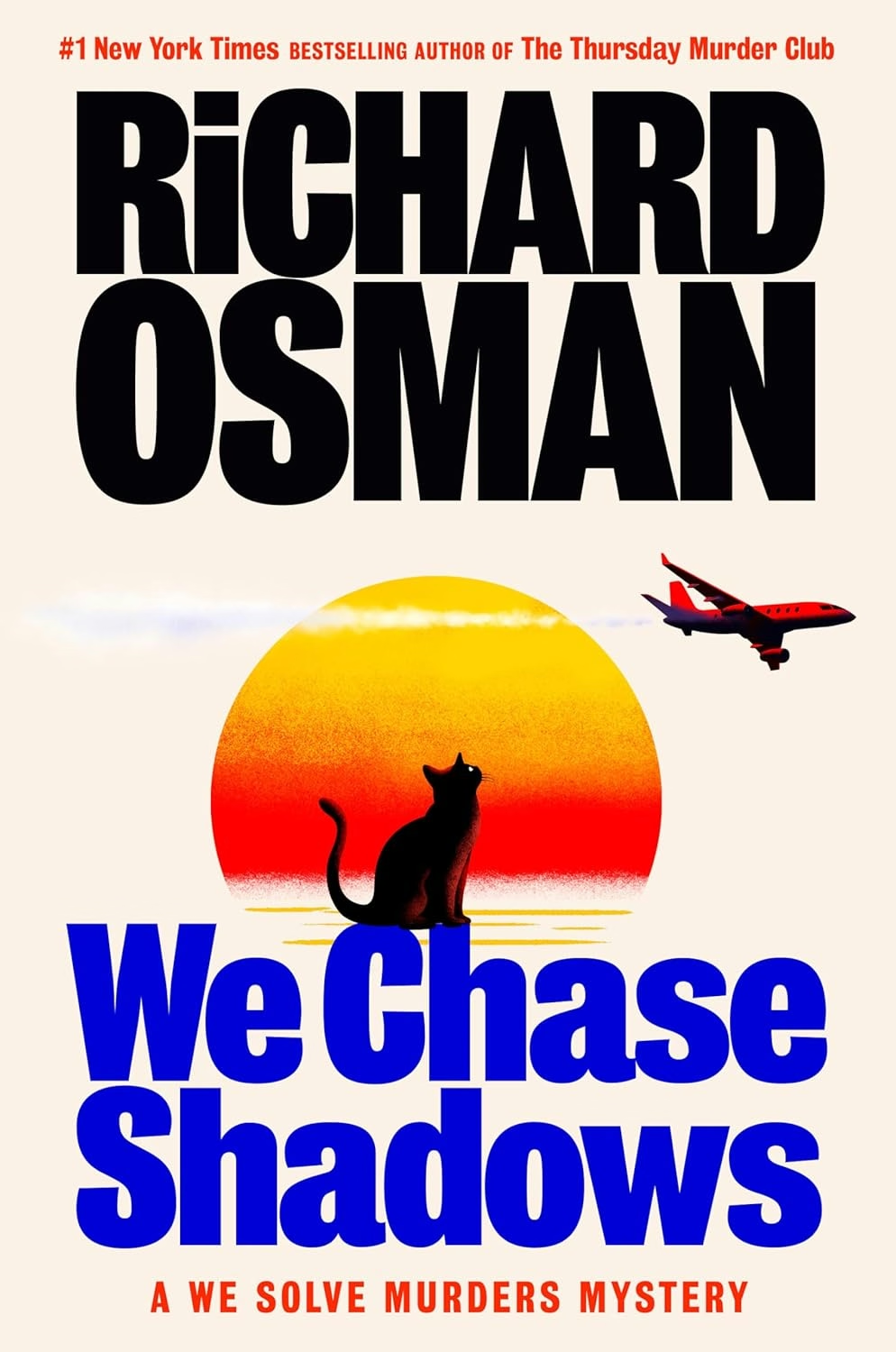
Richard Osman's We Chase Shadows is a globe-trotting mystery thriller that proves the author's second instalment in the "We Solve Murders" series surpasses its predecessor in almost every measurable way. This isn't a cosy mystery masquerading as something grittier—it's a genuinely propulsive detective novel that happens to contain Osman's signature wit and warmth. The question isn't whether this book is worth reading; it's whether you can afford to miss it if you enjoyed the first instalment, or if you're looking for a mystery series that actually delivers on its promises.
What It's About
Six months into their investigation agency's operation, Amy, Rosie, and Steve finally catch their first real case. When a body appears on the steps of an Italian villa with a threatening note attached, the trio has their opening—but their client, the morally questionable Vern Blackwood, wants to keep the police out of it. What follows is a jet-setting investigation that bounces from Tuscany to Stockholm, Palm Springs to Barcelona, unraveling a conspiracy far more intricate than a simple murder.
The plot moves with genuine momentum. Osman doesn't waste time establishing the case; he trusts readers to understand the mechanics of how his detective agency works and launches immediately into the mystery. This is smart structuring. The globe-trotting element, which could feel gimmicky in lesser hands, serves a real narrative purpose here—each location reveals new suspects, new motives, and new complications.
The Ensemble That Actually Works
What distinguishes Richard Osman's We Chase Shadows from countless other mystery series is the depth of its three protagonists. Steve Wheeler, the retired cop, brings procedural knowledge and street-level pragmatism. Amy, his daughter-in-law, carries the psychological complexity of someone trained in protection work who struggles with intimacy even in her marriage. Rosie, the bestselling author bankrolling the operation, provides both resources and a unique perspective on human behaviour.
These aren't interchangeable detectives. Each character solves problems differently, and Osman demonstrates genuine skill in showing how their different skill sets complement one another. The banter feels earned rather than forced, and the supporting cast—including Troubles the cat, who genuinely contributes to a plot breakthrough—adds texture without overwhelming the narrative.
The introduction of Ernesto Manuelo Santiago de Sousa de Cuellar from Interpol could have been a misstep, but Osman uses this character strategically, adding an international dimension to the investigation without letting him overshadow the core trio.
Writing Style and Pacing
Osman's prose remains accessible without being simplistic. He balances exposition with dialogue effectively, and his dialogue crackles with specificity. A throwaway line about reading bedtime stories "a little less aggressively" reveals character in three words. This economy of language keeps pages turning.
The pacing deserves particular praise. Mystery novels often suffer from middle-section sag, but We Chase Shadows maintains momentum through structural variety. When the investigation stalls in one location, Osman shifts geography. When character work threatens to slow momentum, a new suspect emerges. This isn't random—it's disciplined plotting.
The pop culture references ground the story in contemporary reality without feeling dated. References to Graham Norton and other current touchstones remind readers these characters inhabit our world, not some timeless detective fiction realm.
Where It Excels
The mystery itself holds together. Osman plants clues fairly; attentive readers can see the solution coming, but the journey to that revelation feels earned rather than obvious. The book respects its audience's intelligence without condescending to them.
The emotional stakes work. Amy's marriage to Adam, which exists largely offstage, becomes surprisingly poignant through small moments and revelations. Steve's relationship with his son develops texture. These personal elements prevent the mystery from feeling like a mechanical puzzle.
The international settings feel researched and lived-in rather than generic. Osman clearly knows these places—Lucca, Stockholm, Malaga—and uses specific details to create atmosphere without resorting to travelogue descriptions.
What Doesn't Quite Land
The villain reveal, when it comes, feels slightly rushed. Osman spends considerable energy building multiple suspects, and while the resolution makes logical sense, some readers may feel the final act moves too quickly through its revelations. The book would benefit from perhaps another 30 pages of denouement to fully explore the implications of what the team discovers.
The moral ambiguity around the client, Vern Blackwood, is introduced but never fully exploited. Osman hints at ethical complications around working for someone who operates outside the law, but these tensions dissipate rather than deepen as the narrative progresses. A stronger We Chase Shadows review would note that this represents a missed opportunity for genuine moral complexity.
Some readers expecting the cosy mystery tone of Osman's Thursday Murder Club series may find this entry darker and less whimsical. That's not a flaw—it's a tonal shift—but it's worth noting for readers seeking comfort reading rather than genuine suspense.
Comparison to Similar Works
If you're familiar with Agatha Christie's Miss Marple novels, you'll recognize Osman's debt to that tradition: an ensemble of investigators with complementary skills solving a puzzle. However, We Chase Shadows moves faster and feels more contemporary than Christie's leisurely plotting. Compared to more recent series like Tana French's Dublin Murder Squad novels, Osman's work is lighter but more propulsive—French prioritizes psychological depth and atmospheric dread, while Osman prioritizes momentum and character chemistry.
The book occupies a comfortable middle ground between literary mystery and page-turning thriller. It's not as intricate as a complex whodunit, but it's far more substantial than a typical cosy mystery.
Who Should Read This
Perfect for: Fans of the first We Solve Murders book who want more of these characters. Readers who enjoyed Thursday Murder Club but want something with sharper mystery plotting. Mystery lovers who appreciate ensemble casts over solitary detectives. Anyone seeking an international mystery that doesn't take itself with crushing seriousness.
Skip if: You require absolutely airtight, mathematically perfect plotting. You prefer mysteries set in a single location. You want a darker, grittier detective novel without humor. You're seeking literary fiction that treats crime as a vehicle for psychological exploration rather than narrative entertainment.
The Verdict
Richard Osman has written a mystery that actually works as a mystery while maintaining the character warmth and humor his readers expect. We Chase Shadows improves on its predecessor through tighter plotting, higher stakes, and a more confident handling of its ensemble cast. The globe-trotting structure could have felt scattered; instead, it creates genuine variety and narrative momentum.
Is We Chase Shadows worth reading? Absolutely—particularly if you've invested in the first book or if you're seeking a mystery series that understands the difference between entertainment and frivolity. Osman proves he can write a genuine page-turner without sacrificing character or wit.
Final Score: 8/10
A thoroughly engaging mystery that balances plot momentum with character development, marred only by a slightly rushed final act and unexploited moral complexity.