Category:
Book ReviewsVictorious Review: The Villain Trilogy's Stunning Finale
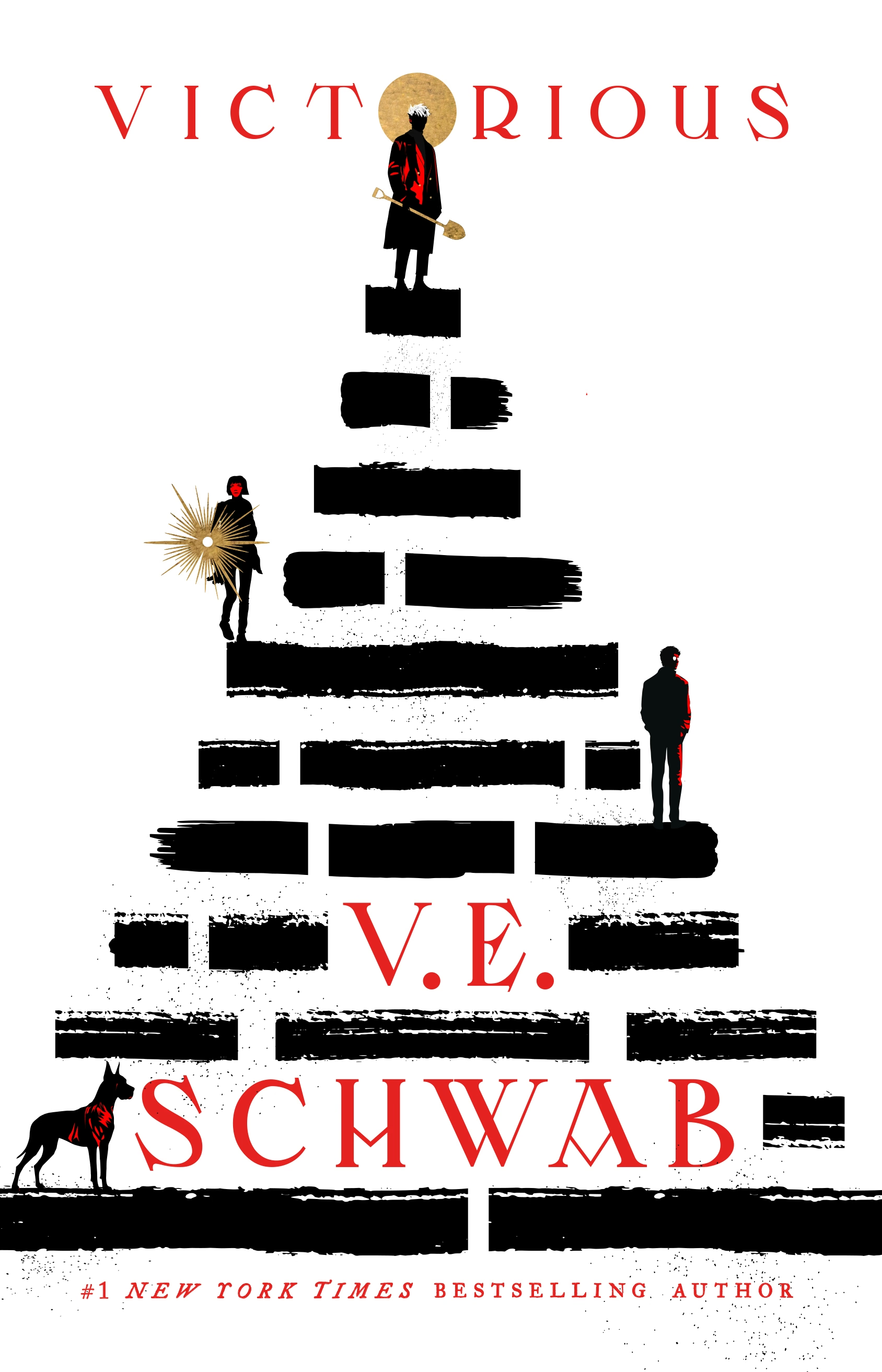
V.E. Schwab's Victorious arrives as the long-awaited conclusion to the Villains trilogy, and it commits fully to what made the first book legendary: the toxic, obsessive dynamic between two men who can't live with or without each other. This is dark academia meets superhero mythology, where the real power isn't in extraordinary abilities—it's in the psychological warfare between characters who've spent years locked in a dance of mutual destruction. After eight years since Vicious and five years since Vengeful, Schwab delivers a finale that doesn't just satisfy; it recontextualizes everything that came before.
Quick Verdict
Victorious is a masterclass in character-driven dark fantasy that justifies its lengthy wait. While it occasionally stumbles with narrative complexity, Schwab's exploration of immortality, obsession, and the cost of extraordinary power reaches new psychological depths. This is essential reading for fans of the series and a surprisingly accessible entry point for those who appreciate morally gray characters and philosophical stakes over plot mechanics.
What You're Actually Getting
This isn't a traditional "good versus evil" conclusion. Victorious reunites Victor Vale and Eli Ever—two ExtraOrdinary individuals whose relationship defies simple categorization—on a supernatural chessboard orchestrated by an opponent neither anticipated. The narrative weaves between multiple perspectives, introducing fresh antagonists while resurrecting beloved (and despised) characters from the previous books. Schwab expands her exploration of what happens when humans gain god-like abilities, moving beyond the psychological breaks and power trips of earlier volumes to examine resurrection, immortality's mental toll, and the strange intimacy of lifelong enemies.
The scope feels deliberately intimate despite its high stakes. This is a book about obsession at its most refined—not the frantic desperation of Vicious, but the settled certainty of two people who've become each other's reason for existing, however twisted that reason might be.
The Writing That Makes This Work
Schwab's prose in Victorious is her most controlled yet. Readers who found Vengeful occasionally difficult to follow will notice an immediate improvement in clarity—the multiple perspectives are easier to track, the timeline less fragmented, the emotional beats more resonant. The author has clearly spent her years away from this universe thinking deeply about how to layer complexity without sacrificing readability.
The book's structure mirrors a chess match, which could feel gimmicky but instead creates genuine narrative momentum. Each "move" feels consequential. Schwab's dialogue crackles with the particular electricity that comes from characters who know each other's vulnerabilities intimately—there's a domesticity to the violence here that's genuinely unsettling in the best way.
What particularly stands out is how Schwab handles the philosophical weight of immortality. Rather than treating resurrection as a plot convenience, she excavates its psychological consequences. Characters who've died and returned aren't the same people—and the book doesn't pretend otherwise. This thematic consistency elevates Victorious from entertaining villain story to something approaching genuine tragedy.
Where It Absolutely Soars
The introduction of the Therapist character is brilliant—ethically questionable, fascinatingly morally complicated, and a perfect foil for Victor's particular brand of control. The dynamic between Victor and Eli reaches heights that justify the eight-year gap; their relationship contains multitudes, and Schwab explores each contradiction without resolving them into comfortable answers.
The ensemble cast shines brighter here than in previous books. Characters like Mitch gain unexpected depth, and returning players feel genuinely recontextualized rather than simply recycled. Schwab proves she can write a complex, layered conclusion that honors both longtime fans and the narrative's internal logic.
The ending itself—without spoiling specifics—demonstrates remarkable restraint. Schwab could have gone for spectacle; instead, she chooses a conclusion that's simultaneously devastating and oddly peaceful. It's the kind of ending that demands immediate rereading.
What Doesn't Quite Land
The expanded cast, while well-developed, occasionally dilutes focus from what makes this series unique: the Victor-Eli dynamic. Some readers may find certain plot threads feel slightly rushed, particularly given the length of the wait between books. The book's philosophical depth, while generally a strength, occasionally tips into territory that might feel self-indulgent to readers seeking more straightforward narrative momentum.
For those who loved Vicious best, Victorious takes a notably different tonal approach. The raw, visceral violence of the first book is replaced by psychological complexity. This is a feature, not a bug, but it's worth noting if you're seeking a return to that particular energy.
Who Should Read This (And Who Shouldn't)
This book is non-negotiable for anyone who's read the previous two Villains books. You're already committed; Victorious rewards that investment completely.
It's also perfect for readers who enjoy:
- Dark academia and morally gray protagonists
- Character-driven narratives over plot-heavy spectacle
- Philosophical explorations of power, immortality, and obsession
- Complex relationships that resist easy categorization
- Schwab's prose style specifically
You should probably skip this if you:
- Need clear-cut heroes and villains
- Prefer straightforward narrative structures
- Found the previous books impenetrable
- Want action-driven fantasy over psychological depth
- Haven't read Vicious and Vengeful (this is emphatically not a standalone)
The Bigger Picture
In the current landscape of dark fantasy and urban fantasy, Victorious stands apart because it refuses to mythologize its characters' capacity for growth. Victor Vale doesn't become good. Eli Ever doesn't achieve redemption. Instead, Schwab examines what happens when extraordinary people remain fundamentally, irrevocably themselves—and suggests that acceptance, not transformation, might be the truest form of resolution.
This approach feels increasingly countercultural in a genre often obsessed with redemption arcs and character rehabilitation. Victorious is darker for refusing that comfort.
Final Verdict
9/10 — Victorious justifies its eight-year wait by delivering a psychologically sophisticated, thematically rich conclusion that honors what made the Villains trilogy essential while pushing its central ideas into genuinely new territory. Is Victorious worth reading? Absolutely—but only if you've already committed to the journey that started with Vicious. For those who have, this is essential. For newcomers, start with the first book and prepare for a trilogy that will redefine how you think about villain stories and what it means to be extraordinary.