Category:
Book ReviewsUltra-Processed People Review: Science-Backed Wake-Up Call
Prices can sometimes be lower on bigger marketplaces, but this link helps independent bookstores and local reading communities.
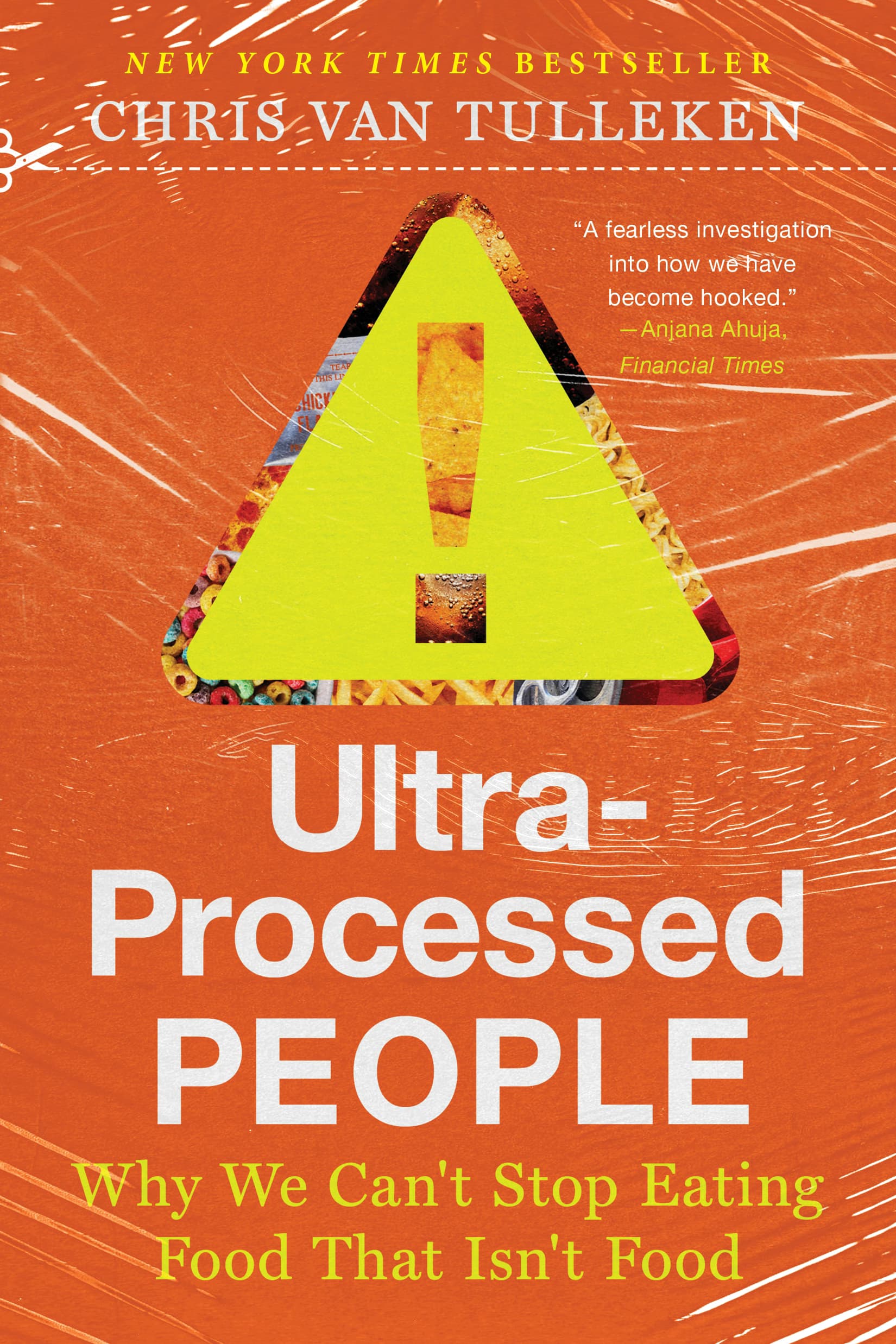
Chris van Tulleken's Ultra-Processed People arrives as something between a manifesto and a scientific intervention—a book that doesn't just criticize what we eat, but exposes the deliberate engineering behind our food cravings. This is essential reading for anyone who's ever wondered why they can't stop at just one ultra-processed snack, yet it's also a book that will make you uncomfortable with every grocery store visit afterward.
The central premise is deceptively simple: ultra-processed food (UPF) isn't food at all—it's an industrially designed edible substance engineered to be addictive. Van Tulleken, a physician and BBC broadcaster, defines UPF with elegant clarity: if it's wrapped in plastic and contains ingredients you wouldn't find in a standard kitchen, it's UPF. But the real power of this Ultra-Processed People review hinges on what van Tulleken does beyond definition—he dismantles the myth that obesity and diet-related disease are matters of personal willpower.
What This Book Actually Does
Unlike typical nutrition books that prescribe restrictive diets, van Tulleken's approach is radically different. He conducts a month-long self-experiment, consuming 80% ultra-processed foods under scientific supervision at University College London—essentially documenting his body's transformation as it becomes subject to corporate food engineering. This isn't theoretical posturing; it's embodied research that forms the narrative backbone of the entire work.
The brilliance of this structure is that van Tulleken doesn't lecture from a position of superiority. He becomes the test subject, allowing readers to witness firsthand how quickly the body adapts to UPF consumption and how profoundly it affects appetite regulation, mood, and physical markers. The experiment forms a compelling through-line that keeps the science grounded in human experience.
Beyond the self-experiment, van Tulleken marshals an impressive arsenal of evidence: conversations with leading academics, agricultural experts, and—most provocatively—food industry insiders themselves. He explores the origins of ultra-processed food, the economics that make it cheaper than fresh alternatives, and the deliberate marketing strategies that target vulnerable populations.
The Science: Addiction by Design
One of the most striking revelations in this book is how food companies have weaponized the brain's reward systems. Ultra-processed foods contain specific combinations of sugar, salt, and fat that activate neural pathways similar to those triggered by addictive substances. This isn't speculation—it's documented neuroscience that van Tulleken presents with appropriate gravity.
The research van Tulleken cites shows that UPF consumption is now linked to the leading cause of early death globally and the number one cause of environmental destruction. These aren't marginal health concerns; they're catastrophic public health failures that have been enabled by regulatory capture and corporate influence over nutritional science.
What makes this particularly damning is that van Tulleken demonstrates how governments, scientists, and medical professionals have essentially allowed transnational food corporations to create a pandemic of diet-related disease. The problem isn't individual consumers lacking discipline—it's systemic manipulation at scale.
Where This Book Succeeds
The Ultra-Processed People review would be incomplete without acknowledging van Tulleken's genuine gift for making complex nutritional science accessible without dumbing it down. His writing moves briskly between personal narrative, scientific explanation, and policy critique without feeling scattered.
The ingredient list analysis that opens many readers' eyes is particularly effective. When van Tulleken deconstructs a seemingly innocent candy bar to reveal dozens of chemical additives and GMO-derived components, the cognitive dissonance is intentional and productive. Readers genuinely confront what "food" means in the modern food system.
The book also avoids the preachy tone that plagues many health narratives. Van Tulleken isn't judgmental about his own month of ultra-processed consumption; he's curious and analytical. This creates space for readers to examine their own habits without shame.
Limitations and Tensions
That said, this book isn't without friction. Some readers find the self-experiment somewhat limited in scope—one month, one person, one body. While scientifically rigorous, the sample size is necessarily small, and van Tulleken is transparent about this limitation. The experiment serves more as illustration than definitive proof.
The policy solutions proposed in the final sections, while grounded in evidence, can feel somewhat abstract compared to the visceral impact of the earlier narrative. Van Tulleken calls for systemic change—regulation, industry reform, agricultural restructuring—but the practical steps individual readers can take feel less developed than the diagnostic work.
There's also a class dimension that the book acknowledges but doesn't fully resolve: for many people, ultra-processed food is the only affordable option. Van Tulleken recognizes this reality, but the solutions don't adequately address how low-income families can realistically shift their consumption patterns when fresh food remains economically inaccessible.
Writing Style and Accessibility
Van Tulleken's background as a broadcaster shows in his prose. The book reads quickly—it's not dense or academic in tone, despite drawing heavily on peer-reviewed research. Short paragraphs, vivid examples, and a conversational rhythm make this accessible to readers without nutritional science backgrounds.
The structure moves logically from problem diagnosis to historical context to personal experiment to policy proposals. This progression gives the book momentum and prevents it from becoming a static list of grievances.
Who Should Read This
This book is essential for anyone struggling with food cravings, weight management, or energy levels. It's particularly valuable for parents concerned about their children's eating habits—van Tulleken's data on UPF consumption among young people is sobering.
Healthcare professionals, particularly GPs and nutritionists, will find this useful for understanding the systemic barriers their patients face when trying to eat well. Policymakers interested in public health should read this as a case study in how corporate interests have captured food regulation.
If you're already deeply invested in nutritional science or have read extensively in this space (think In Defense of Food by Michael Pollan or The Case Against Sugar by Gary Taubes), this book largely covers familiar ground, though van Tulleken's personal experiment adds a fresh angle.
Skip this if you're looking for a diet plan or quick-fix solutions. Van Tulleken explicitly rejects the diet industry's framing and offers no meal plans or calorie counts. This is a diagnosis, not a prescription.
The Bigger Picture
What distinguishes this Ultra-Processed People review from surface-level assessments is recognizing that this book functions on multiple levels simultaneously. It's part memoir, part scientific investigation, part policy critique, and part call to action.
The most provocative claim van Tulleken makes—and it's one that lingers long after finishing—is that the solution to ultra-processed food addiction lies not in individual willpower but in systemic change. This fundamentally reframes how we think about obesity and diet-related disease, shifting responsibility from individuals to the food industry and regulatory structures that enable it.
Is Ultra-Processed People worth reading? Absolutely, if you're willing to have your relationship with food genuinely complicated. This isn't a comfortable book, and it's not meant to be. Van Tulleken's central argument—that we've been systematically engineered to crave substances that aren't food—is difficult to unread once you've encountered the evidence.
Final Verdict
8.5/10 — A meticulously researched, compulsively readable investigation that transforms how you understand food, corporate manipulation, and personal agency. Essential for anyone eating in the modern food system, with only minor limitations in scope and policy solutions preventing a perfect score.