Category:
ThrillerTrust No One Review: Ambitious Thriller Undermined by Execution
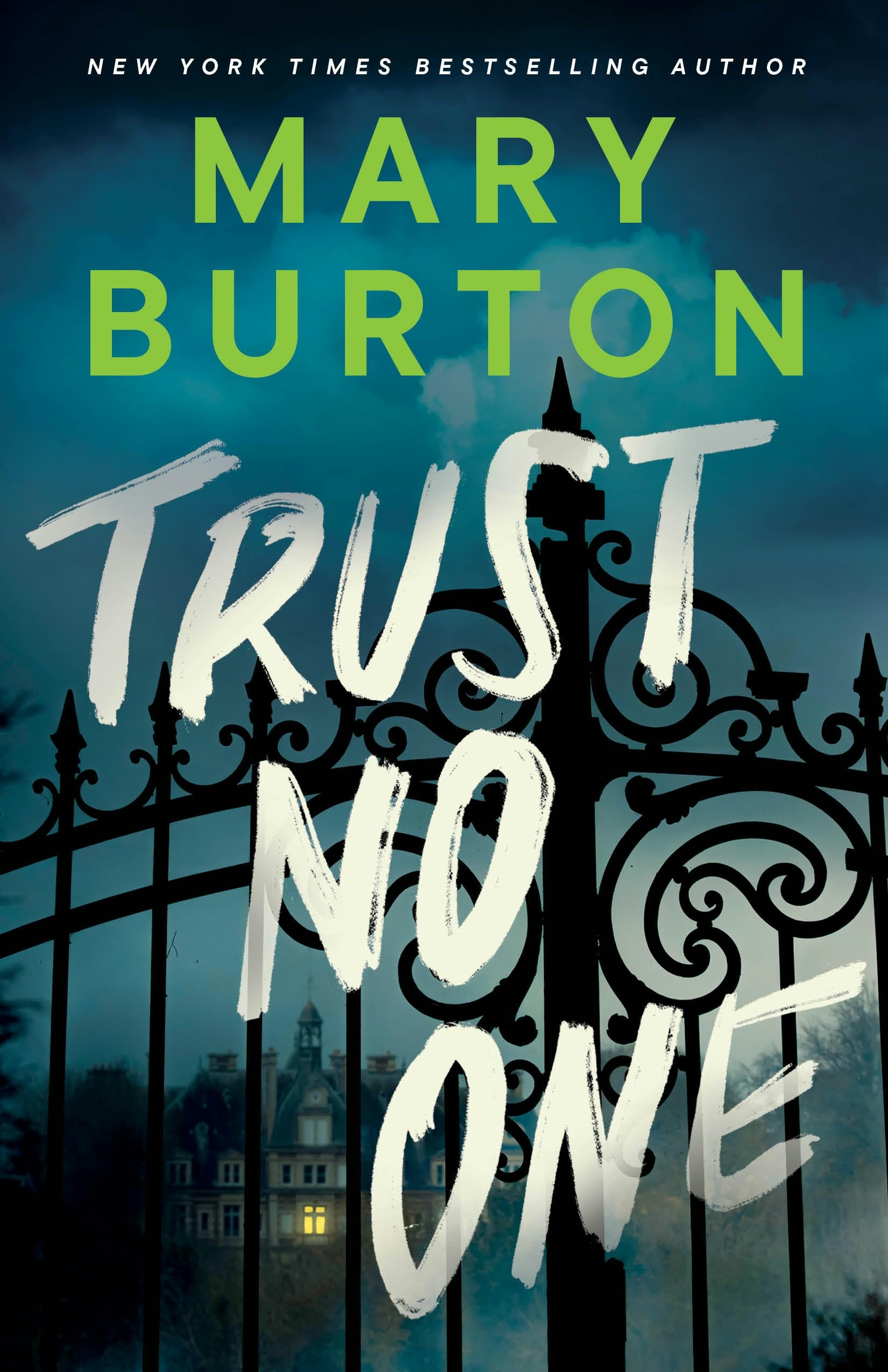
Prices can sometimes be lower on bigger marketplaces, but this link helps independent bookstores and local reading communities.
Mary Burton's Trust No One arrives with genuine promise—a premise that should crackle with tension: a woman returns to her crumbling family estate after seventeen years away, only to find her cousin hospitalized from poisoning, a five-year-old child now in her care, and generations of dark secrets waiting to explode. Yet this psychological thriller reveals a troubling gap between concept and delivery that will frustrate genre fans expecting the propulsive narrative Burton's bestselling reputation suggests.
The core setup is undeniably strong. Raine Hale, a public defender hardened by years defending brutal criminals, arrives at Hale House to discover her estranged cousin Maria poisoned with cyanide. As the sole beneficiary of the crumbling Virginia estate and guardian to young Molly, Raine must navigate a minefield of suspects: Maria's violent, debt-ridden husband; her manipulative ex-husband refusing to sign divorce papers; the lead detective (and former lover) investigating from every angle; and a brutal client recently released from prison who has reason to want her dead. The premise echoes elements of The Inheritance Games by Jennifer Lynn Barnes and The Silent Patient by Alex Michaelides—mysteries layered with family dysfunction and high personal stakes.
What Works: The Bones Are There
Burton deserves credit for constructing a mystery with genuine misdirection. The poisoning itself remains unpredictable enough through the first half, and the stacking of suspects creates legitimate uncertainty about who's actually guilty. The Virginia estate setting provides atmospheric weight, and the notion of buried family secrets literally and figuratively haunting Raine offers thematic richness.
The romantic subplot between Raine and Judson, the detective, provides some readers with genuine satisfaction—particularly those who enjoy the tension between investigator and suspect. Multiple POV narration keeps information asymmetrical, forcing readers to piece together contradictions between what different characters believe they know.
The Critical Problem: Pacing That Kills Momentum
Here's where Trust No One stumbles badly. The first forty percent of the novel is pure setup—introducing characters, establishing Raine's history, detailing the estate's decay—and this exposition overstays its welcome with repetitive scene-building that adds little new information. When the narrative finally accelerates around the halfway point, readers feel genuine relief, expecting the payoff to justify the patience demanded.
Then the ending arrives in a rush. The climactic action sequence that should deliver everything the preceding pages promised occupies less than nine percent of the final manuscript. The contrast is jarring and unsatisfying. Readers who've invested in slow-burn setup deserve a finale that matches that investment in complexity and scope, not a sprint to the finish line.
Character Execution: Where the Novel Loses You
Raine herself proves frustratingly difficult to champion. She's written with clinical detachment—repeatedly making and abandoning coffee without explanation, referring to five-year-old Molly as "the child" with almost anthropological distance, never quite achieving the dimensional humanity a protagonist needs to carry 350+ pages. Despite her professional toughness as a public defender, she makes decisions that contradict her character, including an inexplicable tendency to trust people she demonstrably shouldn't.
The supporting cast fares no better. Characters oscillate between irritating and flat, rarely achieving complexity. Maria's husband reads as a one-note antagonist. The ex-husband functions as plot convenience rather than character. Even Judson, positioned as a romantic interest, lacks the depth needed to make the relationship feel earned rather than obligatory.
Technical Issues That Undermine Credibility
Beyond pacing and characterization, Trust No One suffers from editorial oversights that suggest insufficient manuscript preparation. Continuity errors pepper the narrative—a child's toy transforms from dragon to dinosaur and back again; timelines collapse backward between chapters; basic errors appear, like a character referred to in third person within their own will. These aren't minor quibbles. They signal insufficient editorial oversight on a manuscript that needed substantial revision before publication.
For readers who prize technical polish—particularly those who notice and are bothered by such details—these errors accumulate into a credibility problem that no amount of plot momentum can overcome.
The Cheating Subplot Problem
Multiple infidelity storylines run through the narrative, and this becomes a dividing line among readers. For those with strong negative reactions to marital betrayal in fiction, Trust No One becomes actively unpleasant rather than thrilling. This isn't a minor element but a recurring theme that shapes the emotional tenor of the entire novel. Potential readers who find infidelity triggering should know this upfront.
Who Should Read This
Trust No One is worth reading if you:
- Enjoy mystery setups with multiple suspects and atmospheric family estate settings
- Don't have strong negative reactions to infidelity as a plot device
- Can tolerate slow first halves in exchange for eventual payoff
- Appreciate romantic tension woven through suspense narratives
- Are willing to overlook continuity errors and editorial issues
Avoid this book if you:
- Demand tight pacing throughout (this is not a page-turner)
- Need protagonists you genuinely like and root for
- Are bothered by character inconsistency and weak motivations
- Expect climactic sequences to match the investment of setup
- Have strong reactions to infidelity themes
Is Trust No One Worth Reading?
The honest answer: it depends on your threshold for frustration. The mystery itself—once it finally gets moving—delivers enough intrigue to maintain engagement. The ending, while rushed, does provide a resolution that some readers find genuinely surprising. But the path to that ending is littered with pacing problems, character inconsistency, and technical issues that prevent this from being the assured thriller Burton's bestseller status suggests it should be.
Compared to similar recent releases, Trust No One falls short of The Silent Patient's psychological precision or The Inheritance Games' intricate plotting. It occupies an awkward middle ground where ambition exceeds execution.
The Verdict
Mary Burton's Trust No One is a thriller with compelling bones but flawed execution. The premise deserves a better book than the one delivered. If you're a completist fan of Burton's work or specifically seeking a mystery with romantic suspense elements, you'll find enough here to justify the read. But for readers seeking a tightly plotted, character-driven thriller that maintains momentum throughout, this novel will test your patience more than it will thrill you.
The 4.34-star rating reflects this split response—some readers find genuine satisfaction in the ending and romantic payoff, while others see a promising premise undermined by editorial negligence and structural problems. Your own experience will likely depend on which frustrations matter most to you.