Category:
Book ReviewsTranscendent: A Memoir Review - Raw, Necessary
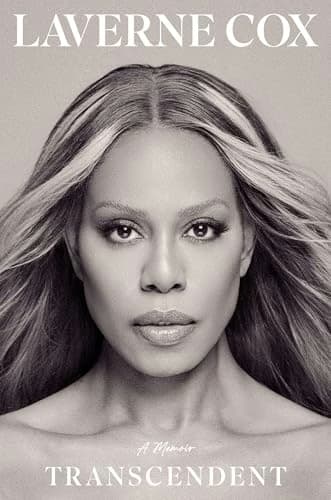
Prices can sometimes be lower on bigger marketplaces, but this link helps independent bookstores and local reading communities.
Laverne Cox's Transcendent: A Memoir is a brutally honest account of survival, visibility, and the cost of representation. This is not a feel-good celebrity memoir dressed up in inspirational language. Instead, Cox delivers something far more valuable: a unflinching examination of what it means to build a life as a Black transgender woman in America, complete with the shame, trauma, and hard-won victories that rarely make it into mainstream narratives.
The book clocks in at just 255 pages, but its impact far exceeds its length. Cox doesn't waste time on filler—every chapter serves a purpose, every reflection builds toward a larger reckoning with identity, belonging, and the price of being seen.
What This Memoir Actually Covers
Unlike typical celebrity memoirs that chronologically march from birth to fame, Transcendent weaves together multiple threads: Cox's childhood trauma in Alabama, her years of struggle as an unknown actress in New York City, her seven-year stint working at a drag restaurant, and the seismic shift that occurred when she booked Sophia Burset on Orange Is the New Black at age forty.
But the real substance lies in Cox's willingness to interrogate her own relationship with visibility and representation. She doesn't pretend that becoming the first openly transgender person nominated for a Primetime Emmy solved her internal struggles. Instead, she explores the paradox of fighting for representation while grappling with internalized shame, body dysphoria, and the loneliness that can accompany sudden fame.
The memoir also contextualizes her personal story within the broader history of transgender rights and cultural attitudes. Cox connects her individual experiences to systemic discrimination, violence, and the evolving language around gender identity. This is a memoir that refuses to be merely personal—it's deliberately political.
The Writing: Direct and Reflective
Cox's voice on the page is conversational without being casual. She writes the way she likely speaks: with precision, vulnerability, and occasional humor that cuts through heavy moments. There's no pretense here, no attempt to smooth over the rough edges of her experience.
What distinguishes this Transcendent review from others is Cox's willingness to sit with contradictions. She explores how she's simultaneously celebrated as a trailblazer and still experiences rejection, discrimination, and the exhaustion of constantly educating others. She doesn't resolve these tensions neatly—she lives in them, which feels more honest than any tidy conclusion could be.
The inclusion of photographs throughout the memoir—from childhood through her rise in Hollywood—adds another dimension. These images ground the narrative in specificity; we're not just reading about her journey, we're seeing it.
What Works Exceptionally Well
The structural honesty. Cox doesn't follow the expected arc of "struggle, then triumph, then happily ever after." Instead, she shows how trauma, healing, and ongoing challenges coexist. This is particularly powerful for readers seeking authentic representation rather than inspirational platitudes.
The specificity of Black transgender experience. Cox centers her identity as a Black trans woman, refusing to let that get flattened into generic "transgender experience." She discusses the particular vulnerabilities, discrimination, and resilience required to survive as a Black trans woman in America. This specificity is rare and necessary.
The behind-the-scenes Hollywood insights. Cox pulls back the curtain on how representation actually works—the compromises, the opportunities that come with strings attached, the way visibility can be weaponized. She doesn't pretend the system is neutral or that individual success solves systemic problems.
The vulnerability about romantic love and belonging. Rather than focusing solely on career achievements, Cox explores her search for romantic connection, her struggles with body image, and her deep-seated feelings of unworthiness. These sections feel particularly brave because they resist the narrative that external success automatically resolves internal wounds.
Where the Memoir Falters
At 255 pages, Transcendent sometimes feels like it's racing through material that could benefit from deeper exploration. Certain relationships and periods of Cox's life get compressed into brief passages when readers might crave more detail. The memoir's brevity is both a strength (it's accessible and moves quickly) and a limitation (some threads feel underdeveloped).
Additionally, while Cox addresses some controversies, she does so somewhat selectively. Readers hoping for a comprehensive examination of every public criticism or debate surrounding her work will find gaps. This is her story told on her terms, which is valid, but it means this is autobiography rather than a complete historical record.
Some readers may also find the spiritual and therapeutic reflection dense in places—Cox clearly has done significant internal work, and sometimes that work is presented in ways that assume a certain familiarity with therapy language or spiritual frameworks.
Who Should Read This
Perfect for:
- Transgender readers seeking representation and validation from someone who has navigated similar terrain
- Cisgender readers genuinely committed to understanding transgender experiences beyond surface-level awareness
- Anyone who admired Cox's work in Orange Is the New Black or her activism and wants deeper context
- Readers interested in memoirs that blend personal storytelling with cultural history and social commentary
- People seeking authentic accounts of survival, healing, and the ongoing work of self-acceptance
Probably not for:
- Readers seeking an exclusively positive, feel-good narrative without difficult content
- Those looking for a comprehensive Hollywood tell-all with extensive industry gossip
- Readers uncomfortable with discussions of trauma, discrimination, mental health, and violence
- People seeking a traditional chronological celebrity biography
How It Compares to Similar Works
If you've read Caitlyn Jenner's The Secrets of My Life, you'll notice the fundamental difference immediately. Where Jenner's memoir sometimes centers celebrity and privilege, Cox's Transcendent centers survival and systemic inequality. Cox doesn't have the luxury of assuming acceptance; she's writing from a place of ongoing struggle.
Compare it instead to Janet Mock's Redefining Realness, another powerful memoir by a Black transgender woman. Both books refuse to separate personal narrative from political context. Both are unflinching about trauma and discrimination. The key difference is that Cox's memoir engages more directly with her relationship to fame and representation as a specific kind of burden and opportunity.
The Verdict
Is Transcendent: A Memoir worth reading? Yes, unequivocally. This is a necessary book—not because it's perfect, but because it's honest. Cox refuses to package her life into an easily digestible narrative of triumph. Instead, she offers something more valuable: a complex, nuanced account of what it means to survive, to fight for representation, and to continue healing even after the world has finally learned your name.
The book's greatest strength is its refusal to pretend that individual success solves systemic problems or that visibility automatically heals internal wounds. Cox shows us that these things coexist: achievement and ongoing struggle, celebration and discrimination, progress and setback.
This memoir will resonate most powerfully with readers seeking authentic representation and those genuinely committed to understanding experiences different from their own. It's the kind of book that generates conversation—not because it's controversial, but because it's honest in ways that demand response.
Final Score: 8.5/10
A powerful, necessary memoir that prioritizes honesty over comfort and specificity over universality—exactly what contemporary memoir should be.