Category:
Book ReviewsThis Shattered Tempest Review: Enemies-to-Lovers Done Right
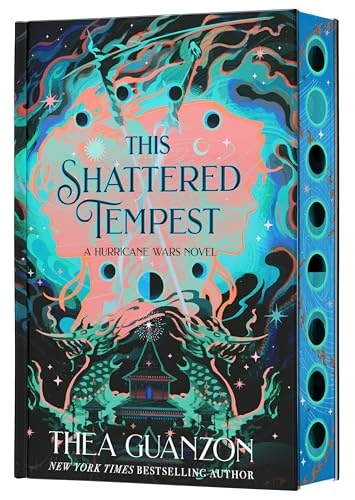
Prices can sometimes be lower on bigger marketplaces, but this link helps independent bookstores and local reading communities.
Quick Verdict
Thea Guanzon's This Shattered Tempest delivers a finale that justifies the hype surrounding the Hurricane Wars trilogy—but only if you're willing to embrace emotional devastation alongside your happy ending. This is a book that polarizes readers sharply: some consider it one of the best romantasy conclusions in recent memory, while others find it repetitive and frustratingly slow. The truth lies somewhere in between, though the scales tip decidedly toward success for anyone who lives for yearning, political intrigue, and characters torn between duty and desire.
What This Shattered Tempest Is Actually About
The final installment picks up the threads left dangling at the end of book two, where Talasyn and Alaric—the Master of the Shadowforged Legion and the last Lightweaver—have just defeated the Moonless Dark together. Their political marriage has transformed into something genuine, but the peace is fragile. A devastating attack shatters their tentative unity, forcing them onto opposite sides of an impending war between their rival nations.
Guanzon structures this conclusion around a deceptively simple question: can love survive when everything else demands you become enemies again? The setup isn't original—enemies-to-lovers has become one of romantasy's dominant modes—but the execution here transcends formula. The political stakes feel genuinely consequential, not just window dressing for the romance.
The Enemies-to-Lovers Dynamic That Actually Works
Here's where This Shattered Tempest distinguishes itself from countless other romantasy entries. The tension between Talasyn and Alaric isn't manufactured through convenient misunderstandings or withheld information. Their conflict emerges from irreconcilable political positions and genuine moral disagreements. They can't simply communicate their way out of this—the problem is structural, baked into the world itself.
This creates the kind of push-pull dynamic that feels earned rather than contrived. When they're apart, you feel the absence. When they're together, the attraction crackles with the weight of everything they're sacrificing. The physical chemistry never overshadows the emotional complexity; instead, it amplifies it. Their yearning feels tangible because it's rooted in real consequence.
The series has always excelled at this particular tension. What distinguishes the third book is how Guanzon escalates the stakes to their breaking point. Around the midway mark, when everything comes to a head, the emotional devastation hits hard enough to make you physically uncomfortable. That's intentional craftsmanship, not accidental melodrama.
Where the Writing Soars
Guanzon's prose in the high-tension sequences is genuinely gripping. The political machinations feel complex without becoming incomprehensible. The action sequences—particularly those involving dragons and magical combat—have real weight and consequence. Character decisions make sense even when you wish they wouldn't; the logic of their choices is transparent, which makes the heartbreak more acute.
The redemption arc that unfolds in the final quarter is particularly well-handled. Rather than simply forgiving past betrayals, the characters must actively earn their second chances. This requires vulnerability and genuine transformation, not just a convenient resolution. The meaningful moments of reconciliation feel hard-won rather than handed over.
The ending itself manages something genuinely difficult: delivering a satisfying happy ending without negating the real damage that's been done. Guanzon doesn't erase the pain; she acknowledges it as the price of their love story.
The Legitimate Criticisms
Not everyone will connect with this book, and there are valid reasons why. Some readers find the middle section repetitive—the same emotional beats recycled through slightly different scenes. The dialogue in certain stretches does become cyclical, circling around the same conflicts and confessions without forward momentum. If you're the type of reader who needs constant plot progression, you may find yourself frustrated.
There's also the question of whether the enemies-to-lovers framework inherently limits what this series can do. Once the hatred phase passes, maintaining tension requires either conflict or secrets. Guanzon relies heavily on both, which some readers experience as artificial obstacle-stacking rather than organic storytelling. The criticism isn't unfounded—it's a genuine structural choice with legitimate drawbacks.
For readers coming to this book without a refresher on the previous installments, the worldbuilding terminology and political landscape require some untangling. The book assumes familiarity; it doesn't hold your hand. This works if you've been invested in the series, but it could alienate new readers attempting to jump in here.
Who Should Read This (And Who Shouldn't)
Read This Shattered Tempest if you:
- Love the enemies-to-lovers trope and appreciate when authors commit fully to the emotional consequences
- Enjoy romantasy that balances romance with genuine political stakes (think The Shadows Between Us meets An Enchantment of Ravens, but with higher emotional stakes)
- Want a trilogy conclusion that actually earns its happy ending rather than rushing toward it
- Appreciate yearning, angst, and characters who actively fight through their own damage
- Have read the first two books and want closure
Skip it if you:
- Found the previous books in the trilogy underwhelming
- Prefer fast-paced plots over emotional introspection
- Are fatigued by enemies-to-lovers as a narrative framework
- Need constant external conflict to stay engaged
- Dislike when romance novels prioritize emotional complexity over plot momentum
The Verdict on Whether It's Worth Reading
Yes, This Shattered Tempest is worth reading—but with caveats. If you've invested in Talasyn and Alaric's journey across two previous books, this conclusion respects that investment. Guanzon delivers on the promise of their relationship, even if the path there is emotionally brutal. The final quarter alone justifies the entire trilogy's existence.
However, if you're approaching this as a standalone or without strong attachment to the characters, you'll likely find it frustrating. This is a book designed for readers who have been waiting specifically for this couple's resolution, not for casual romantasy consumers looking for a quick fix.
Thea Guanzon has established herself as an author worth following. This Shattered Tempest confirms what the first two books suggested: she understands how to write characters who feel real, whose choices matter, and whose emotional arcs resonate beyond the final page. Whether this particular book lands for you depends entirely on your tolerance for yearning-heavy narratives and your investment in the series.
Final Score: 8/10
A satisfying trilogy conclusion that delivers genuine emotional payoff, though the middle section's repetition and the inherent limitations of the enemies-to-lovers framework prevent it from reaching the heights of the best romantasy available.