Category:
Book ReviewsThirst by John Robins Review: Brutally Honest
Prices can sometimes be lower on bigger marketplaces, but this link helps independent bookstores and local reading communities.
Quick Verdict
Thirst: Twelve Drinks that Changed My Life by John Robins is a memoir that refuses to sanitize addiction. This isn't a cautionary tale wrapped in self-pity—it's a raw, darkly funny excavation of one man's relationship with alcohol that doubles as a penetrating examination of why we drink at all. If you're looking for a book that treats sobriety as both tragedy and liberation, this delivers.
What This Book Actually Is
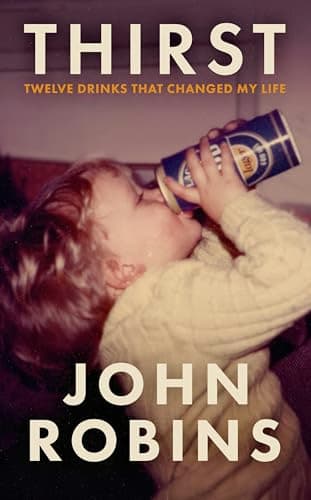
John Robins, the Taskmaster champion and broadcaster best known for his podcast work, structures his memoir around a deceptively simple premise: trace a life through the drinks that defined it. But calling Thirst a straightforward addiction narrative misses what makes it remarkable. Robins uses alcohol as a lens to examine decades of his own behavior—from pretending to be drunk at five years old to his final drink in 2022 and the sobriety that followed.
The book spans everything from university nights spent alone with red wine to the slow realization that something fundamental was broken. What distinguishes this approach is that Robins refuses the redemption arc that readers expect from recovery memoirs. Instead, he offers something messier and more honest: a man genuinely uncertain whether he was born an alcoholic or made one, and more importantly, whether that distinction even matters.
The Writing: Sharp, Unflinching, Funny
Robins' trademark voice—which listeners of his long-running podcast already know—translates brilliantly to the page. The prose is conversational without being lazy, digressive without losing focus. He'll move from a devastating observation about loneliness to a genuinely hilarious tangent (the book's subtitle question about Buddhist solutions to hemorrhoids isn't a joke; it's genuinely there) without the tonal whiplash feeling forced.
What's most striking about John Robins' Thirst is the steadiness of its tone even when describing genuinely painful material. Readers consistently note that the book maintains this balance between humor and heartbreak—never tipping into self-pity, never becoming preachy. The writing feels like sitting with someone who's thought deeply about their own damage and decided to tell you the truth about it, digressions and all.
The structure—organizing a life around specific drinks and drinking moments—could feel gimmicky. Instead, it becomes a powerful organizing principle that lets Robins explore how alcohol functions differently at different life stages. A glass of champagne at five means something entirely different from red wine alone at twenty-five, which means something different again from the final drink at forty.
What Works: The Brutal Honesty
The book's greatest strength is its refusal to flinch. Robins examines not just the drinking itself but what the drinking was covering up: loneliness, anxiety, the gap between who he wanted to be and who he actually was. He interrogates the specific fantasy that alcohol sells—the belief that tonight, this drink might be the one that finally delivers what you're looking for.
He's equally honest about the absurdity of his own behavior and the genuine damage underneath it. This combination—taking yourself seriously while refusing to take yourself too seriously—is harder to pull off than it sounds. Most addiction memoirs either lean too far into tragedy or use humor as a shield. Robins does neither.
The book also tackles something rarely discussed in recovery literature: the role of drinking culture itself. Robins asks difficult questions about how society creates space for one kind of drinking while criminalizing another, and how that gap makes it genuinely hard to figure out when you've crossed a line. For anyone who's grown up around alcohol—whether as a drinker or an observer—this context feels essential.
The tenderness running through the book is another revelation. Beneath the humor and self-awareness, Thirst is a story about vulnerability and the long, slow business of telling yourself the truth. Robins writes about the people he loves with genuine warmth, and that emotional honesty grounds the entire narrative.
What Doesn't Quite Land
A few readers note moments where Robins tips into melodrama or self-pity, though notably, he's aware of this tendency in himself. The book occasionally feels like it's trying to be too many things at once—memoir, addiction study, philosophical inquiry, comedy—and there are moments where the balance wobbles slightly.
Some readers approaching this as a traditional recovery narrative might find themselves frustrated. Robins doesn't offer a neat roadmap to sobriety or a definitive answer to "what is an alcoholic?" If you're looking for a self-help framework or a step-by-step guide, this isn't it. The book is more interested in questions than answers, which is either its greatest strength or its central limitation depending on what you need from it.
The audiobook version, which several readers praise, might actually be the superior experience—Robins' delivery adds another layer to the humor and the vulnerability. If you're considering which format to choose, that's worth considering.
Who Should Read This
This book is essential for:
- Anyone with a complicated relationship to alcohol, whether you drink heavily, moderately, or not at all
- Readers interested in addiction and recovery who want something beyond the typical twelve-step narrative
- People who grew up around alcoholics and are trying to understand the inheritance they received
- Fans of honest, unflinching memoir that doesn't apologize for being messy
- Listeners of Robins' podcast work who want to understand the psychology beneath his comedy
This book is probably not for:
- Readers seeking a straightforward self-help framework
- Those uncomfortable with frank discussions of mental health and addiction
- Anyone looking for a traditional redemption arc with clear resolution
- Readers who prefer their memoirs to maintain emotional distance
The Broader Context
Memoir about addiction and recovery has become a crowded genre in recent years, with books ranging from Russel Brand's Recovery to Holly Whitaker's Quit Like a Woman. What distinguishes John Robins' Thirst is its refusal to offer a unified theory of addiction or recovery. Instead, Robins uses his own experience as a launching point for genuine inquiry.
The book also arrives at a moment when conversations about alcohol are shifting. Recent research suggests younger generations are drinking less than their predecessors, yet alcohol-related deaths continue rising. The cultural mythology around drinking—the idea that it's inherently tied to fun, sophistication, or maturity—persists even as the consequences become harder to ignore. Robins' examination of how that mythology operates in individual lives feels timely.
The Real Achievement
What makes this Thirst review worth reading is understanding what Robins actually accomplishes: he writes about addiction without romance, about recovery without triumphalism, and about sobriety without suggesting it's the only valid choice. He's honest about the genuine appeal of drinking—the escape it offers, the permission it grants—while also being clear about what it costs.
The book's power comes from this refusal to simplify. Robins acknowledges that he might have been "born" an alcoholic or "made" one, and he recognizes that the answer doesn't change much. What matters is what he does now. That's a mature, unsentimental approach to a topic that usually invites sentimentality.
Readers consistently return to how moving this book is—not in a manipulative way, but in the way that genuine honesty can be moving. One reader mentions wanting to highlight nearly every passage. Another, who grew up with alcoholic parents, found themselves crying multiple times while also laughing frequently. That combination of emotional impact and intellectual engagement is rare.
Is Thirst Worth Reading?
Yes, absolutely—but with the caveat that you need to know what you're getting. This isn't a comfort read or a straightforward recovery story. It's a genuinely thoughtful examination of addiction, drinking culture, and what it means to change your life. John Robins has written something that feels both deeply personal and broadly relevant, which is exactly what the best memoirs do.
The book's 4.39-star rating across thousands of readers suggests something that works for most people who approach it with the right expectations. Those expectations are: you're reading a smart, funny, deeply honest man thinking through the most difficult parts of his own life. If that sounds valuable to you, Thirst delivers.
Final Score: 8.5/10
A brutally honest memoir that treats addiction and recovery with the complexity they deserve—funny, moving, and genuinely thought-provoking.