Category:
Book ReviewsThe Witch Review: McFadden's Most Atmospheric Work Yet
Prices can sometimes be lower on bigger marketplaces, but this link helps independent bookstores and local reading communities.
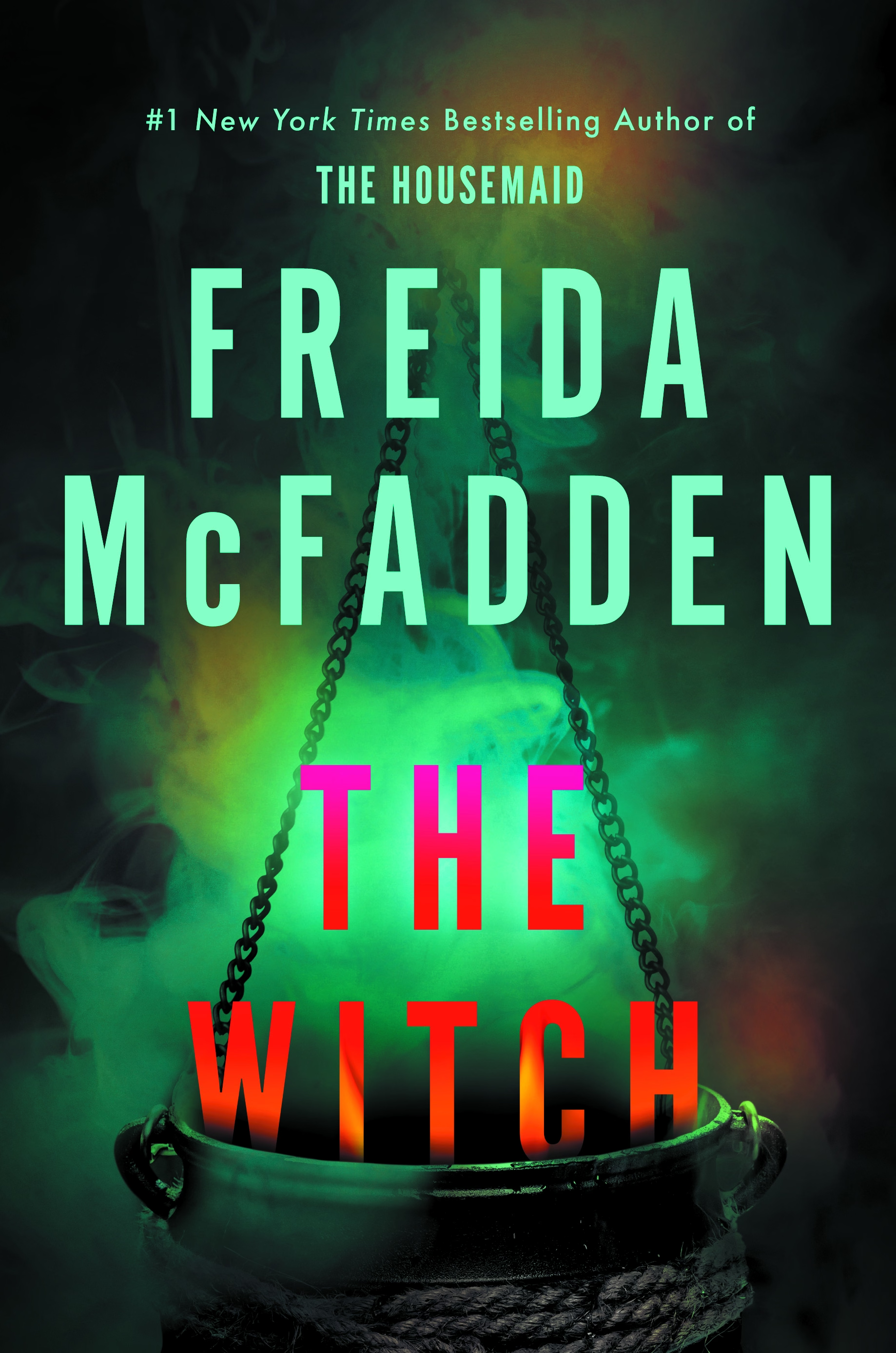
Freida McFadden's The Witch is a paranormal thriller that splits opinion sharply—and that's precisely what makes it worth your time. This 2024 release marks a noticeable departure from McFadden's signature psychological suspense formula, trading relentless page-turning momentum for something more atmospheric and historically grounded. The result is either her most accomplished work or a frustrating departure, depending entirely on what you want from a thriller.
What The Witch Actually Delivers
The premise is deceptively simple: Julia Barlow returns to Pemberton, her family's sprawling seventeenth-century Massachusetts estate, ostensibly to care for her aging grandmother. What unfolds is a dual-timeline narrative weaving between Julia's present-day encounters with supernatural phenomena and the harrowing story of Caroline, a woman accused of witchcraft during the 1692 Salem trials.
The house itself becomes the true protagonist. McFadden spends considerable effort establishing Pemberton as a decaying, musty character—creaking floorboards, a grandfather clock that stops at 3:41 a.m. every night, disembodied cries outside bedroom doors. This isn't subtle haunted-house staging; it's environmental storytelling that actually works. You can practically smell the neglect seeping from the pages.
What makes Freida McFadden's The Witch distinctive is its willingness to slow down. Unlike The Housemaid or Never Lie, which propel readers forward through relentless reveals, this novel asks you to sit with dread. The pacing is deliberate, almost Gothic in its sensibilities. For readers fatigued by the breakneck velocity of contemporary thrillers, this atmospheric shift feels refreshing.
The Two Timelines: Uneven Power
The dual narrative structure reveals McFadden's strengths and weaknesses simultaneously. Caroline's 1692 storyline carries significantly more weight than Julia's present-day investigation. Caroline emerges as a character of quiet righteousness and barely contained rage—a woman trapped by circumstance and the hysteria of her community. Her narrative taps into something primal about the witch trials as a metaphor for silencing women's voices.
Julia's timeline, by contrast, takes longer to establish genuine stakes. The first half moves glacially, with little to compel readers beyond atmospheric dread. Julia herself reads as somewhat passive initially, observing supernatural events rather than driving the narrative forward. This creates an uncomfortable imbalance—readers find themselves more invested in the 1692 plot, which raises questions about whether McFadden intentionally wanted Julia's story to feel secondary or simply misjudged the pacing.
Writing Style: The Divisive Element
Here's where The Witch review scores become genuinely polarized. McFadden adopts a noticeably different prose style than her previous work. The historical sections employ simplified, almost sparse dialogue that some readers find authentic to the period while others perceive as stilted. This isn't the propulsive, immediate voice of The Housemaid—it's more restrained, more literary.
The language in Caroline's timeline occasionally veers into awkwardness. Dialogue doesn't always land with the punch McFadden intends, and there are moments where the historical setting feels more like a costume than lived experience. However, this stylistic departure also represents genuine growth. Readers note a marked reduction in McFadden's previous reliance on repetitive descriptions and heavy-handed foreshadowing. The prose feels more controlled, even when it doesn't entirely succeed.
The Supernatural Elements: Hit or Miss
McFadden leans heavily into paranormal horror here, and the execution divides readers sharply. The supernatural occurrences—hauntings, manifestations, the sense of malevolent presence—work beautifully as atmosphere-building tools. They're genuinely unsettling when they land.
The problem is consistency. Some readers report that the paranormal elements feel underdeveloped or poorly explained. The supernatural phenomena exist primarily to create mood rather than to function as integral plot mechanics. If you're reading The Witch expecting clear rules about how the haunting operates, you'll be disappointed. If you're reading it for Gothic atmosphere and historical mystery, the ambiguity works in the book's favor.
Plot Twists: Expected Yet Satisfying
The ending generates mixed reactions. Some readers predicted Caroline's fate approximately 40% through the novel, yet found the revelation satisfying anyway. Julia's conclusion arrives with more genuine surprise—McFadden manages a reversal that feels earned rather than manipulative.
The twists aren't jaw-dropping or paradigm-shifting. They're solid, competent plot developments that make sense within the narrative framework. If you're seeking the kind of shocking revelation that fundamentally recontextualizes everything you've read, The Witch won't deliver that. It offers instead a resolution that feels appropriate to the story McFadden chose to tell.
How The Witch Compares to Similar Work
If you've read The Housemaid, expect something markedly different. The Housemaid is a psychological pressure cooker; The Witch is a Gothic mystery. The comparison most readers make is apt: this novel feels more aligned with paranormal historical fiction than with McFadden's typical psychological thriller territory.
Think Mexican Gothic rather than Gone Girl—atmospheric, historically conscious, willing to prioritize mood over momentum. That positioning helps explain why some McFadden devotees feel disappointed. They came for psychological manipulation and got atmospheric haunting instead.
The Character Problem
Beyond Julia and Caroline, the supporting cast struggles. Secondary characters often feel functional rather than fully realized. Jonas, Julia's love interest, carries predictable archetypal weight. The grandmother exists primarily as plot device. This isn't unusual in thrillers, but it's noticeable in The Witch because the novel slows down enough that we might expect deeper characterization.
The focus on Julia and Caroline's parallel experiences means other voices remain underdeveloped. This works narratively but limits the emotional complexity available to the story.
Who Should Actually Read This
Perfect for: Readers seeking atmospheric paranormal fiction over high-velocity plot twists. Those interested in witchcraft history and the Salem trials from a fictional angle. Anyone fatigued by McFadden's previous formula who wants to see her experiment. Gothic fiction enthusiasts. Autumn and spooky-season readers looking for something with literary ambitions.
Skip if: You read McFadden specifically for her psychological thriller mechanics. You need rapid pacing and constant reveals. You dislike slow-burn narratives. You want clear supernatural rules and explanations. You prefer contemporary settings and modern conflicts.
Is The Witch Worth Reading?
Yes—with significant caveats. This is McFadden's most ambitious novel, even if ambition doesn't always translate to execution. The atmosphere is genuinely compelling. The historical narrative carries real emotional weight. The writing demonstrates growth and control.
However, The Witch isn't McFadden's best work; it's her most interesting one. It sacrifices the addictive page-turning quality that made The Housemaid a phenomenon. Some readers will celebrate this evolution. Others will miss the relentless momentum.
The novel works best if you enter it with adjusted expectations—not as a psychological thriller but as paranormal historical fiction with thriller elements. Judge it on those terms, and The Witch delivers something genuinely worthwhile. Judge it against McFadden's previous catalog, and it's more uneven.
Final Verdict
The Witch represents both McFadden's most literary effort and her most divisive. The atmospheric Gothic approach, dual timelines, and willingness to prioritize mood over mechanics mark genuine artistic growth. Yet the uneven pacing, underdeveloped secondary characters, and occasionally stilted dialogue prevent this from being a masterpiece. It's a solid, ambitious thriller that will captivate readers seeking something different from the McFadden formula while potentially frustrating those who loved her previous work.
The supernatural elements enhance rather than define the narrative. The historical timeline carries more weight than the contemporary one. The ending satisfies without shocking. And the house itself becomes unforgettable—a character that lingers long after you've finished the final page.
This is worth reading, especially if you're open to McFadden experimenting beyond her established wheelhouse. Just know what you're getting: atmospheric paranormal mystery rather than psychological thriller.