Category:
Book ReviewsThe Tainted Cup Review: A Masterful Fantasy Mystery
Prices can sometimes be lower on bigger marketplaces, but this link helps independent bookstores and local reading communities.
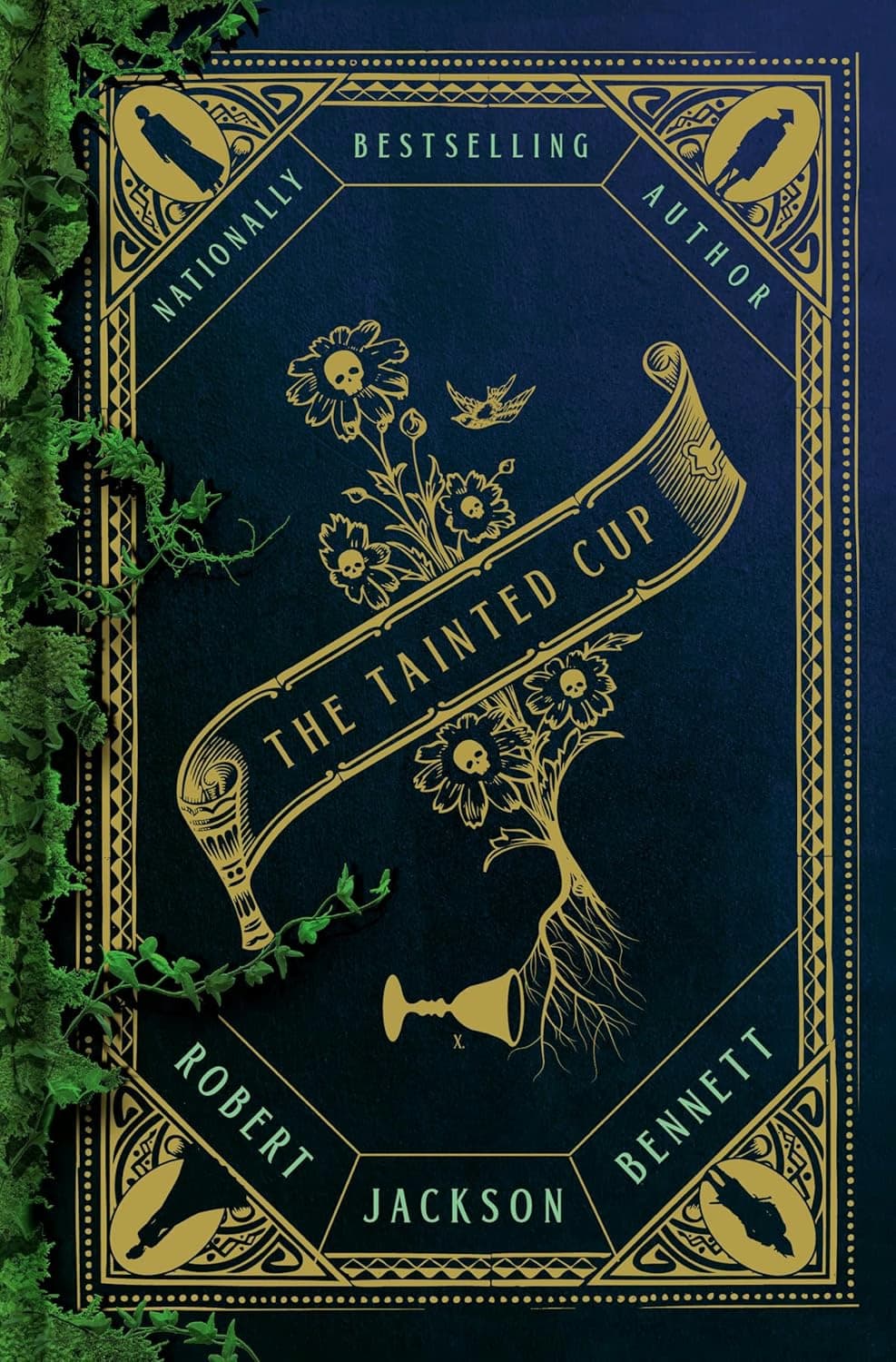
Robert Jackson Bennett's The Tainted Cup is a rare achievement: a fantasy novel that treats mystery as its primary architecture rather than window dressing. This is a book that asks you to think alongside its characters, to gather clues like a detective yourself, and to trust that the author has orchestrated every detail with precision. The verdict is immediate: if you love mysteries with genuine intellectual weight, this deserves your attention.
Bennett has crafted something that feels both timeless and urgently contemporary—a Holmes-and-Watson pairing transplanted into a richly imagined fantasy world where the rules of magic and investigation collide in unexpected ways. But what makes The Tainted Cup review-worthy isn't just its plot mechanics; it's the profound statement the novel makes about neurodivergence, power, and the systems that exploit difference.
What It's About
The setup is deceptively straightforward: an Imperial officer is found dead in Daretana, killed by what appears to be a tree erupting from his body. Impossible. Terrifying. Unexplainable—at least to everyone except Ana Dolabra, the Empire's most brilliant investigator.
But Ana operates by her own rules. She refuses to leave her home. She wears a blindfold at all times. She's hired Din Kol, an engraver magically altered to possess perfect memory, as her literal eyes and ears. Their dynamic is the engine of the novel: Ana's frenzied leaps of intuition paired against Din's methodical documentation of evidence.
What begins as a locked-room mystery spirals outward. The case touches on the Leviathans—vast creatures whose blood carries transformative magical properties—and hints at a conspiracy that threatens the Empire's stability. The investigation becomes a descent into systems of power designed to render certain bodies invisible, exploitable, and ultimately disposable.
The Characters That Make It Work
Ana Dolabra is not your typical detective. She's eccentric in ways that feel earned rather than performative. Her insistence on the blindfold isn't quirk for its own sake; it's a deliberate rejection of visual bias, a way of forcing herself and her assistant to think differently. She takes genuine joy in scandalizing Din, in breaking propriety, in making connections that seem to come from nowhere—until you realize she's been listening to everything, cataloging details others missed.
Din is the perfect counterbalance: competent, grounded, initially skeptical of Ana's methods, but gradually recognizing her genius. His journey from bewilderment to reluctant admiration mirrors the reader's own experience. By the novel's end, he's wrestling with questions about what it means to have your secrets exposed to such piercing intellect.
The supporting cast feels equally deliberate. Every character serves a function in the investigation, but none feel like mere plot devices. They're people with their own contradictions, their own stakes.
Writing & Style: Precision Meets Accessibility
Bennett's prose is clean and propulsive. He trusts readers to keep up without spelling everything out, but he never becomes obscure. The world-building unfolds naturally through investigation—you learn about Daretana's systems of power, its magical infrastructure, its social hierarchies because they're relevant to solving the murder.
The dialogue crackles. Ana and Din's conversations are where much of the novel's humor and tension live. Bennett has a gift for making banter feel both entertaining and meaningful; these exchanges reveal character while advancing the plot.
The pacing is exceptional. This is a book that moves. There's no bloat, no unnecessary tangents. Every chapter builds on what came before, and the mystery genuinely deepens rather than just adding complications.
What Works Brilliantly
The mystery itself is legitimately intricate. This isn't a whodunit where the solution feels obvious in retrospect or where crucial clues are hidden through authorial sleight of hand. The puzzle is fair—all the pieces are there—but assembling them requires the same kind of lateral thinking that Ana employs. Readers who love mystery fiction will find themselves genuinely engaged in solving the case.
The thematic depth. The novel's treatment of neurodivergence isn't decorative. Ana and Din's neurotypes aren't obstacles they overcome; they're fundamental to how they think and investigate. The book explores how systems of power exploit difference while simultaneously rendering different ways of being suspect and dangerous. This resonates in ways that feel urgent and contemporary without ever becoming preachy.
The world-building is subtle but immersive. Bennett doesn't info-dump. Instead, the fantasy world emerges through investigation. The Leviathans, the contagions, the magical transformations—all feel like genuine parts of this society rather than exotic window dressing.
The emotional stakes. By the final act, you care deeply about Ana and Din. The personal and political stakes become intertwined. The resolution carries weight.
Where It Stumbles (Slightly)
If there's a weakness, it's that the novel occasionally prioritizes plot momentum over character interiority. We understand Din and Ana through their actions and dialogue, but there are moments where deeper psychological exploration might have enriched the experience. Some readers seeking more internal monologue or emotional vulnerability may find the approach somewhat clinical.
The ending, while satisfying, might feel abrupt to those expecting a more traditional denouement. Bennett seems more interested in the implications of the mystery's solution than in dwelling on its aftermath. This is a stylistic choice rather than a flaw, but it's worth noting.
The Knives Out Comparison
Multiple readers have drawn parallels to Rian Johnson's Knives Out, and there's validity to the comparison. Both feature eccentric detectives solving intricate mysteries with style. Both prioritize the pleasure of the puzzle. But Bennett's novel operates in a different register. Where Knives Out is theatrical and self-aware, The Tainted Cup is more grounded and thematically ambitious. If you loved Knives Out, you'll likely appreciate this, but it's a different animal—one that integrates its mystery more fully with its fantasy world-building and thematic concerns.
Who Should Read This
Perfect for: Mystery enthusiasts who also love fantasy. Readers who appreciate neurodivergent representation that goes beyond surface-level inclusion. Anyone who enjoyed the detective dynamics in Sherlock Holmes adaptations but wanted something fresher. Fans of intricate plotting who don't mind a slower burn. People who want their genre fiction to have something meaningful to say.
Proceed with caution if: You're seeking cozy mystery vibes—this has darker elements and real stakes. You need extensive internal monologue and emotional processing. You prefer straightforward plots over layered mysteries. You want resolution that ties up every thread neatly.
Is The Tainted Cup Worth Reading?
Yes. Unequivocally. This is one of those books that justifies the hype surrounding it. Bennett has created something that honors the mystery tradition while pushing it in new directions. The Tainted Cup review community has largely recognized this—the book maintains a strong rating across platforms—and for good reason.
It's the kind of novel that makes you want to immediately reread it, knowing you missed details. It's the kind that lingers. It's the kind that makes you trust an author's ability to execute complex ideas without sacrificing readability.
Robert Jackson Bennett's The Tainted Cup is essential reading for mystery lovers and a significant achievement in contemporary fantasy. It's a book that respects your intelligence while entertaining you thoroughly. In an era of increasingly formulaic genre fiction, that's genuinely rare.
Final Verdict
9/10 — A brilliantly constructed mystery that merges intricate plotting with thematic depth, held together by unforgettable characters and prose that never wastes a word.