Category:
Book ReviewsThe Spider Silk Scarf Review: Haunting But Divisive
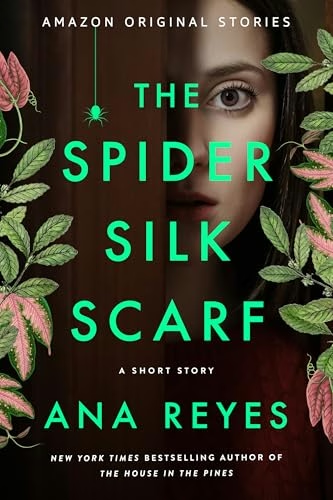
Ana Reyes's The Spider Silk Scarf is a 32-page short story that asks a deceptively simple question: What happens when you steal from a witch? The answer, it turns out, depends entirely on what kind of reader you are. This slim thriller-fantasy hybrid has sparked wildly polarized reactions, with readers either calling it a poetic masterpiece or dismissing it as confusing nonsense. The truth, as with most divisive fiction, lies somewhere in between—and that's precisely what makes this short story worth examining.
Quick Verdict
Ana Reyes's The Spider Silk Scarf is an ambitious, layered short story that rewards close reading but punishes casual consumption. If you appreciate literary ambiguity, symbolism, and dark fairy-tale logic, this is genuinely excellent. If you want straightforward narrative momentum and clear explanations, you'll likely find it frustrating. At 32 pages, it's short enough to take a chance on—but dense enough that you might need to read it twice to understand what actually happened.
What It's About
Nora is a compulsive thief. Not a criminal mastermind—just someone who gets a rush from taking things she can't afford, from nail polish to luxury cognac. Her fiancé Ben doesn't ask questions. Their comfortable life of small cons works until Ben mentions a rumor: their reclusive neighbor, Ms. Martin, supposedly a witch, owns a scarf woven from black widow spider silk. Legend claims it took twelve weavers seven years to create. Only eleven survived.
Nora becomes obsessed. She breaks into the neighbor's gloomy house. What unfolds next defies easy explanation—a descent into something that feels simultaneously real and dreamlike, grounded and supernatural. The story doesn't follow conventional thriller beats. It fractures, loops back, and forces you to reconsider everything you've read.
Writing & Style
Reyes's prose is deliberately ornate and atmospheric. She writes like someone crafting a modern fairy tale, layering sensory details and metaphorical weight onto every scene. This approach creates genuine mood and unease—readers consistently praise the atmospheric quality, describing it as "spooky and creepy" and "mesmerizing." Her language has a poetic cadence that elevates the material beyond typical genre fiction.
However, this same stylistic choice is precisely what alienates readers who want clarity. The narrative jumps between perspectives and timelines without always signposting these transitions. Some readers find this deliberately unsettling; others find it sloppy. The writing quality itself isn't in dispute—it's the purpose of that quality that divides the audience.
What Works: Symbolism and Depth
The Spider Silk Scarf review conversations reveal something crucial: readers who engage with the story's symbolism find it genuinely brilliant. The obsession with stealing, the twelve weavers of which only eleven survived, the connection to a sister's death, the mirror imagery—these elements form an intricate web of meaning about grief, compulsion, and the price of what we desire.
The most insightful readers note that Nora's kleptomania isn't random character quirk but a manifestation of unprocessed trauma. The scarf isn't just a valuable object but a symbol of something she's trying to reclaim or replace. When you read it this way, the story's fractured structure makes perfect sense—it's mimicking a traumatized mind, not failing at coherent plotting.
For readers who appreciate fables, mythology, and psychological depth, this approach is exactly what makes the story work. It's not a conventional thriller with a twist ending; it's a modern myth about the consequences of desire and the nature of loss.
What Doesn't Work: Accessibility and Clarity
The flip side is real: approximately half the readers found The Spider Silk Scarf confusing, boring, or pointless. Some complained the story "didn't make a lot of sense," while others felt it was "too weird" without earning that weirdness through character investment. A few readers noted they couldn't empathize with Nora and therefore couldn't engage with her journey.
The core issue isn't execution but expectation management. Readers picking this up expecting a straightforward supernatural thriller will be disappointed. The story requires active interpretation. It doesn't explain its own logic. It trusts the reader to piece together meaning from fragmented scenes and symbolic resonance. That's not a flaw in the writing—it's a demand the writing makes. Some readers relish that demand; others resent it.
There's also the question of whether the payoff justifies the confusion. Even sympathetic readers acknowledge the story is "weird"—the question is whether that weirdness feels intentional and meaningful or accidental and muddled.
Comparison to Similar Work
If you've read Stephen King's The Girl Who Loved Tom Gordon or Shirley Jackson's The Lottery, you understand the kind of story Reyes is attempting. Like those works, The Spider Silk Scarf uses genre conventions (thriller, fantasy) as a vehicle for psychological and philosophical exploration. The ending doesn't resolve the plot in traditional terms; instead, it recontextualizes everything that came before.
The difference is that King and Jackson have decades of mastery and reader trust behind them. Reyes is asking for that same leap of faith in a 32-page story from readers who may not know her work. Ana Reyes's The Spider Silk Scarf is actually easier to dismiss on first read because there's less time to build investment in her narrative approach.
Who Should Read It
Perfect for: Readers who love literary short fiction, fables, and psychological horror. People who appreciate Reyes's previous novel The House in the Pines and want more of her voice. Anyone interested in stories about grief, compulsion, and the dark side of desire. Fans of atmospheric writing over plot-driven narratives.
Skip it if: You want clear narrative progression and straightforward explanations. You prefer character-driven stories where you understand the protagonist's motivations. You're looking for a quick, entertaining read that doesn't require multiple passes to understand. You've had bad experiences with "weird for weird's sake" fiction.
The Verdict on Whether It's Worth Reading
Is The Spider Silk Scarf worth reading? Yes—but with caveats. At 32 pages, you're not making a massive time investment. The prose is genuinely skilled. The ambition is evident. The story will stay with you, even if you're not entirely sure what it means.
The real question is whether you're willing to meet Reyes halfway. She's not writing a puzzle with a solution you can find. She's writing a dream, and dreams don't always make logical sense. They make emotional and symbolic sense. If you can sit with that ambiguity, you'll find a story that rewards rereading and contemplation.
The polarized reader responses aren't a sign of failure—they're a sign that Reyes took a genuine artistic risk. She wrote something that works brilliantly for some readers and frustrates others. That's not a bug; that's often a feature of work that matters.
Final Score: 7/10
A genuinely ambitious short story that succeeds at what it attempts, even if what it attempts won't work for everyone.