Category:
Book ReviewsThe Sixth Faction Review: A Second Chance That Actually Lands
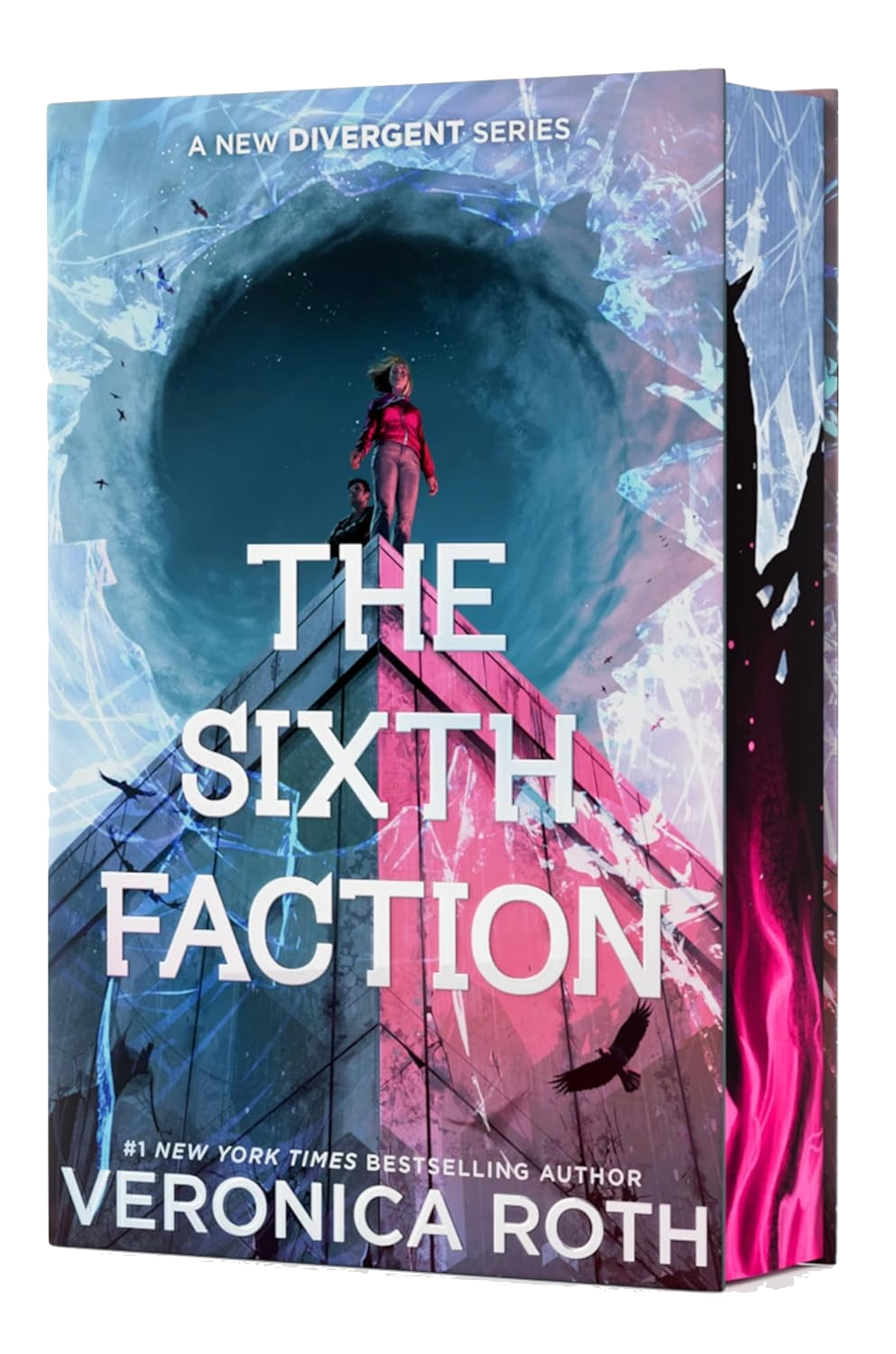
Prices can sometimes be lower on bigger marketplaces, but this link helps independent bookstores and local reading communities.
Veronica Roth's The Sixth Faction isn't a sequel, prequel, or spinoff—it's an alternate-universe reboot of the original Divergent series, and it's exactly the redemption arc fans have been waiting for since Allegiant devastated them a decade ago. This is a bold move from a bestselling author willing to revisit her most controversial work and ask the question that's haunted the fanbase: what if Tris Prior made a different choice?
The Core Concept: A Divergent Universe Reset
Roth takes us back to Beatrice Prior's Choosing Ceremony, but this time, tragedy strikes before she can select Dauntless. The premise is deceptively simple—explore what happens when Tris doesn't become a Dauntless initiate, the decision that launched a thousand fan theories and even more heartbreak. Instead of following the original path, The Sixth Faction branches into uncharted territory while maintaining the faction system that made the original trilogy so compelling.
The "sixth faction" reference is clever. In Roth's world, the Divergent and Factionless exist outside the rigid five-faction structure. This new book seems to be asking whether the system itself is the problem, not just the people within it. That's a more mature thematic concern than the original trilogy grappled with directly.
Writing & Style: A Visibly Evolved Author
Readers who've picked up The Sixth Faction consistently report that Roth's prose has matured significantly. This isn't the same writer who penned the original Divergent back in 2011. The world-building is denser, the descriptions more layered, and the Chicago faction system feels simultaneously familiar and freshly explored.
The pacing balances nostalgia with novelty effectively. Iconic scenes play out with new consequences, and character dynamics shift in ways that feel earned rather than forced. Readers have specifically noted that small changes—like Tris and Caleb being twins in this universe—add texture without invalidating what came before. That's harder to pull off than it sounds.
The writing doesn't feel like fan fiction or a cash grab. It reads like an author who genuinely wanted to revisit her world with greater technical skill and thematic clarity.
What Works: Honoring the Original While Breaking New Ground
The Sixth Faction succeeds where many reboots fail by respecting what readers loved about the original series while refusing to simply rehash it. The faction dynamics, the initiation sequences, and the slow-burn romance elements are all present—but they're recontextualized through a different narrative lens.
The alternate-universe framing liberates Roth from feeling obligated to repeat plot points. Yes, there's an underground rebellion and a boy with dangerous secrets (the "Four" analogue), but the story doesn't march down the same path. Instead, it deepens the systemic critique of the faction structure itself, exploring corruption and control in ways the original trilogy only touched on.
For fans traumatized by Allegiant's ending, there's a psychological relief in knowing this is a different timeline. You can engage with the story without carrying the weight of that particular narrative decision. That's not a small thing—the Allegiant support community that formed online speaks to how deeply that ending wounded readers.
The character work is notably stronger. Tris feels like a fully realized person making different choices based on different circumstances, not a puppet being moved through predetermined beats. The supporting cast has dimension that the original trilogy sometimes sacrificed for plot momentum.
What Doesn't Work: The Lingering Question of Necessity
Here's the honest tension: The Sixth Faction is well-executed, but some readers will still question whether it needed to exist at all. The original Divergent trilogy, ending and all, told a complete story. Roth herself has acknowledged her complicated relationship with this universe. Revisiting it, even in alternate-universe form, raises the question: is this art or commerce?
That skepticism isn't entirely unfair. The timing—releasing a new Divergent book when YA dystopian fiction has evolved significantly since 2013—feels somewhat nostalgic rather than urgent. The Hunger Games, Red Rising, and other series have moved the genre forward. The Sixth Faction is excellent within its framework, but it's not breaking new ground for dystopian YA as a whole.
Additionally, readers who've moved past Divergent entirely may find the faction system feel dated, even with Roth's evolved writing. The premise relies on accepting a very specific world-building logic that feels more grounded in 2011 YA trends than contemporary storytelling.
The romance element, while better integrated than in the original trilogy, still carries some of the same dynamics that sparked criticism about Roth's earlier work. Readers should go in aware of this.
Who Should Read This
Perfect for: Original Divergent fans who felt betrayed by Allegiant, readers seeking closure through alternate outcomes, YA dystopian enthusiasts who appreciate character-driven narratives, and anyone interested in seeing how an author revisits their early work with greater skill.
Proceed with caution: Readers who've completely moved on from the Divergent universe, those skeptical of reboots and alternate timelines, readers seeking groundbreaking new YA dystopian fiction, and anyone who loved Allegiant as-is and doesn't want it recontextualized.
The Verdict: A Surprisingly Satisfying Second Act
The Sixth Faction review consensus suggests this book accomplishes something genuinely difficult: it gives longtime fans a reason to revisit a world they thought was closed, without feeling like a cynical cash grab. Is The Sixth Faction worth reading? If you were wounded by the original trilogy's ending or curious about how different choices ripple through Roth's world, absolutely. If you've moved on completely, this won't change your mind about the Divergent universe—but it might make you reconsider Roth's abilities as a writer.
This is the book fans deserved after Allegiant, even if they didn't realize they needed it. It's the first in a planned duology, and based on this opening, the second book has genuine potential to surprise us.
Final Score: 8/10
Veronica Roth's The Sixth Faction is a competent, engaging alternate-universe reimagining that proves reboots can honor their source material while charting genuinely new territory.