Category:
Book ReviewsThe Secrets We Hide Review: Slaughter's Best Thriller Yet
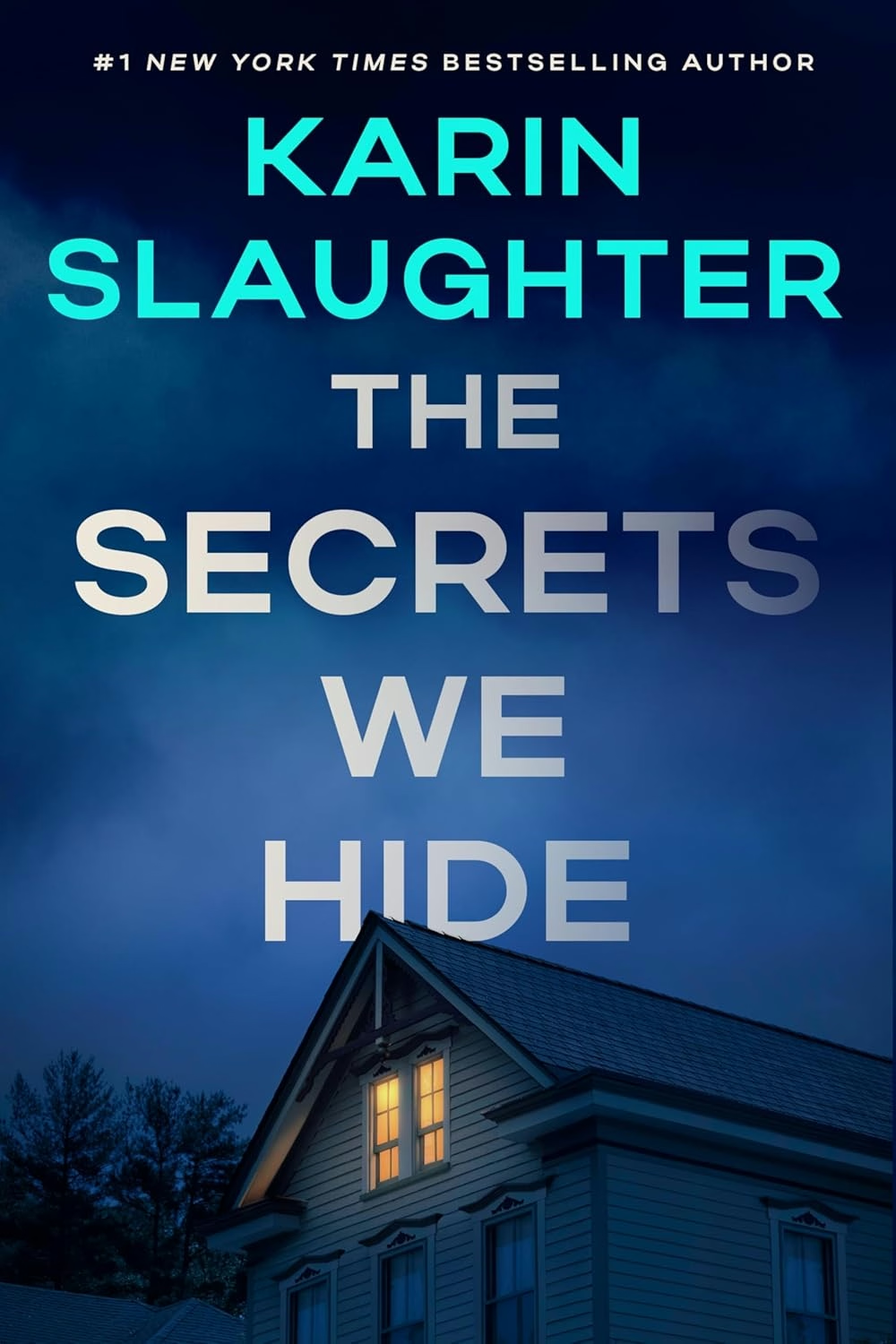
Prices can sometimes be lower on bigger marketplaces, but this link helps independent bookstores and local reading communities.
Quick Verdict
The Secrets We Hide by Karin Slaughter is a masterclass in psychological tension wrapped in a small-town mystery that refuses to play by the rules. This second North Falls novel proves that Slaughter hasn't lost her edge—she's sharpened it. If you've been following her work, this is essential reading; if you're new to her, this is the perfect entry point into why she's dominated bestseller lists for two decades.
What It's About
Welcome to North Falls, where everyone knows everyone but nobody knows the truth. When Allison Vickery is found murdered in her kitchen and her teenage daughter left for dead upstairs, Sheriff Emmy Clifton faces a case that hits dangerously close to home. Allison wasn't just another victim—she was a colleague, a friend, and someone whose life was wrapped in whispered rumors about what happened behind closed doors at 1601 Iris Drive.
The town has already decided who's guilty: Allison's abusive husband. But Emmy knows better. She's learned that small-town certainty is often small-town blindness. With her ex-federal agent sister Jude by her side, Emmy must navigate a labyrinth of family secrets, departmental politics, and personal demons to uncover what really happened. The investigation becomes a pressure cooker where every suspect has motive, every clue contradicts the last, and Emmy's own judgment becomes increasingly unreliable.
The Writing & Style That Works
Karin Slaughter's prose in this novel moves with surgical precision. She doesn't waste words, but she doesn't skimp on atmosphere either. The small-town setting becomes a character itself—claustrophobic, judgmental, and suffocating with the weight of secrets. Her dialogue crackles with authenticity, particularly the banter between Emmy and Jude, which provides crucial breathing room in an otherwise relentless narrative.
What distinguishes The Secrets We Hide review-worthy is Slaughter's ability to shift perspective without losing momentum. Readers follow multiple threads simultaneously—the investigation, Emmy's personal unraveling, family trauma, and the slow revelation of what really happened at that house. It's a technique that could feel scattered in lesser hands, but Slaughter wields it like a conductor managing a complex symphony.
The pacing deserves specific praise. Unlike some mystery novels that frontload exposition, this one maintains genuine momentum. Just when you think you've figured out the puzzle, Slaughter introduces a new wrinkle that forces you to reconsider everything. Readers consistently report the "one more chapter" phenomenon—that addictive quality where you glance at the clock and suddenly three hours have passed.
What Works Brilliantly
The Investigation Itself: This isn't a whodunit where the mystery feels like an excuse for character development. The crime scene genuinely doesn't add up. Slaughter presents clues that seem to point in contradictory directions, and watching Emmy piece together the truth feels earned rather than convenient. The procedural elements ground the story in reality—this feels like actual detective work, with its frustrations and dead ends.
Emmy and Jude's Dynamic: The relationship between these sisters is the emotional core of the novel. Their banter masks deeper wounds, and watching them navigate professional partnership alongside personal baggage creates genuine stakes. The contrast between Emmy's emotional investment and Jude's federal agent pragmatism generates real tension.
Inherited Trauma: Slaughter excels at exploring how family violence echoes across generations. The Vickery family's dynamics mirror patterns in Emmy's own life, creating thematic resonance that elevates this beyond a standard procedural. The novel suggests that abuse doesn't just wound individuals—it poisons entire communities.
Shocking Turns: Without spoiling anything, this novel contains genuine surprises. Not cheap plot twists designed to manipulate, but revelations that recontextualize what you thought you understood. Readers report solving the mystery moments before Emmy does—a testament to Slaughter's fair-play approach to plotting.
Where It Stumbles
Emmy Clifton is a fascinating character, but she's also frustratingly inconsistent. She's written with remarkable psychological complexity—her emotional investment in victims and her constant second-guessing feel authentic to someone who cares too much. But this same quality sometimes undermines her effectiveness as a sheriff. There are moments where her internal spiraling actively prevents her from doing her job, and while this is clearly intentional character work, it occasionally reads as passive rather than active.
The comparison is inevitable: Slaughter has written Amanda Wagner, a force of nature who intimidates through competence and will. Emmy is her opposite—relatable, vulnerable, but sometimes overwhelmed by her own emotions. Some readers will find this refreshing character development; others will find it frustrating, particularly if they're accustomed to Slaughter's more formidable protagonists.
There's also a recurring imagery issue that borders on overuse. Slaughter returns repeatedly to sensations in Emmy's throat—cotton, glass, lumps—as physical manifestations of anxiety. The metaphor works initially, but by the third or fourth iteration, it feels like a tic rather than intentional symbolism. It's a minor quibble in an otherwise tightly constructed novel, but worth noting.
The North Falls Series Context
If you haven't read the first North Falls novel, don't worry—this book functions as a standalone mystery. However, reading them in order enriches the experience. The second book picks up weeks after the first, allowing character development to accumulate naturally. Slaughter clearly has a multi-book arc in mind, and the ending sets up compelling threads for what comes next without feeling like a cliffhanger designed to manipulate.
Who Should Read This
Perfect for you if: You love police procedurals with emotional depth (think Tana French or Gillian Flynn), enjoy small-town mysteries with genuine atmosphere, appreciate complex female protagonists, or want to explore Slaughter's work beyond her Will Trent series. If you've read Pretty Girls or her earlier thrillers, this confirms she's still at the top of her game.
Proceed with caution if: You prefer mysteries where the protagonist is always in control, you're sensitive to depictions of domestic violence and abuse, you find Emmy's emotional vulnerability more annoying than compelling, or you prefer lighter mysteries without psychological depth. This is dark, violent, and emotionally demanding—it's not comfort reading.
Comparing the Landscape
If you're trying to orient yourself: The Secrets We Hide occupies similar territory to Tana French's Dublin Murder Squad series—small-town secrets, unreliable perspectives, and investigations that uncover uncomfortable truths about communities. However, Slaughter leans more heavily into procedural detail and family trauma than French's literary ambitions. It's closer in tone to Gillian Flynn's Sharp Objects, but with less of the sensationalism and more genuine investigative work.
Unlike cozy mysteries or puzzle-box thrillers, this novel doesn't offer neat resolution or cathartic justice. It offers truth, which is messier and more complicated.
The Verdict
The Secrets We Hide by Karin Slaughter is a compelling mystery that justifies its 4.28/5 rating across thousands of readers. Is it worth reading? Absolutely—particularly if you appreciate thrillers that balance plot momentum with character complexity. This Secrets We Hide review arrives at a clear conclusion: Slaughter has crafted a novel that respects both her readers' intelligence and their appetite for genuine suspense.
The book's strength lies not in shocking twists for their own sake, but in the slow accumulation of detail and the dawning realization that the truth is more complicated than anyone wants to admit. Emmy Clifton's journey—both as an investigator and as someone confronting her own demons—feels earned rather than manufactured.
The ending deserves specific praise for resisting easy answers. Slaughter understands that real justice is often incomplete, that family secrets don't dissolve neatly, and that understanding what happened doesn't necessarily heal the wounds it created.
Final Score: 8.5/10
A gripping, psychologically complex thriller that confirms Slaughter's mastery of the genre while introducing a protagonist worth following for years to come.