Category:
Book ReviewsThe Scout Mindset Review: Brilliant Framework, Smug Execution
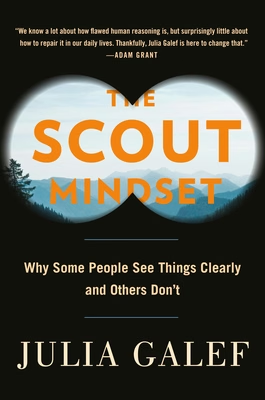
Julia Galef's The Scout Mindset: Why Some People See Things Clearly and Others Don't presents a deceptively simple thesis: most people think like soldiers defending their territory, when they should think like scouts mapping it. The book has become required reading in rationalist circles, earning a solid 4.08-star rating across thousands of reviews. But this Scout Mindset review exposes a tension at the heart of Galef's otherwise compelling work—the framework itself is genuinely useful, yet the way it's wielded often embodies the very smugness it critiques.
What This Book Actually Does
Galef distinguishes between two metaphorical mindsets. The soldier mindset treats beliefs like territory to defend at all costs. You marshal evidence selectively, rationalize contradictions, and dismiss challenges to your worldview. It's tribal, protective, and deeply human. The scout mindset, by contrast, prioritizes accuracy over comfort. Scouts venture into uncertain terrain with genuine curiosity, update their maps when evidence demands it, and feel genuine satisfaction in discovering they were wrong.
This isn't entirely original thinking. Galef herself acknowledges drawing from Daniel Kahneman's Thinking, Fast and Slow, Dan Ariely's Predictably Irrational, and Carol Tavris's Mistakes Were Made (But Not by Me). What she does offer is accessibility and practical application. The book moves beyond abstract cognitive bias theory into territory readers can recognize in their own lives.
The Framework Works—Painfully Well
The strength of Galef's work lies in its concrete examples. She examines how Jeff Bezos avoids overconfidence through deliberate decision-making processes. She explores how superforecasters outperform CIA analysts not through superior intelligence but through emotional discipline. She traces how Reddit threads devolve into tribal warfare, and how pandemic-era politics revealed the soldier mindset operating across the entire political spectrum.
These examples stick because they're relatable. You'll recognize the soldier mindset in yourself within pages. You'll see it in your family WhatsApp groups, your workplace meetings, your own social media arguments. This recognition is the book's greatest strength. Once you internalize the scout-versus-soldier distinction, you genuinely do see the world differently. As one reader noted, the framework becomes "a lens, and once you're looking through it, the world makes a lot more sense."
The practical habits Galef outlines—asking yourself what biases might affect your judgment, seeking out credible counterarguments, distinguishing between "I believe this" and "this is probably true"—are genuinely useful tools for clearer thinking.
Where It All Falls Apart
Here's the uncomfortable truth this Scout Mindset review must address: Galef's book often reads like a manifesto for a particular tribe of rationalists, which is precisely the soldier mindset behavior she's critiquing. There's an inherent irony in a book about avoiding intellectual smugness that frequently comes across as intellectually smug.
The problem isn't the content itself but the tone and the community it represents. When Galef discusses "effective altruism"—the movement she's affiliated with—there's a self-congratulatory quality that undermines her central message. She criticizes people who weaponize phrases like "correlation doesn't equal causation" as conversation-enders, yet the book itself occasionally employs similar rhetorical moves, positioning scout thinking as obviously superior and soldier thinking as obviously inferior.
This becomes particularly apparent in her treatment of disagreement. While Galef advocates for intellectual humility, there's limited exploration of situations where reasonable people, both thinking scoutlike, genuinely disagree. The book sometimes implies that with enough clear thinking, consensus should emerge—a premise that itself reflects a kind of soldier mentality about what "correct thinking" looks like.
Additionally, the book's framing of the "golden mean" as inherently wise glosses over legitimate criticism: sometimes the center position is extreme or wrong. Sometimes passion and conviction, not detached analysis, serve truth better. Galef acknowledges this only briefly, which feels like a missed opportunity for genuine intellectual wrestling.
Comparing to Similar Works
If you've read Thinking, Fast and Slow, you'll recognize much of the cognitive science foundation. Galef's book is more accessible and action-oriented, making it superior for readers seeking practical application. However, Kahneman's work goes deeper into the psychological mechanisms, while Galef prioritizes narrative engagement.
Compared to Mistakes Were Made (But Not by Me), which also explores rationalization and self-deception, Galef's book offers more solutions and fewer dark observations. Tavris and Aronson's work is more psychologically sophisticated in some ways, but less prescriptive. Galef's scout mindset framework is more memorable and easier to apply than Tavris's concept of "cognitive dissonance."
Who Should Read This—And Who Won't
Perfect for: People genuinely interested in improving their reasoning. People who recognize their own biases and want practical tools to counteract them. High school and college students developing critical thinking skills. Anyone frustrated by polarized discourse and seeking a framework for understanding why it happens. Professionals in fields requiring accurate forecasting or decision-making.
Will Struggle with This: Readers sensitive to intellectual condescension. People who've internalized postmodern critiques of "objective truth" and find the book's confidence in scout thinking naïve. Those seeking nuanced exploration of when passion and conviction matter more than detached analysis. Readers already familiar with behavioral economics literature will find the core concepts familiar.
The Writing and Accessibility
Galef writes clearly and engagingly. The book moves quickly, avoiding academic jargon while maintaining intellectual substance. Examples are vivid and memorable. This accessibility is genuinely admirable—Galef could have written a denser, more technically rigorous book, but chose clarity instead. That's a scout move, actually.
The structure works well, with each chapter building on previous concepts. The habit-building section at the end provides actionable takeaways rather than leaving readers with abstract philosophy.
The Uncomfortable Truth
This Scout Mindset review must acknowledge something many readers have noticed: the book's greatest weakness is that its author, despite all her careful reasoning about bias and accuracy, seems genuinely convinced that her worldview—rationalist, effective-altruist-leaning, analytically-focused—represents scout thinking at its best. There's little room for the possibility that other frameworks for understanding the world might also represent legitimate forms of scout thinking.
That said, this doesn't invalidate the book's core insights. The distinction between defensive thinking and truth-seeking thinking is real and valuable. The emotional skills Galef describes—intellectual humility, comfort with uncertainty, genuine curiosity about opposing views—are genuinely worth cultivating.
Is The Scout Mindset Worth Reading?
Yes, with caveats. The framework is useful enough to justify the time investment. You'll gain practical tools for clearer thinking and recognizing your own biases. You'll understand why intelligent people disagree so passionately. The book succeeds at what it sets out to do: make behavioral economics and cognitive science accessible and actionable.
But read it with your own scout mindset engaged. Notice where Galef might be exhibiting soldier thinking herself. Recognize that the book represents one valuable perspective on rationality, not the only one. Some of the book's most important insights—about intellectual humility and the limits of our thinking—are undermined by the certainty with which they're presented.
The irony is that this tension makes the book more valuable, not less. It's a living example of how even well-intentioned, thoughtful people struggle with the very biases they're trying to overcome. That's actually a scout move: recognizing the limits of your own framework.
Final Verdict
The Scout Mindset is a genuinely useful book with a memorable framework that will change how you think about disagreement and belief formation. The practical examples are excellent, the writing is clear, and the core concepts deserve wider adoption. However, the book's execution sometimes contradicts its message, and readers should approach it with the very skepticism Galef advocates for. It's worth reading—just not uncritically.