Category:
Book ReviewsThe Place Where They Buried Your Heart Review
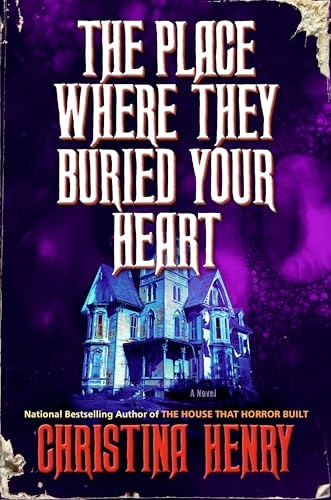
Prices can sometimes be lower on bigger marketplaces, but this link helps independent bookstores and local reading communities.
Quick Verdict
The Place Where They Buried Your Heart by Christina Henry is a masterfully atmospheric horror novel that transcends the haunted house formula by grounding cosmic terror in deeply personal trauma. This isn't just a ghost story—it's a bildungsroman wrapped in dread, where a woman must finally confront the house that devoured her childhood and fractured her family. Henry delivers genuine chills and emotional devastation in equal measure, though the climax stumbles slightly after building such meticulous tension.
What It's About
On a quiet Chicago street sits an abandoned house. The McIntyre house. The house that eats children—or so the neighborhood kids whisper. Years ago, Jessie Campanelli dared her little brother Paul to enter it. He never came out. What follows is a sprawling, multi-generational exploration of how one act of childhood cruelty and one impossible disappearance can poison an entire family, a street, and ultimately a woman's entire adult existence.
Now in her thirties, Jessie still lives on the same street, raising her own son in the shadow of that house. The darkness radiating from it has only grown more malevolent, more hungry. As unexplained disappearances continue and the house's grip tightens, Jessie realizes she can no longer ignore what she's always known: that house is alive, and it's waiting for her.
Writing & Style
Christina Henry's prose in this novel is genuinely excellent. She constructs atmosphere with surgical precision—the kind of slow-burn dread that makes you check over your shoulder while reading in broad daylight. The narrative structure alternates between Jessie's childhood (the incident with Paul) and her adult present, and this dual timeline is handled with skill and purpose. Each flashback deepens our understanding of how thoroughly that single moment defined everything that came after.
The dialogue feels authentic, particularly between Jessie and her son, and the supporting characters—her estranged father, her protective friend Jake, her emotionally unavailable husband Ted—all register as fully realized people rather than horror-novel archetypes. Henry never lets the supernatural elements overshadow the human stakes, which is precisely what elevates this beyond standard genre fare.
What Works Brilliantly
The central concept is genuinely unsettling: a house that doesn't just haunt people but actively consumes them, with a particular appetite for children. But Henry doesn't rely on jump scares or cheap thrills. Instead, she builds a mythology around the McIntyre house that feels earned and terrifying—the revelation of what actually happened inside those walls, and what continues to happen, is genuinely disturbing.
The emotional core of the novel is what truly resonates. Jessie's guilt over Paul, her mother's descent into denial and bitterness, her father's abandonment of the family—these aren't subplots. They're the actual horror. The house becomes a metaphor for trauma itself: something that doesn't disappear just because you stop looking at it, something that grows stronger the longer you pretend it isn't there.
The supporting cast elevates the narrative considerably. Jake, Jessie's childhood friend who also witnessed Paul's disappearance, provides both emotional grounding and a counterpoint to Jessie's paralysis. The dynamic between these two characters—shaped by shared trauma and complicated by time—feels authentic and heartbreaking.
What Doesn't Quite Land
Here's where this The Place Where They Buried Your Heart review must acknowledge the book's genuine stumble: the climax is rushed. After nearly 400 pages of meticulous tension-building, the actual confrontation with the house and whatever entity dwells within it resolves in what feels like minutes. The solution arrives almost too neatly, and the final confrontation lacks the weight and complexity that precedes it.
Adult Jessie, while sympathetic, is considerably less compelling than teenage Jessie. Much of adult Jessie's characterization revolves around her identity as "mother" and "watcher of the house," which serves the thematic purpose but sometimes leaves her feeling reactive rather than actively driving the narrative. Her husband Ted is similarly underdeveloped—he's functional to the plot but never quite becomes a fully dimensional character.
There are also moments where the horror elements feel slightly at odds with the domestic realism. The book works best when the supernatural dread emerges from everyday situations; when Henry leans too heavily into cosmic horror descriptions, the intimate character work gets momentarily crowded out.
The King Comparison (And Why It's Apt)
If you've read Stephen King's It or The Body, you'll recognize the DNA here. Like King, Henry understands that the most effective horror emerges from the collision of childhood innocence with genuine evil. She captures that same bittersweet quality—the nostalgia mixed with dread, the found family dynamics, the way traumatic events reshape entire life trajectories. But where King often sprawls across 1,000+ pages, Henry is more economical. This novel is tighter, more focused, and occasionally more devastating because of it.
Who Should Read This
Perfect for: Horror readers who want genuine atmosphere over gore, fans of character-driven narratives who don't mind the supernatural, anyone who loved The House That Horror Built or similar contemporary haunted house fiction, readers who appreciate the Stephen King approach of trauma-as-the-real-monster.
Will frustrate: Readers seeking straightforward ghost stories without emotional baggage, those who demand consistently escalating action, anyone who needs a satisfying climactic payoff (the ending is more ambiguous than conclusive), readers who prefer lighter horror without the heavy family dysfunction elements.
Is The Place Where They Buried Your Heart Worth Reading?
Yes—emphatically so. This is a book that understands horror as a vehicle for exploring genuine human pain. The atmosphere is suffocating, the characters are real, and the central mystery of what happened to Paul (and what the house actually is) will haunt you long after you finish. The climax's slight misstep doesn't undermine the nearly 400 pages of excellence that precede it. This is Christina Henry at her best: intelligent, unsettling, and deeply humane.
Final Score: 8.5/10
A haunted house novel that prioritizes emotional devastation over supernatural spectacle, elevated by exceptional character work and atmosphere—held back only by a rushed finale that doesn't quite match the meticulous dread that precedes it.