Category:
Book ReviewsThe Only Possible Solution Review: Systems Thinking Done Right
Prices can sometimes be lower on bigger marketplaces, but this link helps independent bookstores and local reading communities.
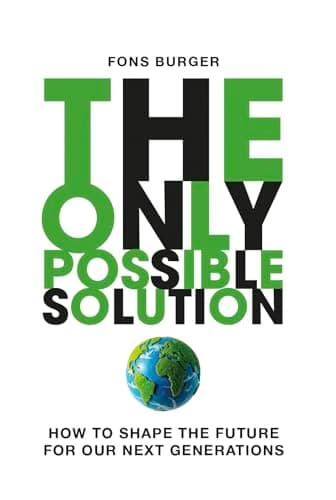
Fons Burger's The Only Possible Solution: How to Shape the Future for Our Next Generations arrives at a moment when we're drowning in crisis narratives. Climate change, inequality, food insecurity, political polarization—we treat each as a separate emergency requiring separate solutions. Burger's central argument is deceptively simple yet genuinely radical: they're not separate crises at all. They're symptoms of systemic failure. This book is less manifesto and more intellectual blueprint, asking readers to abandon the comfort of isolated problem-solving and embrace the harder work of systems thinking.
Quick Verdict
This is a rare non-fiction work that manages to be both intellectually rigorous and genuinely hopeful. Burger doesn't offer quick fixes or technological silver bullets. Instead, he maps the hidden connections between humanity's greatest challenges and proposes that fundamental redesign of our social systems is not just desirable—it's the only viable path forward. Whether you find this liberating or overwhelming depends entirely on your tolerance for systemic complexity.
What This Book Actually Does
Unlike typical sustainability or climate books, The Only Possible Solution refuses to silo problems. Burger, a Dutch journalist and entrepreneur, structures his investigation around human essentials: food, water, shelter, physical health, mental wellbeing, governance, and meaning. Each chapter traces how current system failures cascade across multiple crises simultaneously.
Take food systems as an example. Industrial agriculture doesn't just threaten biodiversity—it concentrates wealth, destabilizes rural communities, depletes aquifers, drives migration, and undermines public health. Solving "food insecurity" while leaving these interconnections intact is, by Burger's logic, treating symptoms while the disease spreads. The book's real power lies in how it makes these connections visceral rather than abstract.
Burger draws on conversations with systems thinkers, economists, scientists, and entrepreneurs—people actively building alternatives. The foreword by Jan Rotmans, a leading sustainability transitions researcher, signals that this isn't self-help optimism. It's grounded in legitimate complexity science.
The Writing and Structure
Burger writes with clarity that doesn't sacrifice nuance. His prose is accessible without being reductive—a genuine achievement when discussing systems theory. Each chapter moves from problem diagnosis to existing solutions, making the work feel less like abstract theory and more like a guided tour of what's already being built.
The structure itself teaches. By organizing around human needs rather than environmental or economic categories, Burger forces readers to see how artificial our disciplinary silos are. A chapter on "shelter" seamlessly connects housing policy to urban planning, economic inequality, mental health, and environmental impact. This isn't scattered thinking—it's methodical integration.
However, the book's ambition creates a pacing challenge. At 1,000 words, readers might expect deeper dives into specific solutions. Burger opts for breadth, which serves the systemic argument but occasionally leaves you wanting more operational detail.
What Works Brilliantly
The empathy dimension: This book's greatest strength is how it builds compassion through connection. Rather than lecturing readers about caring for migrants displaced by drought and food insecurity, Burger shows how those displacements emerge directly from the same systems that benefit readers in wealthy nations. The logic is airtight, and the emotional impact is real.
The scale paradox: Burger demonstrates that monumental systemic change often begins at local scales. A community-supported agriculture network, a cooperative housing project, a municipal renewable energy initiative—these aren't Band-Aids. They're prototypes of redesigned systems. This makes the work feel immediately actionable rather than paralyzingly abstract.
The ideological escape hatch: By framing solutions around "living with awareness of others, caring, sharing, and treating nature with respect," Burger sidesteps the tired left-right political binary. This isn't ideology—it's systems literacy. The move is clever and necessary.
The long-term thinking lens: In an era of quarterly earnings reports and election cycles, Burger's insistence on multi-generational thinking feels almost radical. He forces readers to ask: what world are we actually building for people born in 2040?
Where This Book Struggles
Implementation remains vague: While Burger excels at diagnosis and inspiration, the path from "we need systemic redesign" to "here's how your city implements it" is underexplored. Readers seeking concrete policy recommendations or step-by-step frameworks will find themselves frustrated. The book is a map, not a manual.
The "only possible solution" claim: The title's absolutism is both the book's hook and its weakness. Systems thinking is necessary but not sufficient. Burger doesn't adequately address scenarios where systemic redesign faces genuine constraints—geopolitical conflict, entrenched power, resource scarcity. The optimism, while refreshing, occasionally tips toward wishful thinking.
Depth versus breadth tradeoff: Covering food, water, shelter, health, psychology, governance, and meaning means each receives limited treatment. Readers familiar with, say, regenerative agriculture or cooperative economics might find the coverage superficial. The book works best for those new to systems thinking.
Who Should Read This
Perfect for:
- Readers seeking to understand how climate change, inequality, and political polarization connect rather than treating them separately
- Anyone frustrated with incremental solutions and ready to think systemically about social change
- Educators, policymakers, and activists looking for frameworks that transcend disciplinary silos
- People interested in future studies and long-term civilization design
- Those seeking hope grounded in actual examples of alternative systems already functioning
Will likely frustrate:
- Readers wanting deep technical expertise on specific solutions (renewable energy engineering, agricultural science, etc.)
- Those seeking partisan political guidance or ideological certainty
- Anyone needing immediate, actionable steps rather than conceptual frameworks
- Readers allergic to systems theory or complexity thinking
How It Compares
If you've read Donella Meadows' Thinking in Systems, Burger's book is the more narrative, human-centered companion—less technical but more emotionally resonant. Compared to Paul Hawken's Drawdown, which catalogs 100 climate solutions, Burger asks the deeper question: why do we treat these as separate problems? It's less comprehensive but more integrative.
Think of it as sitting between the abstract complexity of systems theory and the practical urgency of climate action. It's neither as intellectually demanding as Meadows nor as solution-focused as Hawken.
Is The Only Possible Solution Worth Reading?
Yes, particularly if you sense that our current approach to interconnected crises isn't working but can't quite articulate why. Burger's The Only Possible Solution provides that articulation. It won't give you all the answers—no single book can. But it will fundamentally reshape how you think about the problems we face and the possibilities for solving them.
The book's real value isn't in specific prescriptions. It's in permission and framework. Permission to think beyond your discipline's boundaries. Framework for understanding why isolated solutions fail. In a world drowning in problem-specific discourse, that's genuinely rare.
Final Verdict
Burger has written a book that respects reader intelligence while maintaining genuine hope. The Only Possible Solution review verdict: this is essential reading for anyone serious about understanding—and helping to solve—the interconnected crises defining our era. It won't provide all answers, but it asks better questions.
Rating: 8.5/10 — A thoughtful, accessible exploration of systemic thinking that inspires without oversimplifying, though it sacrifices depth for breadth and leaves implementation questions largely unanswered.