Category:
Book ReviewsThe New Menopause Review: Comprehensive but Agenda-Driven
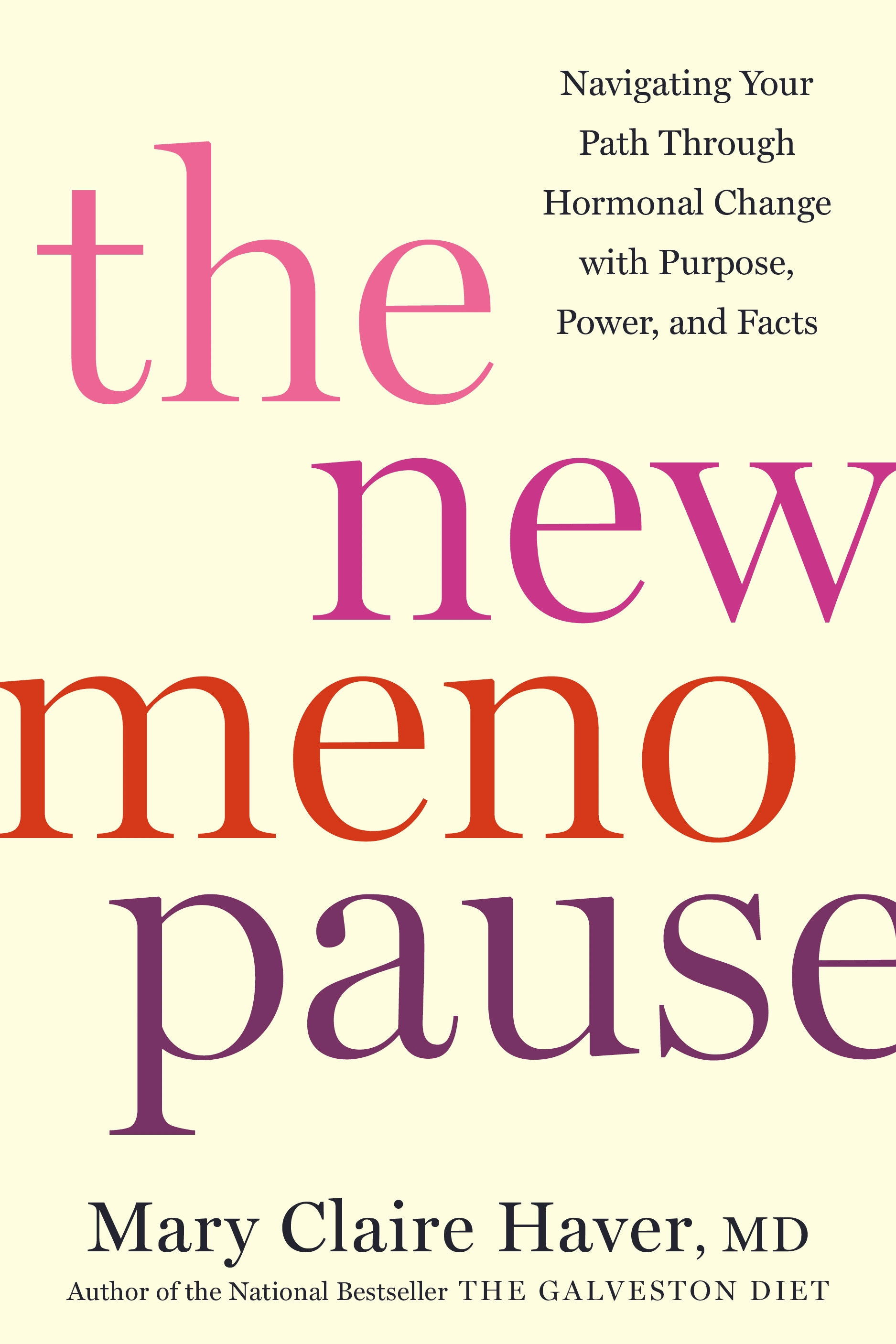
Prices can sometimes be lower on bigger marketplaces, but this link helps independent bookstores and local reading communities.
Quick Verdict
Dr. Mary Claire Haver's The New Menopause is an ambitious, well-researched attempt to reframe midlife hormonal change as a medical priority rather than an inevitable suffering. With a 4.25/5 rating across nearly 20,000 readers, it's clearly resonating with women desperate for answers. But this New Menopause review reveals a book that, despite its scientific credibility, struggles with structural clarity and an undeniable bias toward hormone replacement therapy that some readers—including medical professionals—find heavy-handed.
What This Book Actually Delivers
Haver's premise is compelling: menopause isn't new, but the medical establishment's dismissal of it is finally being challenged. She tackles the full spectrum of menopausal experiences—from sleep disruption and cognitive fog to cardiovascular risk, bone density loss, and sexual dysfunction. The breadth is genuinely impressive. Unlike earlier menopause literature that focused narrowly on hot flashes, The New Menopause positions hormonal transition as a whole-body phenomenon demanding comprehensive care.
The book's strongest sections are its A-to-Z symptom toolkit and its guide to advocating for better healthcare. Haver provides concrete questions to ask doctors and frameworks for demanding "whole life care" during annual wellness visits. This is practical gold for women tired of dismissive physician responses like "do you sleep with a down comforter?" when reporting night sweats.
Her coverage of emerging research on dementia risk, Alzheimer's prevention, and metabolic changes during menopause reflects genuine scientific literacy. The book doesn't shy away from complexity—it acknowledges gaps in research while presenting what we do know with appropriate nuance.
Where the Structure Falls Apart
Here's the problem: this New Menopause review must address what multiple readers flagged—the book's organizational chaos. Haver constantly instructs readers to "jump to section X for more details" or "we'll cover this later." This creates a fragmented reading experience that undermines the book's authority. You're never quite sure if you have the complete picture or if critical information is scattered across three different chapters.
Compare this to Dr. Jen Gunter's The Menopause Manifesto, which delivers similarly rigorous science in a far more linear structure. Gunter's book flows; Haver's requires active navigation. For a book aimed at women already experiencing cognitive fog and overwhelm, this is a significant friction point.
The writing is also more technical than typical self-help health books. Haver treats her readers as intelligent—which is admirable—but the density of medical terminology and the assumption of prior knowledge makes this feel more like a reference text than a readable narrative. Some readers will appreciate this; others will find themselves reaching for a medical dictionary mid-chapter.
The Hormone Replacement Therapy Question
The most divisive aspect of The New Menopause is Haver's clear advocacy for hormone replacement therapy (HRT). While she does present alternatives—lifestyle modifications, supplements, non-hormonal medications—the through-line of the book suggests HRT is the most effective solution. A practicing gynecologist who reviewed this book noted that Haver sometimes glosses over legitimate research gaps by pivoting back to HRT as the answer.
This isn't necessarily wrong. HRT can be transformative for many women. But readers seeking a truly balanced exploration of options—particularly those with contraindications for HRT or philosophical preferences against it—may feel the deck is stacked. The book reads less like "here are all your options" and more like "here's why you should consider HRT."
The Self-Promotion Problem
Multiple readers noted that Haver frequently references her previous book, The Galveston Diet, and promotes her own supplement line available on her website. This creates an uncomfortable dynamic: Is this advice being offered because it's genuinely best, or because it's profitable for the author?
To be fair, many health authors promote their own products. But when you're already skeptical of the book's HRT bias, the commercial interests become harder to ignore. A reader should never wonder if they're being sold a solution or offered one.
What Actually Works Here
Despite these criticisms, The New Menopause excels in specific ways. The symptom-by-symptom breakdown is genuinely useful—Haver addresses neurological changes, musculoskeletal issues, and sexual dysfunction with refreshing directness. The section on preparing for healthcare conversations is genuinely empowering. And the book's central thesis—that menopause deserves serious medical attention and self-advocacy—is absolutely correct and much-needed.
For women who already follow Haver on social media or who are actively seeking HRT information, this book will feel like a comprehensive resource. It's well-researched, medically sound (despite minor technical errors), and written by someone who clearly cares about women's health outcomes.
Who Should Actually Read This
Perfect for: Women actively considering hormone replacement therapy who want detailed information about benefits and risks. Women frustrated with dismissive healthcare and seeking ammunition for doctor conversations. Anyone who wants comprehensive coverage of menopause's full symptom spectrum beyond hot flashes.
Skip it if: You're looking for a balanced, non-advocacy-driven exploration of menopause options. You prefer linear, easy-to-follow health narratives. You're skeptical of author self-promotion or have concerns about HRT. You want a book that acknowledges its limitations rather than pivoting to the author's preferred solution.
Consider alternatives: Jen Gunter's The Menopause Manifesto offers similarly rigorous science with better structure and less obvious bias. Janice Dunn's Hot & Bothered provides a more narrative-driven approach to midlife hormonal change.
The Bigger Picture
What's genuinely new here isn't the menopause itself—it's the medical community's slow awakening to its importance. Haver is riding a wave of overdue attention to women's health, and she deserves credit for contributing substantive research to that conversation. The problem is that she's written a book that reads like advocacy literature disguised as comprehensive reference material.
This matters because women deserve honest information, not sales pitches wrapped in scientific language. The New Menopause contains genuinely valuable information, but you'll need to read it critically, fact-check claims that feel overreaching, and remember that alternatives to HRT exist even if this book doesn't emphasize them equally.
Final Verdict
Is The New Menopause worth reading? Yes—if you go in with eyes open about its perspective. It's a solid, research-backed resource that will help you advocate for better healthcare and understand your body's changes. But it's not the definitive menopause bible some readers claim. It's a well-intentioned, occasionally frustrating book that serves women seeking HRT information better than it serves women seeking balanced alternatives. The science is sound; the presentation is muddled; the agenda is unmistakable.
Rating: 6.5/10 — Valuable information undermined by structural chaos and undisclosed bias toward the author's preferred solutions.