Category:
Book ReviewsThe Me I Used to Be Review: Friendship, Secrets & Second Chances
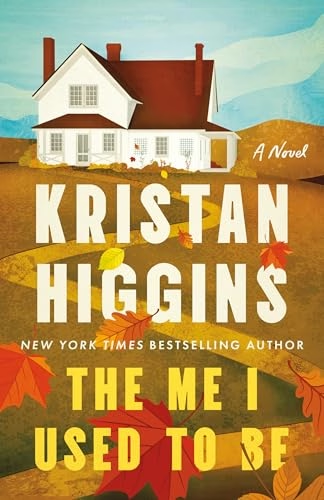
Prices can sometimes be lower on bigger marketplaces, but this link helps independent bookstores and local reading communities.
Quick Verdict
The Me I Used to Be by Kristan Higgins is a character-driven meditation on female friendship that swings between heartbreaking and hilarious—often within the same page. This isn't a light reunion story. It's a deliberate excavation of trauma, regret, and the possibility of forgiveness after decades of estrangement. The book delivers emotional weight without feeling suffocating, though the ending rushes past its own intensity.
What It's About
Four women—Audrey, Micah, Jasmine, and Beck—were inseparable in high school, dubbed the "Core Four" for their seemingly unbreakable bond. A devastating car accident the night after graduation shatters everything, leaving them estranged for twenty-five years. When they reconvene for their high school reunion, they're no longer the girls with golden futures. They're middle-aged women carrying the weight of unfulfilled dreams, failed marriages, career disappointments, and the one secret they've all been keeping about that fateful night.
The catalyst for reunion is urgent: one of them has been diagnosed with early-onset dementia, making this potentially the last chance to reckon with their shared past. Over a single weekend, Higgins pulls apart the mythology they've constructed around themselves and that accident, forcing each woman to confront not just what happened, but who they've become.
The Dual Timeline That Actually Works
Kristan Higgins' The Me I Used to Be employs a dual timeline structure—flashing between high school and the present—that could easily feel gimmicky. Instead, it feels essential. The contrast between their teenage selves (full of possibility and casual cruelty) and their current selves (haunted by choices and compromises) gives the novel its emotional spine.
The nostalgia isn't saccharine. Higgins captures the specific sting of remembering who you thought you'd be. Audrey imagined herself as the lucky one, the woman for whom life would unfold perfectly. Beck dreamed of athletic glory. Micah's beauty was supposed to be currency. Jasmine was the brilliant one. Reality delivered something messier for all of them. That gap between expectation and reality is where the book finds its deepest resonance, and it's a gap that expands with each page.
Character Work That Feels Lived-In
What distinguishes this novel from standard women's fiction is how Higgins refuses to make any of these women easily sympathetic. They're flawed, defensive, and often unkind to each other. Micah carries resentment like a weapon. Jasmine's perfectionism masks deep insecurity. Beck's achievement-obsession has left her isolated. Audrey's control issues are both her greatest strength and her tragic flaw.
Yet Higgins doesn't punish them for these flaws—she excavates them. As secrets tumble out (infidelity, hidden paternity, accusations of sexual pressure), you watch each character's defensive walls crack just enough to reveal the scared, wounded person underneath. It's the kind of character work that makes you simultaneously frustrated with these women and deeply invested in their redemption.
The Mystery Element
While The Me I Used to Be reads primarily as a character study, Higgins plants a genuine mystery at its center: what really happened the night of that accident? The tension around this question builds steadily without ever feeling manipulative. The pacing is deliberate—Higgins lets information emerge organically through conversation and flashback rather than relying on artificial reveals.
This approach distinguishes the book from similar reunion narratives like The Thursday Murder Club or Remarkably Bright, which prioritize plot momentum. Higgins is interested in psychology and consequence, not plot twists for their own sake.
Where It Stumbles
The ending is the book's most notable weakness. After nearly 350 pages of careful emotional excavation, the final resolution feels compressed. The major revelations about the accident land with appropriate weight, but the denouement—how these women actually move forward—gets rushed. You're left wanting another ten or twenty pages to sit with the aftermath, to see how forgiveness actually takes root rather than simply being declared.
Additionally, while the dementia diagnosis provides narrative urgency, it occasionally feels instrumentalized. The early-onset dementia isn't deeply explored as an experience; it functions more as a plot device to force the reunion. Readers looking for nuanced representation of cognitive decline will find that element underdeveloped.
The Emotional Tone: Bittersweet, Not Bleak
What's remarkable about Kristan Higgins' The Me I Used to Be is its tonal balance. Heavy themes—trauma, guilt, regret, mortality—never tip the book into despair. Humor threads throughout, mostly derived from the absurdity of middle age and the specific comedy of women trying to navigate their own contradictions.
This isn't darkly funny. It's the kind of humor that emerges when people finally tell each other the truth after decades of silence. It's recognition, not cynicism. That balance keeps the book from becoming a slog despite its serious subject matter.
Who Should Read This
Perfect for: Readers of women's fiction who want emotional substance without sentimentality. Anyone who's experienced the particular sting of losing a close friendship. People who appreciate character-driven narratives over plot-driven ones. Fans of books like Lessons in Chemistry or The Seven Husbands of Evelyn Hugo that explore female complexity across time. Readers interested in exploring how friendships fracture and potentially heal.
Not for: Those seeking light, escapist reads. Readers who need fast-paced, plot-driven narratives. Anyone uncomfortable with extended emotional examination or who prefers their women's fiction with clear heroines and villains. Readers seeking a deep dive into the medical/psychological experience of dementia.
How It Compares
If you've read The Thursday Murder Club by Richard Osman, you'll recognize similar DNA—a group reunion with secrets, humor threading through grief, the exploration of how people change across decades. But where Osman prioritizes plot and mystery, Higgins prioritizes psychology and character revelation. It's less cozy mystery, more literary fiction.
Compare it also to Remarkably Bright by Catherine Birkwood—another novel about female friendship tested by time and circumstance. Both explore the mythology women construct around their younger selves and the disappointment of unmet potential. Higgins' version is more emotionally raw; Birkwood's is more whimsical.
The Verdict on Whether It's Worth Reading
Yes, The Me I Used to Be is worth reading if you value character development and emotional authenticity over plot mechanics. This isn't a book you read for the twist; you read it to understand how people become who they are and whether they can choose differently. The answer Higgins offers is complicated, hopeful, and earned.
It's a book that will stay with you, particularly if you've ever wondered what happened to your own "Core Four" and whether time and honesty could rebuild what was broken. The real question isn't whether this book is worth reading—it's whether you're ready to feel something genuine.
Final Thoughts
Kristan Higgins has written a novel that respects both the weight of trauma and the resilience of female friendship. It's not perfect—the ending rushes, and the dementia element could be deeper—but it's authentic in a way that matters. This is a book about becoming the woman you didn't expect to be and finding grace in that unexpected life.