Category:
BiographyThe Man Who Would Be King Review: Ambitious but Compromised
Prices can sometimes be lower on bigger marketplaces, but this link helps independent bookstores and local reading communities.
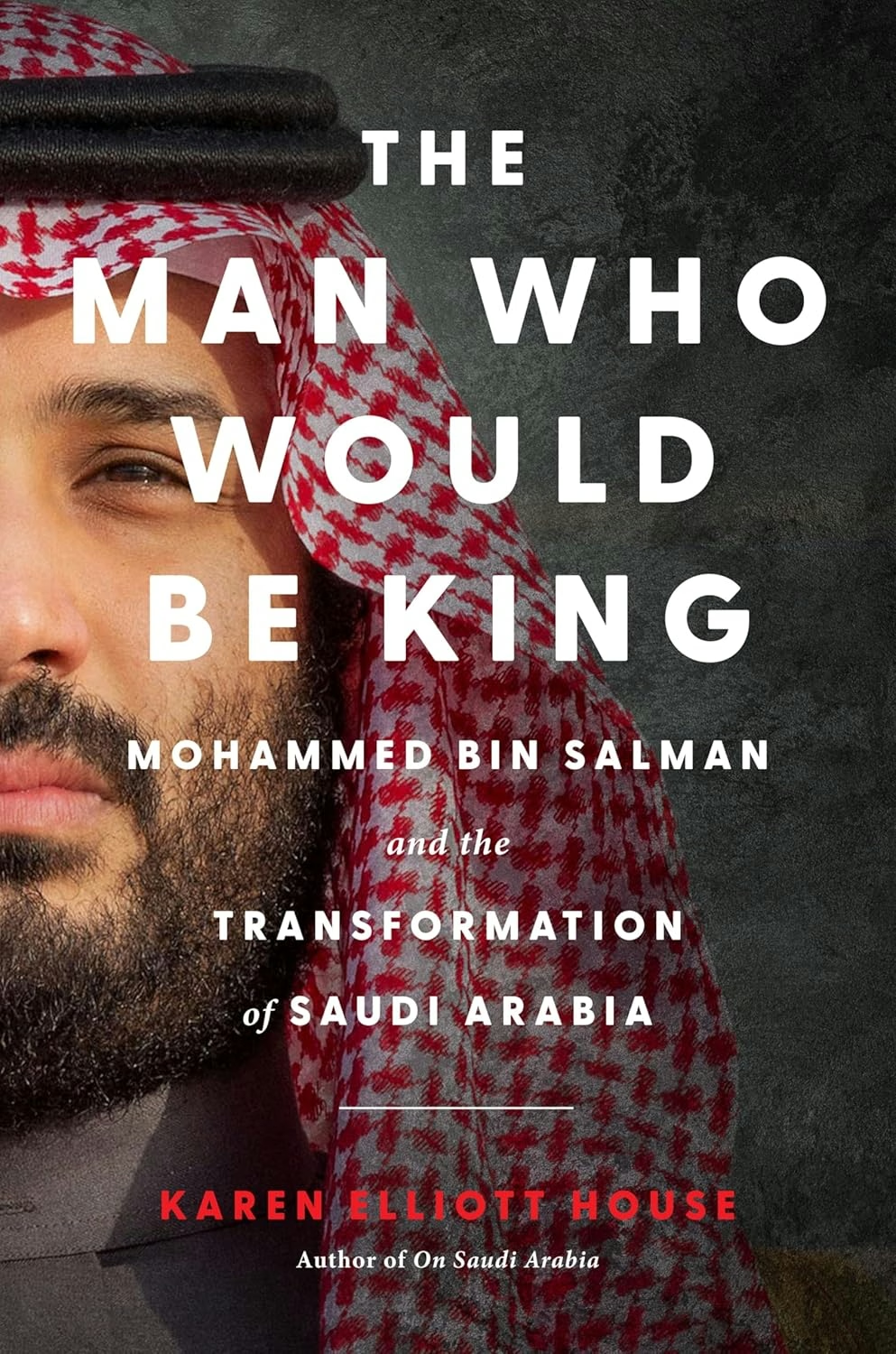
Karen Elliott House's The Man Who Would Be King: Mohammed bin Salman and the Transformation of Saudi Arabia is a biography that promises unprecedented access to one of the world's most consequential yet opaque leaders. What it actually delivers is a more complicated picture—one that reveals as much about House's own editorial choices as it does about the Crown Prince himself.
Let's establish the verdict upfront: this is a readable, well-researched book that offers genuine insights into MBS's rise to power and Saudi Arabia's Vision 2030 agenda. But it's also a book that struggles with fundamental questions of journalistic balance, suffers from repetitive structure, and occasionally reads like a sympathetic policy brief rather than rigorous biography. For readers seeking a serious examination of Saudi Arabia's modernization efforts, it's valuable. For those hoping for a critical reckoning with MBS's authoritarian consolidation of power, it will disappoint.
What This Book Actually Is
House brings formidable credentials to this project. As a Pulitzer Prize-winning reporter and former Wall Street Journal publisher with four decades covering the Middle East, she's earned access that few Western journalists possess. The book draws on extensive interviews with MBS himself, his inner circle, and various royal family members and advisors.
The narrative traces MBS's ascent from relatively obscure prince to the de facto ruler of Saudi Arabia's 35 million people. House examines the political maneuvering that elevated him, his ambitious Vision 2030 economic diversification plan, and his aggressive regional foreign policy. She also addresses the elephant in every room: the Khashoggi murder, the Yemen war, the detention of rival princes, and the accusations of sports-washing through investments in global football teams and the LIV golf tour.
The Dual-Portrait Problem
House structures her analysis around an explicit comparison: MBS as Peter the Great (modernizer) and Ivan the Terrible (tyrant). This framework sounds balanced in theory. In practice, it becomes a way to compartmentalize rather than integrate these contradictions.
The modernization narrative dominates. House devotes substantial space to Vision 2030's megaprojects—The Line, the $500 billion futuristic desert city, renewable energy initiatives, and women's rights reforms. These are real achievements. Women can now drive, attend sporting events, and work in previously closed sectors. Tourism is being developed. Investment is flowing into non-oil sectors.
But here's where the The Man Who Would Be King review gets complicated: House treats these reforms somewhat separately from the consolidation of autocratic power. The book acknowledges that MBS jailed political opponents and rival princes, yet frames this primarily as necessary strongman tactics rather than exploring the human cost or the contradiction between modernization and political repression. When she does address the Khashoggi murder, the section feels perfunctory compared to the expansive treatment of economic policy.
The Repetition Problem
One of the most common complaints about this biography is structural sloppiness. The same information—MBS's early life, his relationship with his father, key Vision 2030 initiatives—appears multiple times across different chapters. This isn't the kind of deliberate reinforcement that builds thematic depth. It reads like editing oversight, which undermines the book's authority on a subject this serious.
This repetition matters because it suggests House had more material than she knew how to synthesize. A tighter editorial hand could have transformed this into something more penetrating. Instead, readers sometimes feel they're reading the same chapter twice.
The Perspective Question
Several readers have noted that House's framing reveals a particular worldview—one that views Islamic influence with skepticism and frames religious obstacles as hurdles to overcome rather than legitimate cultural forces. Her description of the Islamic call to prayer (the adhan) as "haunting" is telling. So is her somewhat dismissive treatment of Saudi women's own religious commitments and their complex relationship to modernization.
This matters because it shapes how House interprets MBS's reforms. She presents them primarily through a Western modernization lens rather than exploring how Saudi citizens themselves—particularly women and religious conservatives—experience these changes. The book occasionally reads as if House is more interested in whether Saudi Arabia becomes more like the West than in understanding Saudi Arabia on its own terms.
What Works
Despite these limitations, House does several things exceptionally well. Her reporting on MBS's political consolidation is detailed and illuminating. She explains the complex family dynamics and succession struggles that shaped him. The section on Saudi Arabia's regional strategy—particularly the Abraham Accords and the tense relationship with Iran—provides useful context for understanding MBS's foreign policy.
House is also genuinely fair-minded about the economic necessity of Vision 2030. Saudi Arabia's oil-dependent economy was unsustainable. Youth unemployment was endemic. The social contract was breaking down. MBS's pivot toward diversification, tourism, and mega-projects wasn't just ambition—it was necessity. House captures this urgency effectively.
The book's examination of how MBS navigates relationships with the United States, China, India, and Russia is particularly sharp. She doesn't shy away from depicting him as a shrewd operator willing to play great powers against each other. This is the MBS worth understanding: not a simple villain or hero, but a calculating ruler making strategic bets about Saudi Arabia's place in a multipolar world.
Who Should Read This (and Who Shouldn't)
This book is essential for anyone seriously studying contemporary Saudi Arabia, Middle Eastern geopolitics, or the intersection of oil wealth and modernization. It's valuable for policy professionals, journalists, and students of international relations. If you're trying to understand how Vision 2030 actually works, what MBS actually believes, or how Saudi Arabia sees its regional role, The Man Who Would Be King provides genuine insights.
It's less useful if you're looking for critical distance on MBS's human rights record or a rigorous examination of authoritarianism. It's not the book for readers seeking a counternarrative to Saudi state messaging. If you want something more skeptical, more willing to let contradictions remain unresolved, you might prefer earlier works on Saudi Arabia that maintain more critical distance.
The Comparison Question
If you're familiar with House's earlier work on Saudi Arabia or with books like Princes of the Apocalypse or The Saudi Enigma, you'll recognize her approach here. She's generally sympathetic to Saudi state interests while maintaining journalistic professionalism. This book is more detailed and more sympathetic than some of her earlier work, which some readers will appreciate and others will critique as too accommodating.
The Verdict
Is The Man Who Would Be King worth reading? Yes—with caveats. It's a competent, well-researched biography that provides genuine access to an important figure. It's marred by repetition, editorial looseness, and an interpretive framework that sometimes privileges Western modernization narratives over deeper cultural understanding. It's a solid book that could have been an exceptional one with tighter editing and more willingness to sit with contradictions.
House has written a biography that will be useful to specialists and accessible to general readers. It's not the definitive MBS biography—that book remains to be written. But it's a substantial contribution to understanding Saudi Arabia's current trajectory and the calculating ruler driving that transformation.
Read it for the reporting. Read it for the policy analysis. Just don't expect it to resolve the fundamental tensions between MBS the modernizer and MBS the autocrat. House documents both versions. She just doesn't fully reconcile them.