Category:
Book ReviewsThe Last Days of Marilyn Monroe Review: Mismarketed Biography
Prices can sometimes be lower on bigger marketplaces, but this link helps independent bookstores and local reading communities.
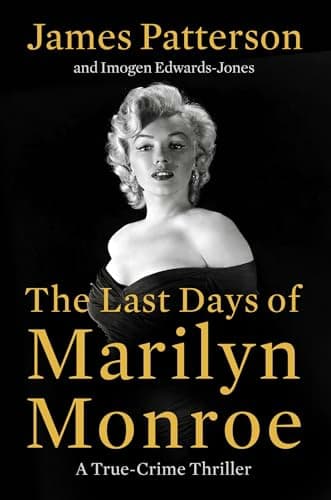
James Patterson's The Last Days of Marilyn Monroe: A True Crime Thriller arrives with an identity crisis. Marketed as a gripping true crime investigation into Hollywood's most enduring mystery, this collaboration between Patterson and Imogen Edward-Jones is fundamentally a biographical narrative that spends the vast majority of its pages tracing Marilyn Monroe's life from troubled childhood through her meteoric rise to stardom. The "true crime thriller" framing is misleading—and that's the central tension readers need to understand before opening this book.
Quick Verdict
If you approach this as a Marilyn Monroe biography written with Patterson's accessible storytelling style, you'll find an entertaining, well-researched account. If you're hunting for a deep investigation into the conflicting theories surrounding her death on August 5, 1962, you'll feel systematically shortchanged. The book's structural flaw—burying its most provocative premise under hundreds of pages of life narrative—undermines what could have been a compelling exploration of Hollywood's darkest moment.
What This Book Actually Is
Let's be direct: The Last Days of Marilyn Monroe review reveals a fundamental mislabeling issue. The book is structured chronologically, beginning with Monroe's difficult adolescence, her arranged marriage to Jim Dougherty, and her grinding climb through modeling and bit parts. Patterson and Edward-Jones dedicate substantial sections to her breakthrough roles, her establishment of her own production company (a detail many readers didn't know), and her three major marriages—to baseball legend Joe DiMaggio, playwright Arthur Miller, and her complicated entanglement with the Kennedy brothers.
The Kennedy connection receives attention, but not the depth the title promises. Jack Kennedy's presidency and Bobby Kennedy's position as Attorney General form the backdrop for exploring Monroe's personal relationships and alleged affairs, yet the book sidesteps the very questions that fuel decades of speculation: Was there a cover-up? Did political pressure influence the investigation? What really happened in those final hours?
The Death Investigation: A Bait-and-Switch
Monroe's death investigation occupies perhaps three to four chapters—roughly 10-15% of the total narrative. The early hours of August 5, 1962, when her housekeeper discovered her lifeless body and psychiatrist Ralph Greenson called the LAPD, deserves the thriller treatment promised by the title. The involvement of junior medical examiner Dr. Thomas Noguchi, the conflicting timelines, the missing phone records, the mysterious visitors—these are genuinely compelling threads.
But Patterson's book doesn't weave them into a cohesive investigation. Instead, it presents the established facts and timeline without exploring the contradictions that have spawned decades of conspiracy theories. The conflicting evidence, the unanswered questions about her last phone call, and the suspicious circumstances of the autopsy are mentioned but never interrogated with the rigor a true crime thriller demands.
Writing Style and Accessibility
Patterson's fingerprints are visible in the book's accessibility. Short chapters, punchy prose, and a fast-moving narrative make this an easy read—the kind of book that pulls you through pages without requiring intense concentration. Edward-Jones, credited as the co-author, brings research depth and biographical structure, though the collaboration sometimes feels like an outline executed competently rather than passionately.
The dialogue and intimate scenes are fictionalized—a necessary choice for a non-fiction narrative, but one that blurs the line between biography and historical fiction. Conversations are reconstructed, emotional moments are dramatized, and Monroe's interior life is imagined rather than documented. This works for entertainment value but raises questions about what readers are actually getting: is this biography or novelization?
What Works
The book excels at humanizing Monroe beyond her iconic status. Readers unfamiliar with her filmography learn she appeared in far more films than the public remembers. Her entrepreneurial ambitions—establishing Marilyn Monroe Productions—reveal a woman more strategically minded than her public image suggested. The exploration of her struggles with substance abuse, her difficult relationships, and her professional frustrations creates a portrait of someone constantly battling industry expectations and personal demons.
The chronological structure works well for readers new to Monroe's story. You understand her trajectory, the men who shaped her life, and the Hollywood machinery that both elevated and destroyed her. For someone approaching Marilyn Monroe for the first time, this book provides comprehensive context and entertainment value.
What Doesn't Work
The central failure is structural. A book titled The Last Days of Marilyn Monroe should make those final days its investigative centerpiece, not an afterthought. Readers expecting a true crime investigation—something comparable to the scrutiny applied to other celebrity deaths—will feel misled. The book doesn't examine why so many people suspect foul play, what evidence supports various theories, or why the official narrative remains contested.
Additionally, some readers report factual inconsistencies, though these aren't detailed enough in reviews to specify. For a biography of a historical figure, accuracy matters. Patterson's prolific output—six or more books yearly across multiple genres—raises legitimate questions about editorial rigor and fact-checking depth.
The Kennedy connection, positioned as central to understanding her death, receives surprisingly surface-level treatment. The affairs are acknowledged, the political implications noted, but the deeper investigation into how these relationships might have influenced events remains underdeveloped.
Who Should Read This Book
Perfect for: Casual readers new to Marilyn Monroe's story who want an entertaining, comprehensive biography. Readers who enjoyed Joyce Carol Oates' Blonde but want something less literary and more straightforward. People seeking a quick, accessible introduction to Monroe's life and legacy.
Will disappoint: True crime enthusiasts expecting a rigorous investigation into her death. Readers familiar with Monroe's story who want new insights rather than biographical recap. Anyone misled by the "thriller" marketing who expects mystery-novel pacing and investigative depth. Marilyn Monroe scholars seeking original research or controversial new theories.
The Timing Question
This book's 2025 publication coincides with Marilyn Monroe's hundredth birthday in June 2026—a marketing opportunity that likely influenced the project's greenlight. That commercial timing matters. It suggests this book is positioned for mainstream accessibility rather than deep investigation, which explains the biographical breadth over true crime depth.
Writing and Research Context
Patterson's non-fiction output includes books on John Lennon, Princess Diana, and Tiger Woods—celebrity-focused narratives that follow similar biographical structures. His memoir-writing approach prioritizes narrative momentum and accessibility over investigative journalism. Edward-Jones brings research credentials, but the collaboration reads like an outline executed competently rather than a passion project exploring a specific mystery.
Final Verdict
James Patterson's The Last Days of Marilyn Monroe is a well-written, entertaining biography that fails to deliver on its true crime thriller promise. It's worth reading if you approach it as a biographical narrative rather than an investigation, but the misleading marketing creates a credibility problem. For readers seeking a definitive exploration of Monroe's death and the surrounding mysteries, this isn't that book. For casual readers wanting an accessible, comprehensive account of her life, it delivers.
Rating: 6/10 — Entertaining biography undermined by false marketing and investigative shallowness on its central premise.