Category:
Book ReviewsThe Gilded Blade Review: A Polarizing Saga Finale
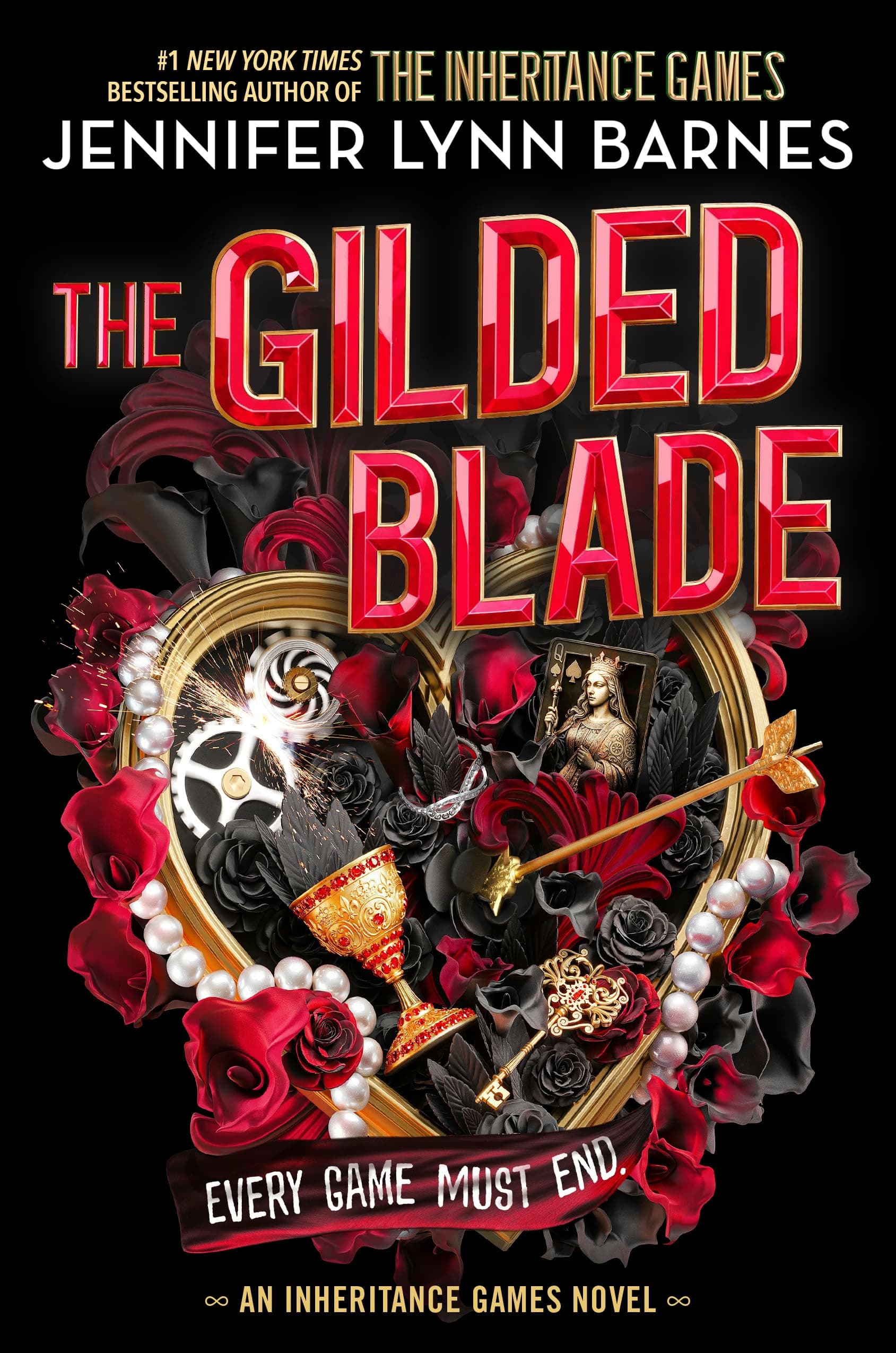
Prices can sometimes be lower on bigger marketplaces, but this link helps independent bookstores and local reading communities.
Quick Verdict
The Gilded Blade by Jennifer Lynn Barnes is a sweeping conclusion to the Inheritance Games saga that delivers on mystery and emotional payoff—but not without controversy. This isn't a traditional trilogy finale; it's an extension that will either feel like a gift to devoted fans or an unwelcome cash grab, depending on your tolerance for serialized storytelling. The book lands solidly on the strength of its puzzle mechanics and character development, earning a strong 8/10 for what it achieves, though it stumbles in pacing and managing reader expectations.
What This Book Actually Is
Let's address the elephant in the room immediately: The Gilded Blade isn't the ending readers thought they were getting. Jennifer Lynn Barnes initially positioned the Inheritance Games as a trilogy, then expanded it into a six-book saga across two narrative arcs. The Grandest Game trilogy was supposed to conclude everything, but Barnes had other plans. The Gilded Blade arrives as book six, promising closure while simultaneously refusing to fully deliver it—a move that's generated as much love as it has frustration.
The premise remains compelling: Avery Grambs and her inner circle face their most dangerous game yet, with secrets unraveling, mysteries converging, and the stakes reaching their highest point. This is where Jennifer Lynn Barnes promised the "staggering answers to long-brewing mysteries." Whether she actually provides them is where opinions sharply diverge.
The Mystery Engine Still Works
What Barnes does brilliantly in The Gilded Blade is maintain the intricate puzzle-box structure that made the original Inheritance Games trilogy addictive. The mystery unfolds with genuine momentum. Readers aren't just passively consuming a plot—they're actively solving alongside the characters, piecing together clues and making predictions. This is the book's greatest strength, and it's substantial.
The convergence of multiple storylines feels earned rather than forced. Character arcs that seemed disparate suddenly interlock. Antagonists reveal hidden dimensions. The pacing in the mystery sequences crackles with tension. If you're reading The Gilded Blade for the intellectual challenge of unraveling a complex narrative puzzle, you'll find genuine satisfaction here.
Character Development: The Real Heart
Beyond the mechanics, Jennifer Lynn Barnes has cultivated something rare in young adult fiction—a cast of characters that genuinely feel like a found family. Avery Grambs remains the emotional anchor: intelligent, vulnerable, and constantly tested. But the Hawthorne brothers—particularly Grayson, Jameson, and Xander—have evolved significantly across the saga.
Grayson's character arc is especially noteworthy. He arrives in earlier books as a antagonistic presence, but by The Gilded Blade, readers have watched him transform into something more complex and sympathetic. Jameson's devotion to Avery reaches new emotional heights. Xander provides the levity that prevents the saga from drowning in melodrama. These aren't flat archetypes; they're fully realized characters with contradictions and growth.
The supporting cast—Libby, Nash, Emily, Eve—also receive meaningful development. Some character choices will devastate you. Others will frustrate you. This emotional investment is precisely why the "just write more books" argument resonates so powerfully with devoted readers.
Where It Stumbles
Here's where The Gilded Blade review gets complicated: the book doesn't actually end the saga. It concludes this story, but leaves the universe open for continuation. Some readers anticipated this and embraced it. Others felt betrayed by what they perceived as an incomplete ending.
The pacing also suffers in the middle sections. Between major revelations, the narrative drags slightly, with exposition-heavy passages that interrupt momentum. A tighter edit would have strengthened the overall structure. Additionally, some "staggering answers" feel more like explanations than revelations—they're logical and consistent, but not particularly shocking.
Romance elements, while present, take a backseat to mystery and character exploration. If you're reading primarily for romance payoff, you might feel the love stories are adequately resolved but not deeply explored. This is a mystery-thriller first and romance second.
The Serialization Question
The controversy surrounding The Gilded Blade hinges on a legitimate tension in modern publishing: Should authors continue successful series indefinitely, or conclude them decisively?
Barn Barnes releases roughly two books per year in this universe. That's a stunning output that reflects genuine productivity. The counterargument—that she's extending the series beyond its natural conclusion for commercial reasons—is equally valid. Both perspectives hold truth. She is a professional writer whose job is creating content. She is also extending a story that many readers felt was complete.
The key question: Is the additional content good? Yes. Is it necessary? That depends entirely on whether you view the Inheritance Games universe as a world worth revisiting or a story that overstayed its welcome.
Who Should Read This
Perfect for: Devoted Inheritance Games fans who've invested emotionally in these characters. Readers who love complex mysteries with multiple moving pieces. Young adult enthusiasts who appreciate character development over plot simplicity. Fans of high-stakes games and puzzle narratives (compare to The Hunger Games series or Truly Devious by Maureen Johnson, though The Gilded Blade leans more toward mystery than survival horror).
Skip it if: You felt the original trilogy concluded satisfyingly and want closure. You're frustrated by serialized storytelling. You prioritize tight, focused narratives over expansive universes. You dislike melodramatic emotional beats or romance subplots.
Writing Quality & Style
Barn's prose remains accessible and engaging. She balances multiple perspectives without losing coherence. Her dialogue crackles with personality—each character has a distinct voice. The mystery sequences are expertly constructed, with clues planted and payoffs delivered.
However, the writing doesn't break new ground. It's competent, entertaining, and commercially savvy—but it's not attempting literary innovation. This isn't a weakness, just a reality. The Gilded Blade is entertainment fiction at its best, not literary fiction pretending to be a thriller.
The Verdict: Is It Worth Reading?
The Gilded Blade is absolutely worth reading if you're already invested in the Inheritance Games saga. It delivers mystery, character growth, emotional moments, and puzzle satisfaction. It's a solid 8/10 because it executes its ambitions well, even if those ambitions are somewhat controversial.
If you haven't started the series, begin with the original Inheritance Games trilogy. That's where the magic originates. The Gilded Blade is a continuation, not a standalone entry point.
The real question isn't whether this book is good—it is. The question is whether you want more Inheritance Games content. If you do, you'll find plenty to love here. If you wanted finality, you'll find frustration instead.
Final Score
8/10 — A satisfying mystery conclusion that deepens beloved characters, though it refuses to fully close the book on this universe, making it essential for fans but potentially divisive for those seeking definitive endings.