Category:
Book ReviewsThe Gift of Not Belonging Review: Brilliant Concept, Weak Science
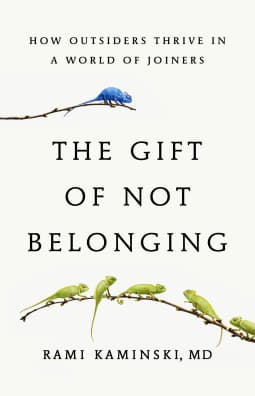
Prices can sometimes be lower on bigger marketplaces, but this link helps independent bookstores and local reading communities.
Rami Kaminski's The Gift of Not Belonging: How Outsiders Thrive in a World of Joiners attempts something genuinely original—introducing the concept of the "otrovert," a personality type that sits uneasily between introversion and extroversion. The book promises to validate a specific kind of social outsider: someone who's comfortable one-on-one but feels alienated in groups, regardless of how popular they might be. It's a compelling premise. But this review reveals a troubling gap between Kaminski's intriguing idea and the evidence he musters to support it.
What This Book Actually Offers
Kaminski, a psychiatrist with decades of clinical experience, proposes that otroverts represent a distinct personality category worth understanding. Unlike introverts (who drain from social interaction) or extroverts (who energize from it), otroverts are described as independent thinkers who thrive in one-on-one connection but struggle with group conformity. They're the people who skip the tour group vacation, avoid summer camp, and feel uncomfortable at parties—not from shyness, but from a fundamental lack of affinity for collective thinking.
The appeal is obvious. Many readers report feeling "seen" by this framework in ways traditional personality models never provided. If you've spent your life feeling caught between labels, never quite fitting the introvert-extrovert binary, Kaminski's taxonomy offers something closer to recognition.
Where the Concept Shines
The book's strongest contribution is reframing social outsiderness as a potential asset rather than a deficit. Kaminski argues that otroverts, precisely because they lack group loyalty, develop genuine independent thinking. They're not constrained by tribal approval, which theoretically frees them to innovate, question norms, and see what others miss. This is genuinely valuable territory for exploration.
The one-on-one relationship emphasis also resonates. In an age of performative social media and forced networking, Kaminski's validation of deep, selective friendships feels countercultural and necessary. Many readers found this aspect of The Gift of Not Belonging refreshing—a permission slip to stop chasing broad social circles.
The Critical Problem: Anecdotal Foundation
Here's where this review must be direct: Kaminski presents a new personality framework with almost no empirical support. The book relies almost entirely on his own clinical observations and personal anecdotes. While 30+ years of practice carries weight, it doesn't substitute for peer-reviewed research, control groups, or validated psychological instruments.
Compare this to Susan Cain's Quiet: The Power of Introverts, which Kaminski's work inevitably invites comparison to. Cain synthesized decades of neuroscience research, conducted interviews across cultures, and engaged with established personality frameworks (Big Five, Myers-Briggs). Whether you agree with her conclusions, she built her case methodically. Kaminski largely skips this step.
The book dismisses neurodivergence—autism, ADHD—as explanations for otroversion by limiting discussion to narrow DSM definitions. This is intellectually evasive. Many of the traits Kaminski describes (difficulty with group conformity, preference for one-on-one interaction, independent thinking) significantly overlap with how neurodivergent individuals experience the world. He doesn't adequately explore whether otroversion might be a behavioral manifestation of underlying neurological differences rather than a distinct personality type.
The Tone Problem
There's an undeniable self-serving quality to the book. Kaminski, by his own admission an otrovert, spends considerable energy praising otrovert traits while subtly denigrating everyone else. Extroverts are portrayed as shallow group-thinkers. Introverts are described as meek and drained. The framing suggests that otroverts have uniquely figured out how to live authentically, which feels less like psychological insight and more like intellectual tribalism—the very thing Kaminski claims otroverts transcend.
This creates an uncomfortable irony. A book about the gifts of not belonging reads, at times, like a belonging manifesto for a very specific group: people who think like Kaminski.
What Actually Works in This Review
Despite these limitations, the book isn't without merit. The quiz at the back genuinely helps readers identify whether they fit the profile. For some, this provides the first language they've had for their experience. That validation, even if the underlying science is shaky, can be psychologically useful.
The discussion of "otherness"—living slightly outside social expectations while still seeking meaningful connection—is genuinely thought-provoking. Whether you accept "otrovert" as a formal personality category, the exploration of that liminal space has value.
Kaminski also makes practical observations about adapting to different social contexts without losing authenticity. These insights feel earned from real clinical work, even if they're not scientifically rigorous.
Is The Gift of Not Belonging Worth Reading?
It depends entirely on what you're seeking. If you want a new framework to understand your own social experience and you're comfortable with a book that prioritizes personal resonance over scientific rigor, you'll likely find value here. It's a quick read, and for many readers, it provides genuine insight.
If you're looking for a scientifically grounded exploration of personality and belonging, you'll be disappointed. The book reads more like a personal psychology than an established model. It's thought-provoking but not authoritative.
Who Should Read This
Perfect for: People who've never felt represented by introvert-extrovert labels; those exploring why they feel like outsiders despite being socially capable; readers seeking validation for selective socializing; anyone interested in personality frameworks as self-discovery tools rather than scientific instruments.
Skip it if: You want evidence-based psychology; you're looking for peer-reviewed personality research; you need scientific rigor over personal narrative; you've already found meaningful frameworks in Cain's Quiet or similar works.
The Verdict
Kaminski's The Gift of Not Belonging introduces a genuinely interesting concept that many readers will recognize in themselves. The book offers real comfort to people who've felt misunderstood by traditional personality categories. However, this review must acknowledge that the concept rests on a thin foundation of personal observation rather than scientific evidence. The book succeeds as a thought-provoking personal framework but fails as a credible psychological model. It's valuable for self-reflection but shouldn't be mistaken for rigorous personality research.
The central tension in reader response is telling: people either feel deeply seen by this book or deeply skeptical of its claims. That polarization suggests the concept resonates emotionally but lacks intellectual grounding. Kaminski's work might have been stronger as a memoir or personal essay exploring outsiderness rather than as a personality taxonomy.
Final verdict: 6/10 — Thought-provoking and occasionally insightful, but too anecdotal to justify its ambitious claims about personality psychology.