Category:
Book ReviewsThe Fund Review: A Brutal Reckoning with Wall Street Mythology
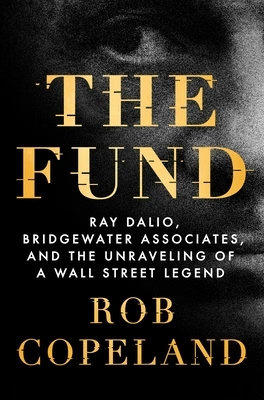
Prices can sometimes be lower on bigger marketplaces, but this link helps independent bookstores and local reading communities.
Rob Copeland's The Fund is a masterclass in investigative journalism that systematically dismantles one of finance's most carefully constructed personal brands. This unauthorized biography of Ray Dalio and Bridgewater Associates reads less like a business book and more like a psychological thriller—one where the protagonist's downfall stems not from market forces, but from his own contradictions. Copeland's reporting is meticulous, drawing from hundreds of interviews with insiders willing to break their silence, and the result is a narrative that challenges everything Dalio's bestselling Principles promised to teach us about leadership and human nature.
Quick Verdict
The Fund is a gripping, well-researched exposé that delivers genuine revelations about toxic workplace culture at the world's largest hedge fund. It's not a balanced business analysis, and it doesn't pretend to be—it's a portrait of narcissistic leadership and the human cost of "radical transparency" weaponized as control. If you're looking for investment strategies or a traditional business biography, look elsewhere. If you want to understand how charisma and wealth can mask dysfunction at the highest levels of finance, this book is essential reading.
What This Book Actually Is
Copeland doesn't waste time with hagiography. The Fund opens with a central thesis: Ray Dalio's famous principles—the philosophy that made him a billionaire and a bestselling author—functioned as an instrument of psychological manipulation rather than enlightenment. The book traces Dalio's rise from his apartment in the 1970s to building Bridgewater into a $150+ billion behemoth, but the real story isn't about investment returns. It's about what happens when one man's need for control and validation becomes embedded in an organization's DNA.
The narrative unfolds through dozens of firsthand accounts from executives, traders, and staff members who experienced Bridgewater's infamous "radical transparency" culture firsthand. What emerges is a pattern: employees praised publicly one day, humiliated in all-hands meetings the next. Executives with stellar track records suddenly "disagreed with Dalio" and found themselves pushed out. The book reveals how Bridgewater's internal rating system—where employees received "red dots" for perceived weaknesses—functioned as a tool for psychological warfare rather than development.
The Copeland Advantage: Reporting That Holds Up
What distinguishes The Fund from typical business criticism is Copeland's sourcing. As a New York Times journalist, he had access to former FBI director Jim Comey's documented interactions with Dalio, internal communications, and willing witnesses. The book includes specific anecdotes—some almost absurdist in their dysfunction—that feel too detailed to be fabricated. One reviewer noted the accuracy was "amazing," and the breadth of reporting is genuinely impressive for an unauthorized biography.
Copeland doesn't rely on speculation. He documents Dalio's increasingly erratic decision-making, including his chronic bearish bets against the U.S. economy and dollar that underperformed significantly over the period in question. He examines the fee structure (the notorious 2/20 model: 2% of assets under management plus 20% of profits) and questions whether Bridgewater's flagship funds actually delivered alpha—excess returns—to justify their enormous costs. For pension funds and institutional investors paying these fees, the implications are damning.
Where This Book Excels
The Fund succeeds most powerfully as a character study of narcissistic leadership. Dalio emerges as a figure simultaneously brilliant and deeply insecure—a man who preaches the value of criticism while being constitutionally incapable of receiving it. The irony is devastating: Dalio's famous quote, "the best gift anyone can receive is the knowledge of their own weakness," becomes a punchline when applied to Dalio himself, who appears immune to any such gift.
The book also functions as a cautionary tale about institutional capture. Bridgewater cultivated relationships with powerful figures—politicians, celebrities, former government officials—creating a protective bubble around Dalio. The portrayal of how wealth and access can insulate someone from accountability resonates beyond finance into broader questions about power and consequence.
Copeland's prose is genuinely engaging. This isn't dry business reporting; it reads like a narrative you can't put down. The rotating cast of characters—from Greg Jensen (Dalio's long-suffering co-CIO) to various executives caught in the revolving door of terminations—creates a human dimension often missing from finance books.
The Legitimate Criticisms
Not everyone finds The Fund compelling, and their objections deserve consideration. Some readers point out the book contains virtually no discussion of investment strategy or Bridgewater's actual trading philosophy. If you're seeking insight into how Dalio's investment principles work, this isn't the book. It's a workplace culture critique, not a finance education.
There's also a valid argument about balance. The book's sources are clearly identifiable through their portrayal—those depicted sympathetically are likely the sources, while Dalio and Jensen are relentlessly negative. While Copeland includes Dalio's responses to various allegations, the structure inherently favors the accuser's narrative. A reader seeking a more neutral analysis might reasonably want additional perspective from Dalio's defenders (though finding willing defenders in print proved difficult).
Some critics argue the book conflates Dalio's personal flaws with Bridgewater's investment performance, treating these as related when they may not be. A toxic workplace doesn't necessarily produce poor returns—sometimes it does the opposite. Copeland doesn't fully untangle this complexity.
The Investment Performance Question
One fascinating tension emerges throughout The Fund: despite the dysfunction, did Bridgewater actually deliver results? The book suggests the answer is increasingly "no." After accounting for fees, several Bridgewater funds underperformed their benchmarks over extended periods. The "All Weather" strategy that was supposed to work in any market condition showed mixed results. Yet "no investment manager gets fired for holding Bridgewater"—until this book, arguably, changed that calculus.
This raises uncomfortable questions for institutional investors who paid premium fees to a fund manager whose personal pathologies may have impaired decision-making. Teachers' pension funds, university endowments, and other institutions trusted Dalio's mystique and paid dearly for it.
Who Should Read This
Perfect for: Anyone interested in how wealth and charisma can mask dysfunction; readers of similar exposés like Bad Blood or Catch and Kill; people curious about finance industry culture; those who read Principles and wondered if something was off; anyone who's worked in a high-pressure, hierarchical organization and recognized the patterns.
Will hate this: Pure finance enthusiasts seeking investment education; Dalio loyalists; readers seeking balance and nuance in their business narratives; those who believe personal character is irrelevant to professional competence; anyone expecting a traditional biography with equal coverage of successes and failures.
Writing and Structure
Copeland's narrative structure is excellent—he builds momentum, introduces characters strategically, and intersperses revelations that keep you reading. The book moves chronologically through Dalio's rise while weaving in present-day consequences. It's accessible without being simplistic, detailed without becoming tedious.
One minor weakness: the sheer number of names and characters occasionally overwhelms. A family tree of Bridgewater executives and their fates would have been helpful. But this is a small complaint about otherwise sharp writing.
The Bigger Picture
The Fund arrives at a moment when questions about workplace culture, toxic leadership, and the relationship between personal ethics and professional success are particularly relevant. The book suggests that Dalio's philosophy of radical transparency, when weaponized by someone unwilling to accept feedback, becomes a tool for control rather than enlightenment. It's a distinction worth contemplating.
The book also implicitly asks: How many other Ray Dalios exist in finance, tech, and other high-status industries? How many organizations hide dysfunction behind charismatic leadership and carefully managed public images? The Fund suggests the answer is probably "more than we'd like to admit."
Is The Fund Worth Reading?
Yes—with caveats. If you value rigorous reporting, compelling narrative, and insights into how power operates in elite institutions, The Fund absolutely merits your time. It's not the definitive story of Bridgewater or Dalio (no single book could be), but it's the most credible, detailed account we have. The book changed how major institutions view Bridgewater, influenced investor decisions, and contributed to Dalio's reduced public profile.
However, if you're seeking investment wisdom, a balanced biography, or a defense of meritocratic capitalism, look elsewhere. The Fund is a specific kind of book: a well-executed takedown that earns its verdict through reporting rather than rhetoric.
Final Thoughts
Rob Copeland's The Fund succeeds because it asks uncomfortable questions and backs them with evidence. It's not perfect—the balance question lingers, and some readers will dismiss it as a hit job. But the sourcing is solid, the narrative is compelling, and the implications are serious. In an era when we're increasingly skeptical of billionaire mythology, The Fund provides a detailed case study of how that mythology gets constructed and what it costs those inside the machine.
The book's central insight—that wealth and success don't confer wisdom about human nature—feels both obvious and radically important. Dalio's Principles promised to unlock universal truths about leadership. The Fund suggests they unlocked something darker: a blueprint for control masquerading as enlightenment.