Category:
Book ReviewsThe Fires of December Review: Sanderson's Most Divisive Cosmere Entry
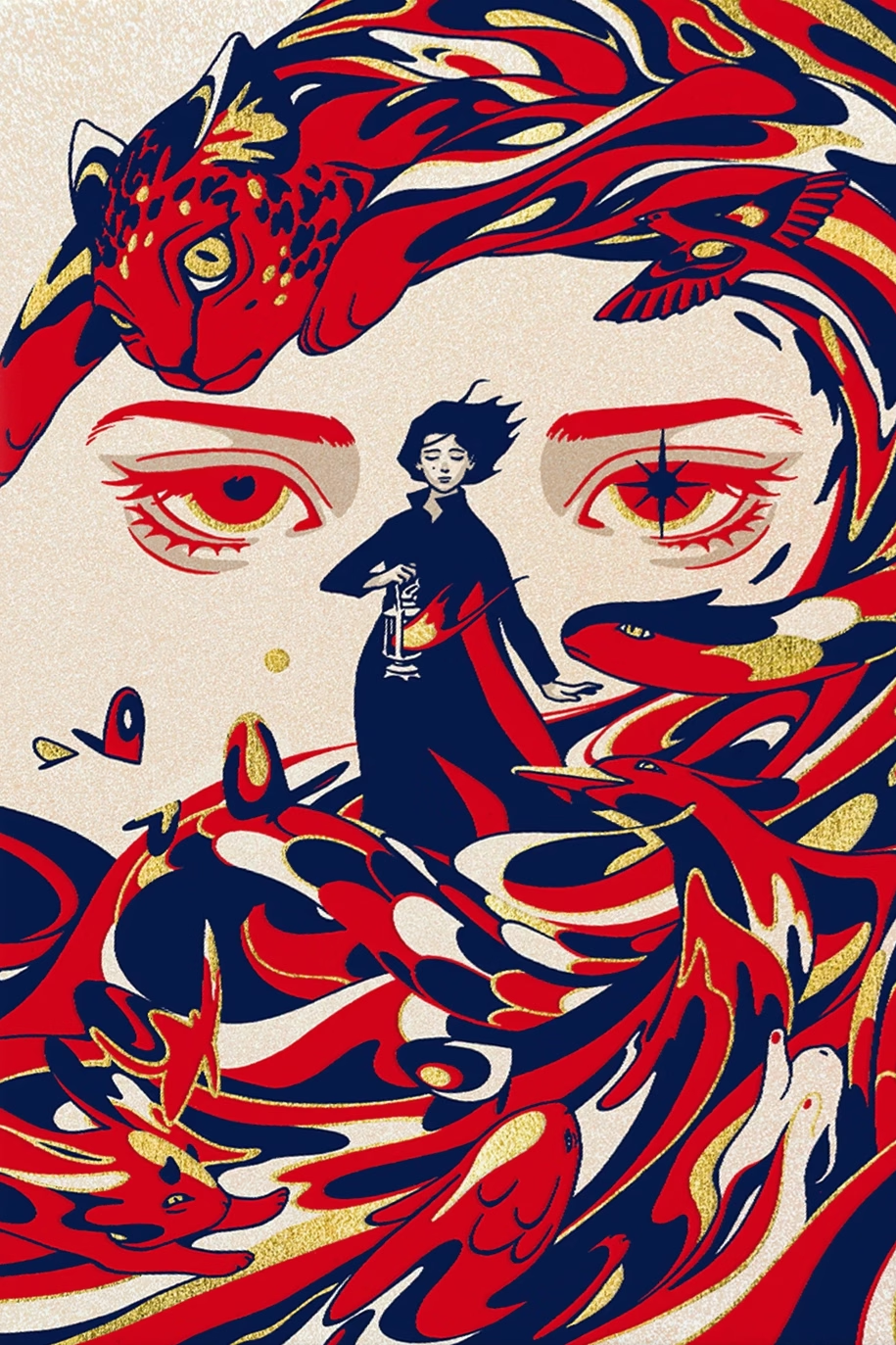
Brandon Sanderson's The Fires of December arrives as his sixth Secret Project with considerable fanfare and a polarizing reception that reveals a fundamental shift in how readers are responding to his recent work. This Cosmere standalone novel presents a time-loop narrative wrapped in political intrigue, featuring a protagonist who discovers the kingdom's salvation only after living an entire lifetime of hardship. The premise is compelling, the execution largely masterful, but the book has exposed a growing tension within Sanderson's fanbase about the direction of his storytelling.
What's the Verdict?
The Fires of December is worth reading if you value character-driven narratives with emotional depth and don't mind a slower, quieter opening that rewards patience. However, if you've grown weary of Sanderson's recent tonal shifts toward quip-heavy dialogue and comedic relief in serious moments, this book may frustrate you. The 4.26/5 rating from over 2,400 readers masks a genuine divide: devoted fans calling it his best opening ever, while long-time supporters express concern about his creative trajectory.
What's Actually Happening Here?
Hoid, the mysterious storyteller who appears throughout the Cosmere, frames this tale of December, an orphan raised by an innkeeper in the kingdom of Mountaincrest. The narrative unfolds with deliberate pacing—we watch December navigate an abusive marriage, social ostracization, and eventual stability as she educates her husband's three sons. Then, in the book's audacious twist, a plague emerges that poisons the demon-blood rivers sustaining the kingdom, killing nearly everyone. December survives into her 80s, blamed by survivors for the catastrophe, only to wake up fifty-nine years in the past with full knowledge of what's coming.
The second act becomes the real story: December, now armed with foreknowledge, must convince a skeptical court that an apocalyptic plague is approaching while navigating royal politics, court intrigue, and building unexpected friendships with a priestess and a fashion designer. It's a premise that echoes time-travel narratives like All You Need Is Kill or The Midnight Library, but filtered through Sanderson's fantasy worldbuilding sensibilities.
Where Sanderson Excels
The opening chapters genuinely deliver something special. Multiple beta readers and early critics specifically praised the book's beginning as potentially Sanderson's most compelling opening—a significant claim given his catalog. The pacing in these early sections creates genuine emotional investment without relying on action sequences or magical spectacle. You become invested in December's struggles before the time-loop mechanics even arrive.
December herself emerges as a protagonist worth following. She's flawed without being frustrating, determined without being unrealistic, and vulnerable in moments that feel earned rather than performative. Her relationships with Amaal (the priestess) and Tamantha (the dressmaker) develop with genuine chemistry, creating a found-family dynamic that readers consistently highlight as a strength. These friendships feel like the emotional core of the narrative, anchoring the political machinations with human stakes.
The worldbuilding concept—a civilization sustained by rivers of demon blood—is imaginative and unusual enough to distinguish itself from typical fantasy settings. Sanderson uses this unique element as more than window dressing; it becomes integral to both the plot mechanics and the thematic exploration of dependency and vulnerability.
Where It Stumbles
Here's where the The Fires of December review landscape becomes interesting: the book's tonal inconsistencies are dividing readers in ways that reflect broader concerns about Sanderson's recent work. Some readers find the humor and wit of supporting characters charming and character-appropriate. Others argue that the constant quips and sarcastic commentary undercut the emotional weight of a story about plague, death, and societal collapse.
One experienced critic noted that Sanderson's recent releases—Wind and Truth, Isles of the Emberdark, and now this—share a troubling pattern: the Cosmere increasingly feels like an MCU-style universe where every character speaks with the same witty, comedic voice regardless of circumstance. When characters make sarcastic jokes while discussing mass death or navigating genuine danger, it can feel tonally jarring rather than humanizing. This isn't a universal complaint, but it's specific enough and consistent enough across reader feedback to suggest a real stylistic issue rather than subjective preference.
The pacing, while praised for its opening, may test patience for readers seeking immediate action. The first act is deliberately slow, and while this works thematically, it demands reader tolerance for a gradual narrative build.
Who Should Actually Read This
Perfect for: Readers who loved the character focus of Yumi and the Nightmare Painter, fans of time-loop narratives who want something grounded in emotional consequence rather than puzzle-box mechanics, and anyone seeking a Cosmere entry point that doesn't require reading ten thousand pages of backstory. The standalone nature makes it genuinely accessible.
Skip it if: You're fatigued by Sanderson's recent tonal shifts, you need immediate plot momentum to stay engaged, or you prefer high-action fantasy where every scene crackles with danger. If Wind and Truth frustrated you with its comedic excess, The Fires of December likely won't resolve those concerns.
The Real Question: Is Sanderson Losing His Edge?
This book crystallizes a genuine debate within the fantasy community. Sanderson has spent the last few years working at an almost unsustainable pace, releasing multiple books annually while maintaining his Kickstarter commitments and completing the Stormlight Archive. Some readers see The Fires of December as evidence he's still operating at elite creative levels. Others view it as symptomatic of a creator spreading himself too thin, with each project showing signs of editorial compromise and tonal inconsistency.
The truth is probably both: this is a genuinely good book with an exceptional opening and compelling emotional core, but it also exhibits the exact stylistic problems that have frustrated readers of his recent work. Sanderson hasn't lost his ability to craft character and worldbuilding. He may have lost some ability to edit himself ruthlessly or to maintain tonal consistency across projects released at breakneck speed.
The Final Verdict
7.5/10 — A character-driven fantasy with an audacious premise and genuine emotional weight, undermined by tonal inconsistencies that reflect broader concerns about Sanderson's recent creative direction.
The Fires of December is absolutely worth reading if the premise intrigues you and you can tolerate a slower narrative burn. It's a book that will reward patient readers and likely disappoint those seeking immediate payoff. For Sanderson's core fanbase, it represents both the best and most troubling aspects of his recent output: masterful character work paired with stylistic choices that feel increasingly at odds with the stories he's telling.