Category:
Book ReviewsThe Firefly Hour Review: Cozy But Emotionally Distant
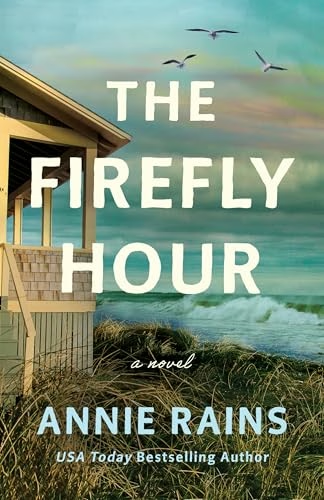
Prices can sometimes be lower on bigger marketplaces, but this link helps independent bookstores and local reading communities.
Annie Rains' The Firefly Hour is a contemporary family drama that arrives with all the trappings of a heartwarming second-chances story—a hurricane-damaged inn, estranged siblings, and a deceased grandmother's wisdom dispensed through recipe cards. On the surface, it delivers exactly what the premise promises: a bittersweet meditation on forgiveness set against the picturesque North Carolina coast. But here's what makes this Firefly Hour review worth your time: the book's greatest strength—its emotional restraint and gentle pacing—is also its most divisive weakness. Some readers find themselves wrapped in a warm blanket of nostalgia; others feel kept at arm's length, never quite achieving the deep emotional connection that transforms a good story into an unforgettable one.
Quick Verdict
The Firefly Hour is a well-crafted, competently written family saga that prioritizes comfort over complexity. It's the literary equivalent of sweet tea on a porch—pleasant, familiar, and unlikely to challenge you. If you're seeking a low-stakes, emotionally accessible read about sibling reconciliation, this delivers. If you want characters who burrow under your skin and stay there, you may find yourself admiring the book from a distance rather than embracing it.
What It's About
When a hurricane devastates the North Carolina coast, three estranged adult siblings are forced back together to repair their grandmother's bed-and-breakfast, The Shelter Inn. Amelia, the overachieving perfectionist, looks down on Maggie's directionless existence. Maggie resents Amelia's controlling nature and judgmental attitude. Duncan, typically the peacekeeper, carries a devastating secret that threatens to unravel what little family cohesion remains.
Their grandmother, Laverne, left behind more than just a damaged building—she left a box of recipe cards filled with wisdom about life, loss, and love. As the siblings work to rebuild the inn, these recipes become a framework for confronting their fractured relationships and the misunderstandings that have kept them apart for years.
The Writing & Style
Annie Rains writes with a painterly sensibility, and this is one area where The Firefly Hour genuinely excels. Her descriptions of the coastal setting are vivid without being overwrought—you can almost feel the humidity, see the fireflies dancing in the humid North Carolina twilight, and taste the sweetness of the lemonade that threads through the narrative as a metaphor for simpler, better times.
The prose moves at a deliberate pace. This isn't a page-turner in the traditional sense; it's a book designed for contemplation. Each chapter peels back another layer of resentment, revealing the small wounds and large disappointments that have calcified into family dysfunction. The multiple perspectives—rotating between Amelia, Maggie, and Duncan—work well structurally, though this also contributes to the emotional distance some readers report experiencing.
Rains' dialogue feels authentic to how families actually communicate: indirect, loaded with subtext, often missing the mark. Characters don't say what they mean; they circle around it, which is realistic but sometimes frustrating to read.
What Works: The Honest Family Dynamics
The central tension between Amelia and Maggie is the book's strongest element. Rains captures something true about sibling relationships—the way two people can love each other while simultaneously driving each other absolutely mad. Amelia's need to control everything stems from genuine care, even if it manifests as judgment. Maggie's aimlessness isn't laziness; it's a different way of moving through the world, and watching Amelia slowly recognize this is genuinely satisfying.
Duncan's storyline provides the emotional anchor. His secret—which I won't spoil—reframes the entire family dynamic and forces a reckoning with how siblings often fail to see each other's struggles. This particular plot thread is handled with sensitivity and emotional weight that the rest of the book occasionally reaches for but doesn't always achieve.
The recipe card concept is genuinely clever. Rather than feeling gimmicky, Laverne's wisdom—advice on "curating the perfect summer day" or "mending a broken heart"—functions as a gentle pressure valve throughout the narrative. These recipes aren't magical solutions; they're tools for reflection, which feels appropriate for a book about family healing.
What Doesn't Quite Land: Emotional Distance
Here's the central problem with The Firefly Hour: you can appreciate what's happening on the page without feeling it in your chest. The book describes emotions with intelligence and clarity, but it rarely makes you feel them viscerally. Characters explain their pain; they don't embody it in ways that create genuine reader investment.
This manifests most clearly in the relationship dynamics. We understand intellectually why Amelia and Maggie are estranged. We can trace the logic of their resentments. But the book keeps us at a narrative distance that prevents the kind of emotional breakthrough that would make their reconciliation truly cathartic. It's like watching a family therapy session through soundproof glass—you can see the progress, but you can't quite feel the weight of it.
The pacing, while intentional, occasionally feels slack. There are stretches where the plot seems to tread water, particularly in the middle section where the focus shifts too heavily to logistics (fixing the inn) rather than emotional stakes. Readers seeking momentum may find themselves checking how many pages remain.
Additionally, while Duncan's secret provides genuine emotional impact, it also exposes a limitation in how the book handles its three perspectives. His storyline feels more dramatically resonant than his sisters', which creates an uneven emotional landscape.
Who Should Read This Book
The Firefly Hour is ideal for readers who prioritize comfort and coziness over emotional intensity. If you love contemporary fiction like Beach Read by Emily Henry or The Midnight Library by Matt Haig but want something with deeper family dynamics, this fits that niche perfectly. It's excellent for fans of women's fiction who appreciate slower-burn narratives and are content with quiet epiphanies rather than dramatic revelations.
This book is also perfect for readers seeking validation about family complexity—the recognition that loving someone doesn't mean understanding them, and that healing often looks less like a breakthrough moment and more like a series of small, imperfect steps.
Who Might Not Connect
If you prefer character-driven literary fiction with psychological depth—think Dept. of Speculation by Jenny Offill or Dept. of Speculation by Celeste Ng—The Firefly Hour may feel too surface-level. Readers who want their family dramas to cut deeper, to explore the darker underbelly of sibling relationships, will likely find this too gentle.
Those seeking plot-driven narratives with high stakes and genuine tension should look elsewhere. The dramatic tension here is internal and muted, which is intentional but not universally appealing.
Comparison Points
If you've read Kristin Hannah's The Great Alone or The Nightingale, you know Hannah specializes in high-stakes family drama with genuine danger lurking beneath the surface. The Firefly Hour is the opposite—it's intimate rather than epic, reflective rather than propulsive. It's closer in spirit to Debbie Macomber's emotionally intelligent contemporaries, though Rains brings more literary sophistication to her prose.
For a more direct comparison: if you loved the family reconciliation elements of Beach Read by Emily Henry but found that book too focused on romance, The Firefly Hour recalibrates the balance toward family dynamics. However, it sacrifices some of Henry's narrative momentum in the process.
The Verdict
The Firefly Hour by Annie Rains is a competent, well-written meditation on family estrangement and the possibility of reconciliation. It won't revolutionize your reading life, but it will provide a pleasant, emotionally safe space to contemplate themes of forgiveness and belonging. The writing is lovely, the setting is evocative, and the family dynamics ring true. But the emotional payoff never quite matches the setup, leaving readers with admiration rather than the deep emotional satisfaction that elevates good books into great ones.
Is The Firefly Hour worth reading? Yes—if you're in the market for a gentle, cozy family drama that prioritizes atmosphere and reflection over emotional intensity. No—if you need your fiction to move you profoundly or challenge your assumptions about human connection.
Final Score: 7/10
A well-executed comfort read that delivers on its promise of gentle family healing, but lacks the emotional depth to truly resonate beyond the reading experience.