Category:
Book ReviewsThe Ex-Wives Club Review: Clever but Disappointingly Shallow
Prices can sometimes be lower on bigger marketplaces, but this link helps independent bookstores and local reading communities.
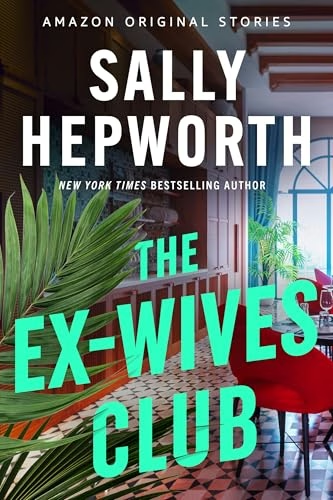
Sally Hepworth's The Ex-Wives Club is a short-form thriller that arrives with an intriguing premise but struggles to justify its own existence beyond the novelty of its setup. Published as part of Amazon's Alibis collection—a series of standalone stories centered on lies, truth, and deception—this 84-page novella asks readers to invest in a murder mystery where the most interesting element is the victim's three ex-wives who actually get along. It's a smart hook, but Hepworth doesn't quite stick the landing.
Let me be direct: is The Ex-Wives Club worth reading? If you're expecting a domestic-suspense novel with the depth Hepworth delivers in her full-length work, the answer is no. If you're looking for a clever, disposable mystery you can finish in an afternoon and forget by evening, then yes—it's perfectly serviceable. The distinction matters, because this book's central problem isn't that it's bad; it's that it's forgettable.
What It's About
Celebrity chef Ian Curley turns up dead in his restaurant's walk-in freezer. The suspects are plentiful: his three ex-wives (Anita, Mary-Jane, and Rosie) who maintain a Friday dinner tradition at his establishment, his two adult children who work there, his current girlfriend, and various staff members. Everyone has motive. Everyone has an alibi. Detective Charlene Li must untangle the contradictions to find the killer.
The setup is genuinely clever. The idea that three ex-wives have built a genuine friendship—bonded by their shared experience of being wronged—is far more interesting than the tired trope of jealous exes at each other's throats. Hepworth recognizes this and leans into it, making their camaraderie the emotional core of the story. In a market saturated with domestic thrillers, this angle feels fresh.
Writing & Style: The Double Timeline Gamble
Hepworth employs a dual-timeline structure that alternates between the night of the murder and the investigation that follows. This technique works better in theory than execution. While the back-and-forth does create momentum and gradually reveals secrets, the chapters are frustratingly brief—sometimes just a few pages before cutting away. This constant switching becomes more disorienting than suspenseful, and readers never settle long enough to build genuine tension.
The narrative perspective shifts across multiple characters, which is ambitious for a short story. Most of the time, Hepworth manages this successfully. The cast remains distinguishable, and their distinct voices come through. However, the brevity of the format means character development is sacrificed for plot mechanics. You learn what these people want, but rarely why they want it with any emotional resonance.
The audiobook narration by Anthea Greco reportedly enhances the experience—a format advantage that short fiction often depends on. If you're considering this story, the audio version may be the superior choice for maintaining immersion across those quick chapter breaks.
What Works: The Prologue and Pacing
The prologue is genuinely excellent. For a short story, opening with a hook strong enough to rival full-length thrillers is no small feat. It immediately establishes stakes and makes you curious about how we arrive at this moment. This opening is the story's greatest strength.
The pacing is relentless. You can absolutely finish this in one sitting, and the momentum rarely falters. There's always something happening, always a new detail emerging. For readers with limited time, this is a feature, not a bug. Hepworth doesn't waste words on unnecessary scene-setting or exposition dumps.
The central mystery itself contains a decent twist. It's not shocking in the way that makes you want to immediately reread the story, but it's satisfying enough. The revelation recontextualizes earlier scenes in a way that works, even if some readers feel it relies on convenient timing rather than careful plotting.
What Doesn't Work: Depth Masquerading as Mystery
Here's the core problem with The Ex-Wives Club: it's fundamentally a domestic drama pretending to be a thriller. There's nothing wrong with domestic drama—Hepworth's full-length novels prove she excels at it. But the marketing positions this as a mystery with genuine suspense, and that's misleading. The detective work is perfunctory. The alibis are contradictory in ways that feel more like convenient plot devices than genuine investigative challenges.
Detective Li's bumbling assistant exists primarily as comic relief, but the humor lands inconsistently. More problematically, the detective herself never feels like an active force in the narrative. She's more observer than investigator, and her eventual conclusions feel less earned than simply revealed.
The ending, while satisfying, contains elements that strain credibility. Some readers describe it as deus ex machina—a resolution that feels imposed rather than inevitable. The emotional payoff is there, but the logical architecture that should support it feels shaky. Hepworth prioritizes thematic resonance over plot mechanics, which is a valid choice, but it undermines the mystery framework entirely.
The brevity that makes this readable in one sitting also prevents meaningful backstory. You learn that these characters have grievances, but you don't feel them. The ex-wives' friendship is asserted rather than demonstrated through genuine interaction. We see them at the restaurant, but we don't see the years of bonding that would make their loyalty believable.
Who Should Read This
Perfect for: Commuters with 90 minutes to spare, fans of Sally Hepworth who want a quick fix between her novels, readers who prefer their mysteries light and unchallenging, anyone curious about the Alibis collection format, audiobook listeners who want an immersive short experience.
Avoid if: You expect the depth of Hepworth's full-length work, you want genuine thriller mechanics and detective work, you're looking for character development and emotional investment, you're bothered by plot contrivances or convenient revelations, you prefer mysteries that reward rereading and careful attention to clues.
Comparison to Similar Work
If you've read Hepworth's Darling Girls, you know what to expect stylistically—domestic drama with mystery elements and multiple perspectives. The Ex-Wives Club is that formula in miniature, which means it lacks the breathing room that made Darling Girls compelling. For comparison, Ruth Ware's short stories in collections like Zero Days pack more genuine suspense into similar page counts, though they sacrifice character depth. Hepworth's strength has always been character, but character needs space to develop. Cramming it into 84 pages exposes the limitations of the format for her particular skillset.
Final Verdict
6.5/10 — A clever premise executed with professional competence but insufficient depth to linger in memory. The Ex-Wives Club is perfectly pleasant entertainment that accomplishes exactly what it sets out to do: provide a quick, engaging mystery with a likable cast and a satisfying conclusion. It's worth your time if you have that time to spare and you're not expecting profound character work or ingenious plot mechanics. But it's not the kind of story that justifies seeking out or rereading. It's the literary equivalent of a well-made television episode—entertaining in the moment, forgotten by tomorrow.
Sally Hepworth's The Ex-Wives Club succeeds as a format experiment but fails as a reason to believe short-form mysteries are where she should focus her considerable talents. Her novels prove she's capable of much more. If you're choosing between this and one of her full-length works, choose the novel. If you're specifically looking for a one-sitting read and you're a Hepworth fan, this won't disappoint—but it won't surprise you either.