Category:
Book ReviewsThe Day After Review: Ambitious but Predictable
Prices can sometimes be lower on bigger marketplaces, but this link helps independent bookstores and local reading communities.
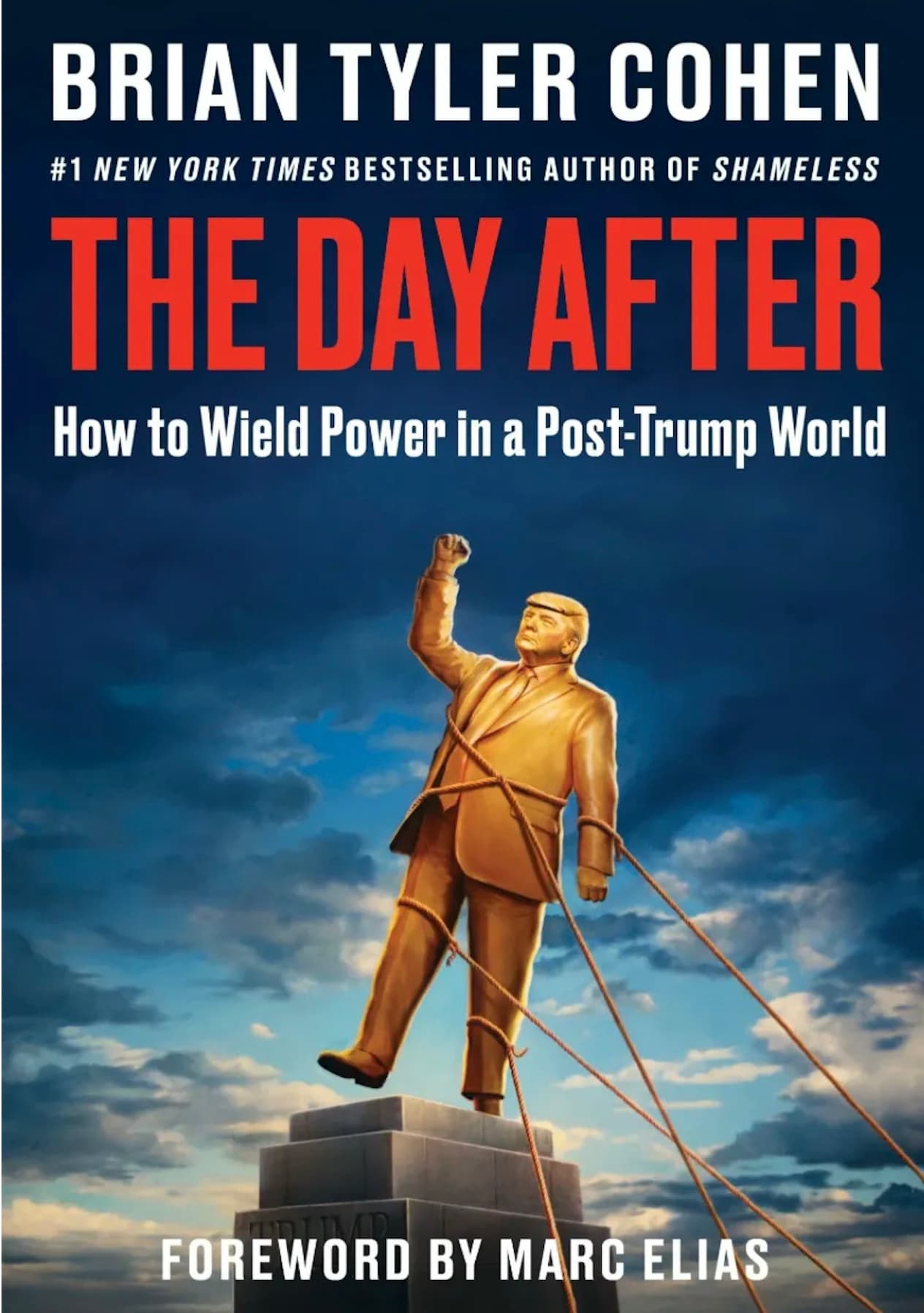
Brian Tyler Cohen's The Day After: How to Wield Power in a Post-Trump World arrives at a critical moment in American politics, offering a blueprint for Democratic action in the aftermath of political upheaval. As a political commentator with substantial media influence, Cohen attempts to move beyond his YouTube commentary into longer-form analysis, but the result is a book that feels more like an extended podcast episode than a genuinely groundbreaking political manifesto.
The core argument is straightforward: American democracy has been systematically dismantled over decades, and the next Democratic administration cannot afford to play by outdated rules of bipartisanship. Cohen contends that Republicans abandoned compromise long ago, leaving Democrats to either adapt their strategy or watch democratic institutions crumble. This thesis isn't particularly novel—it echoes arguments made in books like How Democracies Die by Steven Levitsky and Daniel Ziblatt, which examined autocratic backsliding in detail years earlier. However, Cohen's specific policy recommendations—Supreme Court reform, DOJ independence codification, and aggressive legislative action—provide concrete direction where some political discourse remains abstract.
What It's About
Cohen structures his argument around the premise that returning to "normal" after Trump represents a dangerous fantasy. The book catalogs specific institutional failures, from gerrymandering to voter suppression to the politicization of the judiciary, then proposes systemic reforms necessary to prevent democratic erosion. He argues that Democrats have fundamentally misunderstood the nature of modern political conflict, treating it as a negotiation when it's actually a competition for institutional control.
The book also addresses the psychological and strategic barriers preventing Democrats from wielding power effectively. Cohen suggests that Democratic leaders often suffer from a self-imposed constraint—a belief that they must remain "above the fray" morally—while Republicans operate without such limitations. This asymmetry, he argues, has left Democrats perpetually disadvantaged in high-stakes political battles.
Writing & Style
Cohen's prose is accessible and conversational, reflecting his media background. The writing moves quickly, avoiding dense academic jargon that might alienate general readers. However, this accessibility comes at a cost: the book rarely ventures into truly sophisticated analysis. The arguments are presented clearly but without the nuance or evidentiary depth that would distinguish this work from Cohen's existing video content.
The audiobook format—which many readers consumed—likely enhances the experience, as Cohen's natural speaking voice carries the material with considerable energy. Yet even strong narration cannot overcome the fundamental limitation: readers familiar with Cohen's YouTube channel will encounter few genuinely new ideas here.
What Works
The book succeeds in articulating what many Democrats feel but struggle to express: frustration with their party's perceived weakness and anxiety about democratic backsliding. Cohen's specific policy proposals—particularly regarding Supreme Court reform and DOJ independence—are detailed enough to feel substantive. The section on gerrymandering and voter suppression tactics effectively illustrates how Republicans have systematically rigged electoral advantages.
Cohen also deserves credit for directly confronting the question of Democratic ruthlessness. Rather than pretending moral superiority remains viable in asymmetrical political warfare, he argues that Democrats must become as strategic and single-minded as their opponents. This represents a genuine departure from the "go high" rhetoric that has dominated Democratic messaging, even if the argument itself isn't revolutionary.
The book's urgency feels appropriate to the moment. Whether one agrees with Cohen's conclusions, his underlying concern about democratic erosion reflects real institutional vulnerabilities that deserve serious attention.
What Doesn't Work
The Day After review landscape reveals a significant blind spot: Cohen largely ignores systemic corruption and dysfunction within the Democratic Party itself. One recurring criticism from readers concerns his failure to address dark money, Super PACs, and Democratic complicity in late-stage capitalism. By focusing exclusively on Republican threats to democracy, Cohen presents an incomplete picture of institutional capture.
This selective critique matters because it suggests the book's real agenda may be less about systemic reform and more about restoring Democratic power within existing structures. If Democrats regain control without addressing their own structural vulnerabilities—corporate influence, donor dependence, gerrymandering when advantageous—then Cohen's reforms simply shuffle power between competing establishments rather than fundamentally democratizing politics.
Additionally, the book assumes a Democratic electoral victory in 2028 with surprising confidence. Given current political trajectories, voter suppression effectiveness, and Democratic organizational challenges, this assumption feels optimistic to the point of naivety. The book provides little contingency planning for scenarios where Democrats cannot reclaim power through conventional electoral means.
The writing also lacks the kind of historical depth that would strengthen Cohen's arguments. Comparisons to previous moments of institutional reform—Reconstruction, the Progressive Era, the Civil Rights period—appear only superficially, if at all. This historical shallowness makes the book feel more like contemporary political commentary than serious political analysis.
Who Should Read It
The Day After is ideal for readers already engaged with Democratic politics who want to understand one influential progressive voice's thinking about party strategy. If you follow Cohen's media work and appreciate his communication style, the book extends that engagement into longer-form territory. Political junkies interested in specific reform proposals—particularly Supreme Court expansion and DOJ independence—will find useful material here.
However, this book will frustrate readers seeking genuinely original political thinking or those skeptical of Democratic Party institutions. Progressive readers concerned about Democratic complicity in systemic corruption will find Cohen's analysis incomplete. Conservatives and Republicans will predictably dismiss the work as partisan, though some may appreciate Cohen's willingness to engage substantive policy debates rather than pure partisan rhetoric.
Readers seeking comprehensive analysis of post-Trump American politics might be better served by works offering broader institutional critique or deeper historical context. Those wanting practical guidance on political activism at the grassroots level will find the book's focus on top-down institutional reform somewhat disconnected from ground-level organizing.
The Verdict
Brian Tyler Cohen's The Day After: How to Wield Power in a Post-Trump World is a competent political manifesto that articulates genuine Democratic anxieties without quite achieving the originality or depth necessary for lasting impact. The book succeeds as an extended argument for Democratic strategic ruthlessness and specific institutional reforms, but it fails to grapple with uncomfortable truths about Democratic Party dysfunction. Is The Day After worth reading? For engaged political readers and Cohen's existing audience, yes—it provides useful strategic thinking and clear policy proposals. For those seeking transformative political analysis or comprehensive institutional critique, the book offers less than its ambitions suggest.
The central tension defining this Day After review concerns whether the book represents genuine reform thinking or sophisticated defense of Democratic establishment interests. That ambiguity, more than any specific argument, may be the book's most revealing feature.
Final Score
6.5/10 — Engaging political strategy for Democrats seeking institutional reform, but limited by its narrow focus and failure to address Democratic Party corruption.