Category:
Book ReviewsThe Covenant of Water Review: Epic Ambition Meets Divisive Execution
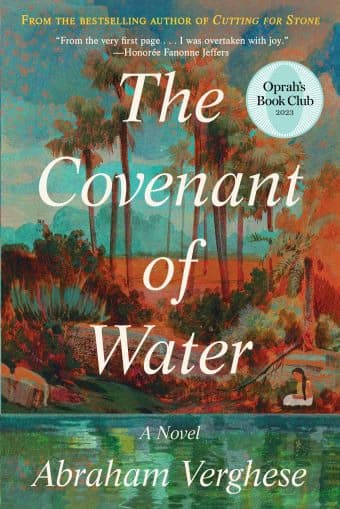
Prices can sometimes be lower on bigger marketplaces, but this link helps independent bookstores and local reading communities.
Abraham Verghese's The Covenant of Water is a sprawling 715-page historical epic that attempts nothing less than a multigenerational family saga set against the backdrop of 20th-century Kerala. This novel will either captivate you completely or exhaust you halfway through—there's remarkably little middle ground. The central premise is haunting: a family cursed by water, where drowning claims at least one member per generation in a land surrounded by backwaters, rivers, and monsoons. It's the kind of hook that demands to be explored, yet Verghese's execution of this concept reveals the fundamental tension that defines this book: ambition isn't always clarity.
Quick Verdict
The Covenant of Water is a masterfully written love letter to Kerala and to medical progress, anchored by unforgettable characters and meticulous historical detail. However, its 700+ page length tests patience, and the narrative structure—jumping between timelines and multiple perspectives—frustrates readers seeking linear storytelling. If you have the stamina for immersive, detail-rich historical fiction and patience with deliberate pacing, this novel rewards deeply. If you prefer tighter plots and faster momentum, you'll likely abandon it.
What This Book Is Actually About
The story opens in 1900 with a twelve-year-old girl from Kerala's Syrian Christian community being sent by boat to marry a forty-year-old widower she's never met. This opening is deliberately unsettling—designed to make modern readers uncomfortable with historical marriage practices. That girl becomes Big Ammachi, the family's matriarch, and her relationship with her husband becomes the emotional core of the narrative, evolving from an arranged transaction into a portrait of genuine partnership and love.
But The Covenant of Water isn't simply Big Ammachi's story. Verghese introduces a secondary character named Digby whose timeline eventually intersects with the family's arc, creating a structure that initially confuses readers but ultimately reveals the author's deeper purpose: exploring how individual lives are shaped by medical progress, cultural change, and the passage of generations. The novel spans from 1900 to 1977, tracking the family through independence, modernization, and personal tragedy.
The Writing and Narrative Structure
Verghese's prose is genuinely beautiful. His descriptions of Kerala's landscape—the backwaters, the monsoons, the colonial architecture—create an almost tactile sense of place. The author clearly researched meticulously, weaving medical details, historical events, and cultural specifics throughout the narrative. His background as both a physician and writer gives the medical elements credibility and emotional weight.
However, the narrative structure is where readers divide sharply. The book doesn't proceed chronologically from 1900 to 1977. Instead, Verghese moves between timelines, introduces multiple characters with equal narrative weight, and takes extensive detours into medical history and cultural context. Some readers find this layering enriching and sophisticated. Others find it frustrating and unnecessarily complex. There's no objective answer here—it depends entirely on your tolerance for non-linear storytelling and your patience with authorial digression.
What Works Brilliantly
The relationship between Big Ammachi and her husband is genuinely moving. Verghese portrays their marriage with such tenderness and specificity that it becomes a powerful counter-narrative to the disturbing opening premise. You watch this man honor his young bride, allow her to grow into womanhood, and gradually build genuine partnership. It's a quiet love story embedded in an epic framework.
The family's resilience is also compelling. Despite the "covenant of water"—the generational drowning curse—this family persists. They build lives, pursue education, become doctors and professionals, and navigate the seismic changes of 20th-century India. Verghese doesn't shy away from suffering, but he also doesn't wallow in it. The tone is fundamentally hopeful, which distinguishes this novel from much contemporary literary fiction.
The audiobook narration, read by Verghese himself, is exceptional. If the page count intimidates you, the audiobook is genuinely worth considering. The author's calm, measured delivery transforms the reading experience, making the lengthy narrative feel more intimate and deliberate rather than bloated.
What Doesn't Quite Work
The length is the elephant in the room. At 715 pages, The Covenant of Water demands serious commitment. While devoted readers report that pages "melt away," many others abandon the book around the 40% mark, feeling that the narrative hasn't justified its scope. Verghese could have told this story compellingly in 500 pages—the question is whether the additional material enriches the core narrative or simply indulges the author's affection for his own creation.
The multiple timelines and character perspectives, while thematically purposeful, can feel scattered. Readers expecting a linear family saga may feel disoriented by the constant shifting between Big Ammachi's timeline and Digby's, between past medical history and present-day revelation. This isn't a flaw in craftsmanship—it's a deliberate artistic choice that not everyone will appreciate.
The pacing is leisurely. If you're accustomed to contemporary page-turners with escalating tension, The Covenant of Water will feel slow. Verghese prioritizes atmosphere, detail, and emotional nuance over plot momentum. This is intentional, but it's worth knowing before you commit.
Who Should Read This Book
Perfect for: Readers who loved Cutting for Stone (Verghese's earlier novel) and want more of his particular blend of medical detail and family saga. Book club members seeking substantial material for discussion. Fans of literary historical fiction like The Nightingale or All the Light We Cannot See. Readers interested in Indian history, Kerala culture, or the intersection of medicine and social progress. Anyone with patience for deliberate, immersive narratives.
Skip it if: You prefer fast-paced plots with clear narrative momentum. You're intimidated by page counts and lengthy time commitments. You dislike non-linear storytelling. You found Cutting for Stone overly ambitious or unfocused. You want straightforward family saga without historical digression.
The Verdict: Is The Covenant of Water Worth Reading?
Yes—but with caveats. This The Covenant of Water review acknowledges that Verghese has created something genuinely significant: a multigenerational family epic that honors both personal intimacy and historical sweep. The novel succeeds at what it attempts, which is to create an immersive portrait of a specific family, a specific place, and a specific historical moment.
The real question isn't whether the book is "good"—it demonstrably is. The question is whether you're the right reader for it. If you have the patience for 700+ pages of meticulous detail, non-linear storytelling, and leisurely pacing, The Covenant of Water will reward you with unforgettable characters, beautiful prose, and genuine emotional depth. If you're seeking tighter, faster-paced narrative, you'll likely feel frustrated.
Abrahm Verghese's The Covenant of Water deserves its acclaim and its passionate readership. It's not perfect, and it's not for everyone, but it's undeniably ambitious, beautifully executed, and deeply felt. That's worth something in an era of safer, smaller novels.
Final Score: 8/10 — A magnificent, flawed epic that achieves its artistic vision, even if that vision requires more patience than most contemporary readers possess.