Category:
Book ReviewsThe Comfort Book Review: Haig's Gentle Antidote Works
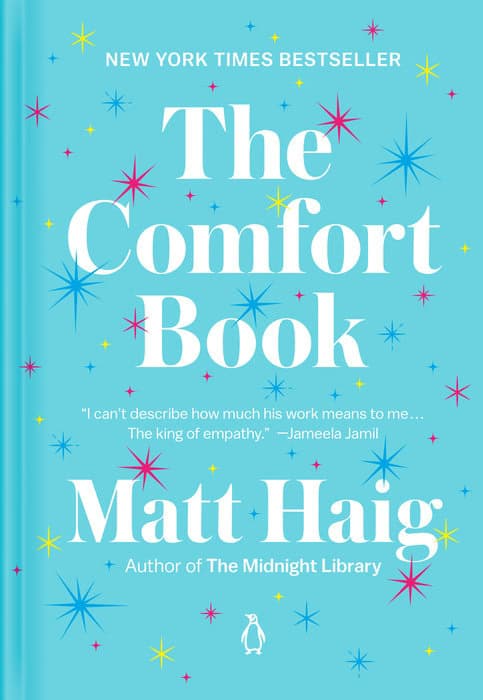
Prices can sometimes be lower on bigger marketplaces, but this link helps independent bookstores and local reading communities.
Matt Haig's The Comfort Book is a deceptively simple collection of personal notes, lists, and reflections designed to soothe rather than transform. Unlike traditional self-help books that promise systematic life overhauls, Haig's approach is refreshingly humble: he's sharing his personal life raft, originally written for himself during his darkest moments, now extended to readers navigating their own storms. The verdict is straightforward—this book delivers exactly what its title promises, though whether that's enough depends entirely on what you're seeking.
What Is The Comfort Book About?
The Comfort Book isn't a narrative you read cover-to-cover in one sitting (though you can). Instead, it's a collection of bite-sized wisdom pieces: observations about philosophy, recommendations for comfort films and music, true stories of resilience, and philosophical musings drawn from Haig's personal experience with suicidal depression and anxiety. The book functions as a permission slip to slow down, to appreciate life's small moments, and to recognize that our darkest feelings are temporary states, not permanent destinations.
Haig draws from diverse sources—stoic philosophy, personal anecdotes, pop culture references like Ferris Bueller's Day Off, and scientific observations about human nature. One recurring theme crystallizes his entire philosophy: "None of us are the same people we were ten years ago." This simple truth anchors much of what makes the book work. It reminds readers that suffering isn't permanent, and that future versions of ourselves might find meaning in enduring present pain.
The Writing and Format: Accessibility as Strength
Haig's prose is deliberately brief and unadorned. Most entries span just a paragraph or two—some barely a page. This isn't laziness; it's architectural brilliance. The shortness forces precision. Complex ideas are distilled to their essence, making the book genuinely dippable. You can read one entry on your commute, photograph it, and return to it weeks later when you need it.
This format also means not every entry will resonate. Some segments venture into philosophical territory that feels slightly overwrought for the casual reader, while others land with unexpected emotional force. Haig acknowledges this implicitly by suggesting readers can "throw out the window" any sections that don't serve them. This meta-awareness—that comfort is personal and subjective—is perhaps the book's wisest feature.
The audiobook version deserves mention here, as Haig's own narration adds an intimate dimension that the printed text can't quite capture. Hearing him read passages about his own depression creates an immediacy that transforms the experience from reading advice to receiving a phone call from someone who genuinely understands.
What Works: The Specificity of Personal Experience
The book's greatest strength is that Haig never pretends to have all the answers. He writes from the trenches of lived experience—specifically, from having survived suicidal ideation and chronic anxiety. This authenticity distinguishes The Comfort Book from generic wellness literature. When Haig writes about how writing itself becomes therapeutic, or how perspective shifts over time, you're reading from someone who has tested these ideas in real conditions.
The inclusion of pop culture references and seemingly trivial comfort sources—a particular film, a song, a memory—validates something readers rarely see acknowledged in self-help: that comfort isn't always profound. Sometimes it's just a good movie. Sometimes it's tea. Haig's willingness to mix high philosophy with low-brow comfort sources creates an unusual egalitarianism. There's wisdom in Stoicism and wisdom in Ferris Bueller.
The book also works as a mirror. Many readers report being inspired to create their own comfort collections—scrapbooks, playlists, journals of personal reminders. The Comfort Book functions as both a finished product and a template, showing readers how to curate their own arsenal of emotional resources.
What Doesn't Quite Land: The Limitations of Brevity
The same brevity that makes the book accessible occasionally undermines depth. Some entries feel like they're just beginning when they end. Readers seeking sustained argumentation or detailed case studies will find themselves wanting more development. For those accustomed to the narrative arc of Haig's novel The Midnight Library, this fragmented approach requires a different reading muscle.
Additionally, the book's reliance on Haig's personal depression narrative, while powerful, can feel repetitive across entries. There's only so much ground to cover when your primary lens is "I survived suicidal depression and here's what helped." Some readers will find this singular perspective limiting, especially if they're dealing with different mental health challenges or life circumstances.
The philosophical sections, while occasionally brilliant, sometimes veer into territory that feels slightly detached from the book's core comfort mission. A reader seeking immediate solace might find themselves bogged down in abstract musings when they'd prefer practical grounding techniques.
Who Should Read The Comfort Book?
Perfect for: Anyone navigating anxiety, depression, or general life difficulty who wants permission to slow down. Readers who love Haig's previous work (Reasons to Stay Alive, Notes on a Nervous Planet) will find familiar themes refined. People who appreciate short-form, dippable content rather than linear narratives. Those seeking a gift for someone struggling—the book's gentle aesthetic and genuine warmth make it ideal for this purpose. Fans of philosophical but accessible writing will appreciate Haig's balance of depth and readability.
Will likely frustrate: Readers seeking systematic self-help frameworks or actionable step-by-step guidance. Those who prefer narrative-driven non-fiction. People skeptical of mental health memoirs or who find personal vulnerability in writing off-putting. Anyone wanting sustained philosophical argumentation rather than aphorisms. Those dealing with acute mental health crises (this is comfort literature, not crisis intervention).
The Comparison Context
If you've read The Midnight Library, The Comfort Book is the non-fiction companion—less imaginative but more direct. Compared to Brené Brown's work, Haig is less prescriptive and more contemplative. Unlike Mark Manson's deliberately provocative approach, Haig leans toward gentleness. It occupies its own space: philosophical without being pretentious, personal without being exploitative, hopeful without being toxic-positive.
Is The Comfort Book Worth Reading?
Yes, with caveats. The Comfort Book review scores consistently high because it delivers on its promise: genuine comfort. But "comfort" isn't what everyone needs at every moment. If you're seeking transformation, this isn't it. If you're seeking validation that life's small moments matter, that your pain is temporary, and that you're not alone in your darkness, then absolutely—this book is worth your time.
The 4.05-star average rating across nearly 77,000 reviews reflects its broad appeal and genuine utility. It's not a five-star masterpiece that changes your life, but it's a solid, honest book that meets you where you are and says: you're going to be okay. Sometimes that's exactly what we need to hear.
Final Verdict
7.5/10 — A genuinely comforting collection that delivers on its promise, though its fragmented format and limited scope prevent it from achieving greater depth or impact.