Category:
Book ReviewsThe Book of Hope Review: Goodall's Antidote Works
Prices can sometimes be lower on bigger marketplaces, but this link helps independent bookstores and local reading communities.
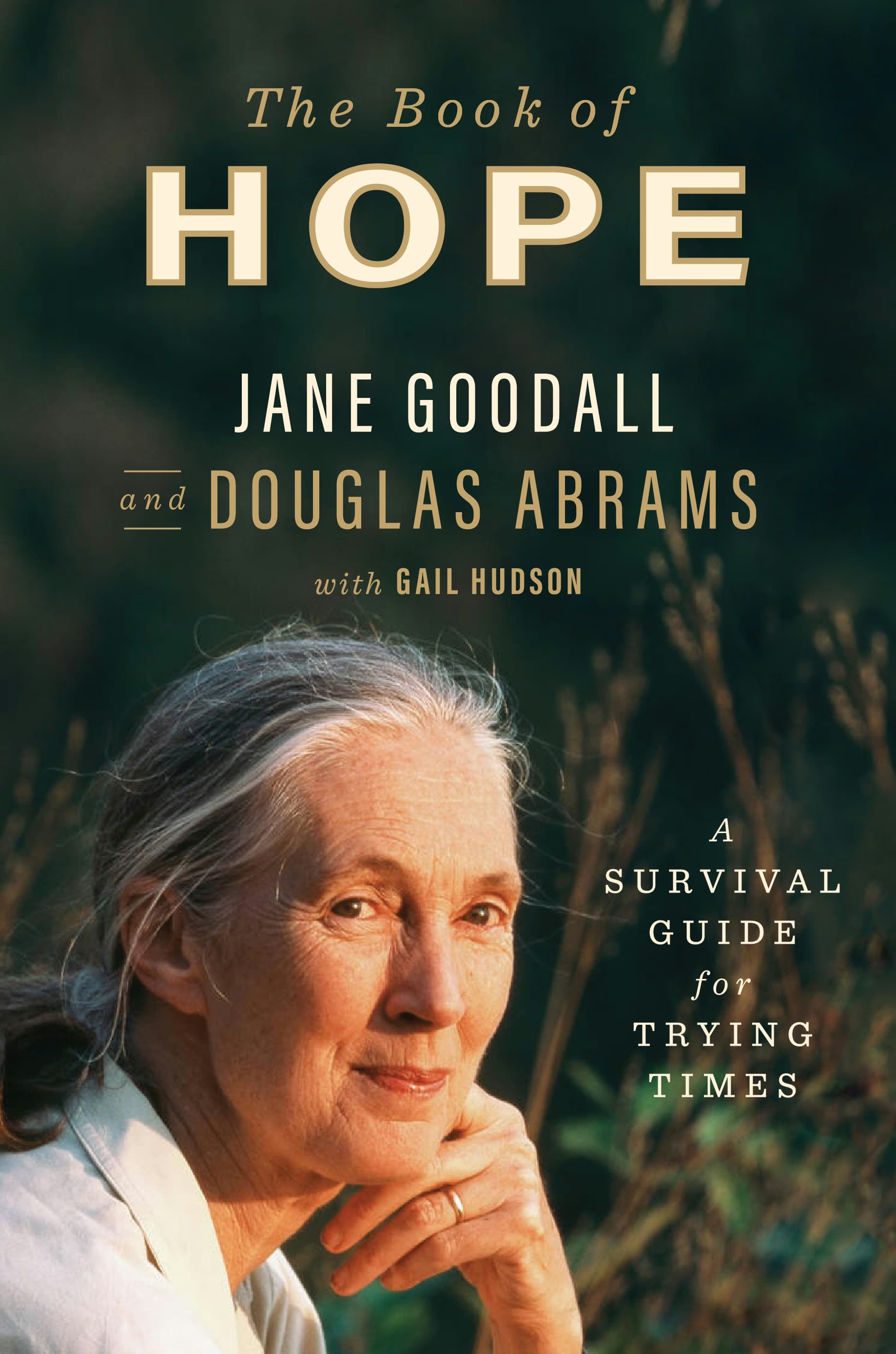
Jane Goodall's The Book of Hope: A Survival Guide for Trying Times, co-authored with Douglas Abrams, arrives at a cultural moment when optimism feels like a luxury we can't afford. This isn't a self-help platitude wrapped in glossy packaging. Instead, it's a measured, evidence-based argument for hope delivered by someone who has spent over six decades observing nature's complexity and humanity's capacity for change. The question isn't whether Goodall can inspire—her track record speaks for itself—but whether this particular book justifies the hype surrounding it.
The answer is complicated, and that's precisely what makes this Book of Hope review worth your time.
What This Book Actually Is
Let's be clear about what you're getting: this is a dialogue, not a lecture. Abrams structures the conversation around Goodall's "Four Reasons for Hope"—The Amazing Human Intellect, The Resilience of Nature, The Power of Young People, and The Indomitable Human Spirit. Rather than abstract philosophy, Goodall grounds each pillar with stories from her remarkable career: her early years observing chimpanzees in Gombe Stream National Park, her transformation from field researcher to global environmental advocate, and her reflections on living through World War II.
The book functions almost as a memoir-meets-manifesto. Goodall reveals how her hopeful worldview was shaped by specific moments and challenges, creating a narrative arc that feels personal rather than preachy. This structural choice matters because it's the difference between being told "hope is important" and understanding why someone who has witnessed humanity's worst impulses still chooses optimism.
The Audiobook Factor Changes Everything
Readers consistently highlight the audiobook experience as transformative, and there's a legitimate reason. Hearing Goodall's own voice—calm, articulate, never condescending—creates an intimacy that the printed page struggles to replicate. Her cadence and tone communicate as much as her words. She speaks with the authority of someone who has nothing left to prove, which paradoxically makes her more persuasive.
But here's where the format becomes crucial: the printed edition includes photographs that deserve attention. Images of plants grown from 2,000-year-old seeds, archival photos from Gombe, and candid moments throughout Goodall's career provide visual evidence for her arguments about nature's resilience and human connection. These aren't decorative—they're integral to the book's thesis. Readers report googling individual photographs to learn more, which suggests the visual component elevates the entire reading experience.
What Works Brilliantly
Goodall's refusal to traffic in false optimism is the book's greatest strength. She doesn't deny the climate crisis, pandemic devastation, or political chaos. Instead, she acknowledges these realities while presenting concrete examples of positive change: technological breakthroughs, ecological restoration projects, youth activism movements like those led by Greta Thunberg. This isn't toxic positivity—it's grounded realism about humanity's capacity for course correction.
The dialogue format also prevents the book from becoming didactic. When Abrams asks clarifying questions, he's essentially asking what readers want to know. Why should we trust hope? How do we cultivate it in our children? What does hope look like in practical terms? These aren't rhetorical flourishes; they're genuine inquiries that push Goodall to elaborate and defend her positions.
Another unexpected strength: Goodall's willingness to discuss her own evolution. She shares how she moved from pure scientific observation to activism, acknowledging the tension between these roles. This transparency about her own journey builds credibility. She's not presenting a finished philosophy handed down from on high—she's describing a lived process of learning and adaptation.
Where It Stumbles
The book's greatest weakness is also its most structural feature: the dialogue format can feel uneven. Some exchanges flow naturally; others feel like Goodall is simply expanding on predetermined talking points. Occasionally, Abrams's questions seem designed primarily to prompt specific answers rather than genuine exploration. This creates moments where the conversation reads more like a curated TED talk than an organic exchange.
Second, the book's scope is simultaneously its limitation. Trying to address climate change, youth empowerment, human resilience, and nature's recovery in one volume means each topic receives surface-level treatment. Readers seeking deep dives into specific environmental issues or detailed policy recommendations will find the book insufficient. It's inspirational architecture, not technical blueprint.
Third, there's an implicit assumption that hope itself is universally accessible. The book doesn't adequately address how socioeconomic position, trauma history, or lived experience of systemic oppression affects one's capacity for hope. Goodall's optimism, while earned, emerges from a particular vantage point. The book could have benefited from more explicit acknowledgment of this limitation.
The Comparison Question: How Does It Stack Up?
If you've read Abrams's earlier collaboration, The Book of Joy (featuring conversations between the Dalai Lama and Archbishop Desmond Tutu), you'll recognize the structural DNA. Both books use dialogue to explore abstract emotional concepts through lived experience. The Book of Hope is more focused and urgent—it's written in response to specific contemporary crises rather than as timeless wisdom. Goodall's environmental expertise also gives this book a different flavor than The Book of Joy's spiritual emphasis.
Compared to other contemporary environmental manifestos, The Book of Hope trades urgency for accessibility. Books like The Uninhabitable Earth by David Wallace-Wells present more alarming data; Braiding Sweetgrass by Robin Wall Kimmerer offers deeper philosophical integration of Indigenous wisdom. Goodall's book occupies the middle ground: serious enough to be credible, hopeful enough to be actionable, personal enough to be memorable.
Who Should Actually Read This
Perfect for: Anyone experiencing climate anxiety or despair about global events. Parents wanting to discuss hope with their children. Environmental advocates who need renewal after burnout. Readers seeking inspiration from someone with genuine credentials. Fans of memoir-style non-fiction. People who prefer dialogue-based learning to traditional argument structure.
Will likely disappoint: Readers seeking technical environmental solutions or policy recommendations. Those who find Goodall's optimism naive or unearned. People who prefer dense, academically rigorous environmental writing. Skeptics of the dialogue format. Anyone looking for a comprehensive guide rather than a philosophical conversation.
The Verdict
Is The Book of Hope: A Survival Guide for Trying Times worth reading? Yes, with caveats. This isn't a book that solves anything—it won't give you a climate action plan or political strategy. What it does offer is permission to hope backed by evidence and experience. In a cultural moment drowning in doomscrolling and apocalyptic narratives, that permission matters.
Goodall's Book of Hope succeeds because it respects your intelligence. She doesn't manipulate you into optimism; she makes a case and lets you decide. The audiobook particularly shines, transforming what could be a standard non-fiction read into an intimate conversation with one of the world's most consequential naturalists.
The book's limitations are real—it's not comprehensive, not radical, and not a substitute for systemic change. But as a philosophical reset and source of genuine inspiration from someone who has earned the right to speak about hope, it delivers.
Final Score: 8/10
A genuinely hopeful book that avoids platitudes through grounded storytelling and personal conviction, though it sacrifices depth for accessibility.