Category:
Book ReviewsThe Black Orchid Review: A Masterclass in Layered Revenge
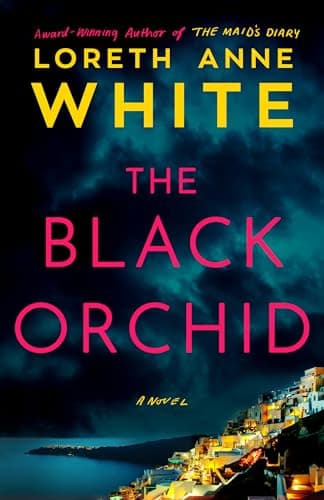
Prices can sometimes be lower on bigger marketplaces, but this link helps independent bookstores and local reading communities.
Loreth Anne White's The Black Orchid is a rare thriller that refuses to be pinned down. It's simultaneously a locked-room mystery in the vein of Agatha Christie, a true-crime psychological thriller, and a deeply human story about belonging and redemption. The verdict is immediate: this is absolutely worth reading, especially if you've grown tired of predictable whodunits that prioritize shock value over substance.
The premise alone hooks you. Nine elite guests board the maiden voyage of a luxury cruise ship through the Aegean Sea. Within three days, tragedy strikes. Not all will survive. But here's what sets this novel apart from the crowded maritime disaster shelf: every single passenger is connected through a web of secrets spanning decades, and their collision course isn't random—it's orchestrated. This is a reckoning disguised as a vacation.
What You're Actually Getting Into
Poppy Buchanan, a personal assistant to legendary war photographer Lillith McGregor, boards the Black Orchid hoping to secure her financial future by ingratiating herself into her employer's will. She's not alone in her desperation. The ship carries a disinherited stepson with everything to lose, an Israeli businessman with a shadowy past, a charming antiquities dealer with hidden motives, and a retired FBI profiler hunting a serial killer he believes is aboard. White populates this pressure cooker with genuine complexity—these aren't cardboard villains or simple victims. They're fully realized people carrying their own justifications for their actions.
What's particularly brilliant is the inclusion of Carter, an eight-year-old boy who wants to be an FBI profiler like his grandfather. His innocent observations and notebook recordings of "suspicious happenings" provide both comic relief and genuine tension, reminding readers that tragedy doesn't discriminate by age.
The Architecture of the Mystery
Loreth Anne White's The Black Orchid employs a multi-perspective narrative structure that elevates it above standard thriller fare. Rather than a single protagonist, the story rotates between four main viewpoints, creating a kaleidoscopic portrait of the same events. This technique, popularized by authors like Ruth Ware and Lucy Foley in recent years, is executed flawlessly here. You're never quite sure whose perspective you can trust, which is precisely the point.
The inclusion of documentary transcripts and mixed-media components adds texture and authenticity. It grounds the narrative in a quasi-true-crime aesthetic without feeling gimmicky. This approach mirrors the real-world trend of how modern audiences consume crime stories—through podcasts, documentaries, and fragmented digital narratives—making the book feel contemporary and urgent.
The pacing is relentless. White doesn't waste time on throat-clearing exposition. You're thrown into the chaos immediately, and the tension never truly releases until the final pages. The atmospheric quality of the isolated ship setting amplifies this claustrophobia; there's nowhere to run, nowhere to hide. The storm that triggers the catastrophe feels inevitable rather than convenient, a natural collision point for all these fractured lives.
Where White Excels
The moral ambiguity is the real strength here. Unlike thrillers that present clear heroes and villains, The Black Orchid operates in murky ethical territory. As one reviewer astutely noted, "even villains are heroes in their own eyes." White doesn't let you off the hook with easy judgments. By the time you understand each character's motivation, you're forced to confront uncomfortable truths about justice, revenge, and whether closure can ever truly be achieved.
The emotional depth is genuinely moving. Beneath the mystery plot lies a meditation on family, belonging, and self-acceptance. These aren't throwaway themes—they're woven into every character arc. The book earns its emotional moments because White has spent time making you care about these people, even the ones whose actions you can't condone.
The twist execution deserves specific praise. Rather than a single "gotcha" moment, White layers revelations throughout the narrative. Each secret that surfaces adds new dimensions to earlier scenes, encouraging you to mentally rewind and reassess. This is the work of a writer who understands that the best mysteries reward rereading.
What Doesn't Quite Land
The main criticism, though minor, centers on the sheer number of moving pieces. With nine characters, multiple timelines, and interconnected backstories, some readers may find themselves occasionally losing track of who's connected to whom. This complexity is intentional—it mirrors the protagonist's confusion—but it does demand active engagement. If you're looking for a beach read you can skim, this isn't it.
The true-crime framing, while atmospheric, occasionally feels like it could tip into exploitation. White navigates this carefully, but some readers might wish for even more restraint in how real tragedy is fictionalized. This is a minor quibble for most, but it's worth noting for readers with sensitivities around crime narratives.
Comparing It to Similar Works
If you loved And Then There Were None by Agatha Christie, you'll recognize the DNA here—the isolated setting, the countdown to catastrophe, the gradual unmasking of secrets. But where Christie's novel is primarily a puzzle to be solved, White's is a psychological excavation. It's closer in spirit to The Woman in Cabin 10 by Ruth Ware or The Hunting Party by Lucy Foley, but with more emotional intelligence and a stronger thematic core.
The true-crime influence recalls books like The Silent Patient by Alex Michaelides, though The Black Orchid feels more grounded and less reliant on a single shocking twist. White's approach is more sophisticated—she trusts her readers to handle ambiguity.
Who Should Read This
This book is perfect for readers who:
- Love locked-room mysteries with psychological depth
- Appreciate morally complex characters over clear-cut heroes and villains
- Enjoy atmospheric, high-stakes settings (cruise ships, isolated locations)
- Want a thriller that also delivers emotional resonance
- Appreciate Agatha Christie but wish her work included more contemporary psychological complexity
- Are drawn to true-crime narratives but want them filtered through fiction
Skip this if you:
- Prefer straightforward plots with clear resolutions
- Want a protagonist to root for unambiguously
- Find multiple POVs confusing rather than engaging
- Prefer lighter, faster-paced thrillers without emotional weight
- Are sensitive to narratives involving maritime disasters or violence
The Verdict
The Black Orchid is a triumph of contemporary thriller writing. Loreth Anne White has crafted a novel that operates on multiple levels—as a propulsive mystery, a psychological character study, and a meditation on justice and redemption. The writing is sharp, the pacing is relentless, and the emotional core is genuine.
Is The Black Orchid worth reading? Absolutely. It's the kind of book that stays with you long after the final page, not because of a shock twist, but because you've spent time with fully realized human beings navigating impossible circumstances. In a genre often cluttered with empty thrills, that's genuinely rare.
Final Score: 9/10 — A masterfully plotted thriller that proves you can have both page-turning momentum and genuine emotional depth.