Category:
Book ReviewsThe Art Thief Review: A Masterclass in Obsession
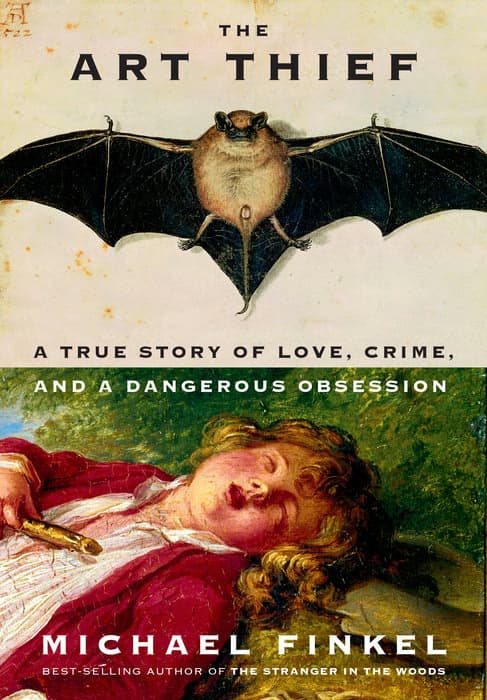
Prices can sometimes be lower on bigger marketplaces, but this link helps independent bookstores and local reading communities.
Michael Finkel's The Art Thief: A True Story of Love, Crime, and a Dangerous Obsession presents one of the most perplexing true-crime narratives in recent memory—a book that forces readers to confront an uncomfortable question: what happens when criminal genius becomes indistinguishable from mental illness? This isn't a heist story about greed. It's a psychological portrait of a man who stole over $2 billion worth of art not for profit, but because beauty itself became his addiction.
The verdict is immediate: if you appreciate character-driven narratives that blur the lines between crime, art, and obsession, this book deserves your time. If you're hunting for a conventional true-crime thriller with clear heroes and villains, you'll find the experience frustratingly ambiguous.
What This Book Actually Is
The Art Thief tells the remarkable story of Stéphane Breitwieser, a French-Austrian art thief who, between 1995 and 2001, executed over 200 heists across European museums and cathedrals. What makes Breitwieser's crime spree genuinely unusual isn't the scale—it's the motivation. Unlike the conventional criminal archetype, Breitwieser never sold a single stolen piece. Instead, he and his girlfriend Anne-Catherine Kleinklaus displayed their treasures in two cramped attic rooms where he could live alongside them, touch them, and admire them in isolation.
The narrative follows Finkel's 11-year investigation, which included dozens of exclusive interviews with Breitwieser himself and museum visits alongside the thief. This unprecedented access gives the book an intimate, almost confessional quality that distinguishes it from typical true-crime fare.
The Brilliance of Finkel's Approach
Finkel doesn't simply chronicle heists. Instead, he constructs a layered psychological investigation that weaves together Breitwieser's methodology, expert commentary from psychologists attempting to diagnose his compulsion, and the devastating human fallout—particularly his mother's role in the unraveling.
The writing style reads like literary narrative nonfiction rather than procedural crime reporting. Finkel employs the pacing and tension of fiction while maintaining meticulous factual accuracy. Each theft unfolds with enough specificity to feel immediate, yet the book never devolves into a repetitive catalog of robberies. Instead, the heists serve as windows into Breitwieser's psychology: his remarkable athleticism, his ability to circumvent security systems, his complete disregard for escalating risk.
What truly elevates The Art Thief is Finkel's willingness to sit with ambiguity. Breitwieser himself offers the simplest explanation: "Art is my drug." Psychologists offer more complex theories. Finkel presents both without forcing resolution, allowing readers to draw their own conclusions about whether Breitwieser represents genius, pathology, or some terrifying combination of both.
Where the Book Excels
The character study is exceptional. Rather than presenting Breitwieser as a one-dimensional criminal, Finkel reveals a man whose gifts—his athleticism, his eye for beauty, his improvisational brilliance—became the instruments of his own destruction. The relationship between Breitwieser and Anne-Catherine emerges as genuinely tragic; she begged him to stop, recognizing the danger he couldn't see. Their dynamic transcends the typical "criminal couple" trope.
Finkel also provides unexpected cultural insights. The European legal system's treatment of art theft—often deemed less serious than property crimes involving weapons—becomes a fascinating subplot that complicates our understanding of justice. The book challenges readers to reconsider what we actually value: why does stealing a priceless medieval sculpture receive lighter punishment than stealing a car at gunpoint?
The audiobook narration by Edoardo Ballerini deserves specific praise. His performance captures both the dreamlike quality of Breitwieser's compulsion and the mounting dread of inevitable consequences.
What Doesn't Quite Work
At just over 200 pages, the book occasionally feels compressed. While this brevity maintains momentum, readers seeking deeper forensic detail about security vulnerabilities or the recovery process may feel shortchanged. The repetitive structure—theft, expert commentary, psychological analysis, repeat—works thematically but can become predictable.
Moreover, the narrative occasionally relies on the same explanatory frameworks without substantially advancing them. By the fourth or fifth expert interview about Breitwieser's possible pathologies, the analysis begins to feel circular rather than revelatory. The book would benefit from either fewer expert voices or more specific diagnostic conclusions.
Some readers will also find the treatment of Anne-Catherine frustratingly peripheral. She's called by her first name throughout while Breitwieser is consistently "Breitwieser," a linguistic choice that mirrors her marginalization in the narrative itself. This may be intentional—reflecting how she was overshadowed by his obsession—but it nonetheless limits our understanding of her perspective.
Comparisons to Similar Works
If you've read The Stranger in the Woods (Finkel's previous book) or similar character-driven true-crime narratives like I'll Be Gone in the Dark, you'll recognize Finkel's signature approach: deep psychological investigation paired with meticulous reporting. However, The Art Thief is more stylistically restrained than those works. It's less sensational, more contemplative.
Compared to traditional heist narratives like The Thieves of Manhattan, this book operates in an entirely different register. There's no clever plotting or outsmarting of authorities. Instead, there's the slow-motion tragedy of a man whose compulsion blinds him to every warning sign, including the woman who loved him enough to plead with him to stop.
Who Should Read This
Perfect for: Readers who appreciate psychological complexity over plot mechanics. True-crime enthusiasts who've moved beyond conventional procedurals. Art lovers curious about the dark side of aesthetic obsession. Anyone interested in how genius and pathology can become indistinguishable. Book club participants seeking substantive discussion material.
Will likely frustrate: Readers seeking conventional thriller pacing and clear resolutions. Those expecting detailed technical heist methodology. Anyone uncomfortable with moral ambiguity or sympathetic criminals. Readers who prefer their true crime violent and dramatic rather than quietly obsessive.
The Lasting Impact
Finkel's own reflection proves prescient: his time with Breitwieser fundamentally altered how he experiences museums and art. The Art Thief achieves the same effect on readers. After finishing this book, you'll never walk through a museum the same way. You'll notice security vulnerabilities. You'll contemplate what makes certain objects worth stealing. You'll understand that the most compelling criminals aren't always the most violent—sometimes they're simply the most obsessed.
The final pages, which chronicle the spectacular collapse of Breitwieser's operation, land with genuine emotional weight precisely because Finkel has spent 200 pages making us understand his subject as fully human rather than merely criminal.
Final Verdict
8/10 — A psychologically astute, beautifully written examination of obsession that transcends typical true-crime conventions through sheer depth of character investigation.