Category:
Book ReviewsThe Art of Fighting Review: A Masterclass in Conflict
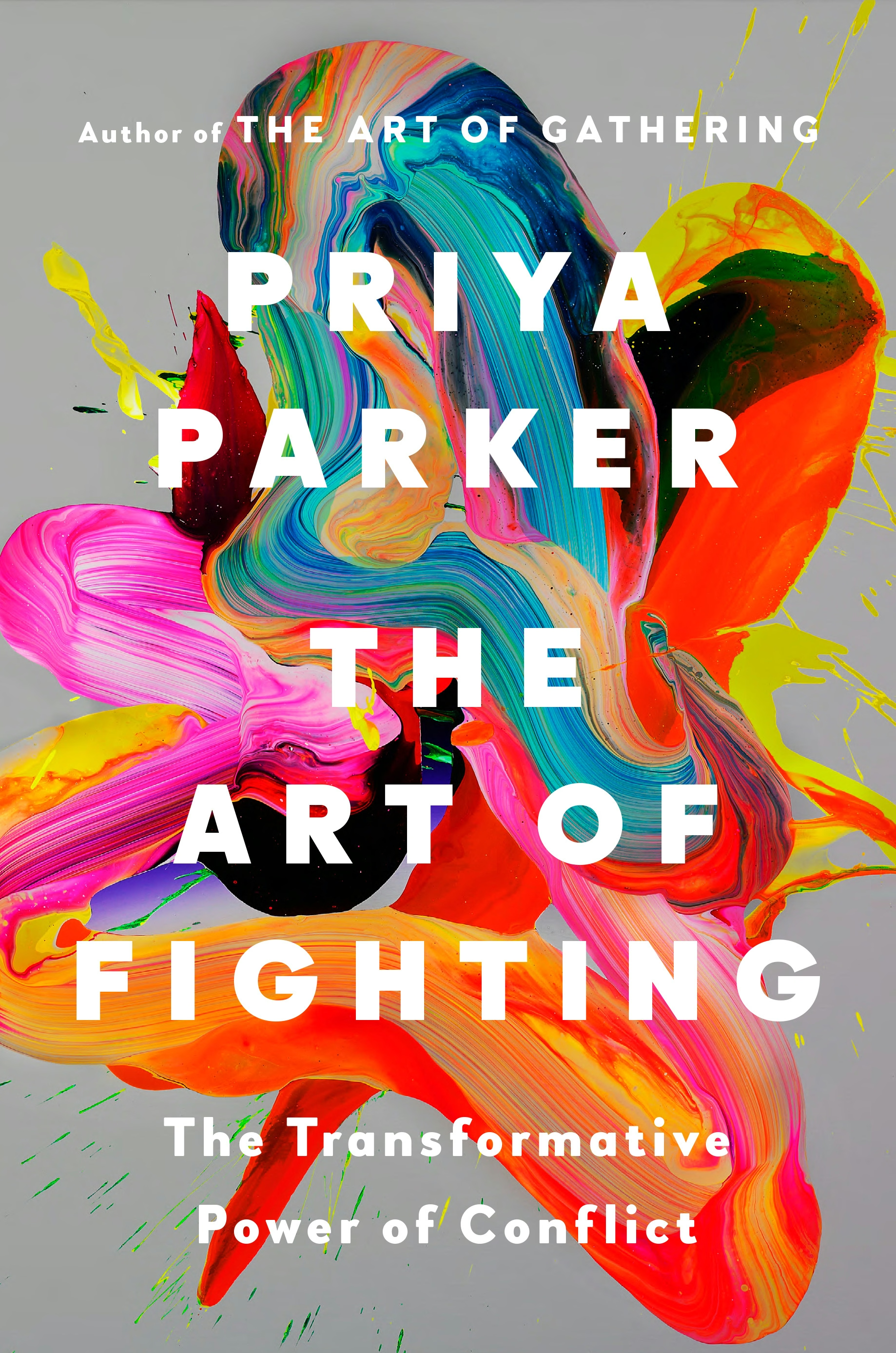
Prices can sometimes be lower on bigger marketplaces, but this link helps independent bookstores and local reading communities.
Quick Verdict
Priya Parker's The Art of Fighting is a paradigm-shifting exploration of conflict that challenges everything we've been taught about disagreement. If you've read The Art of Gathering, expect Parker to go deeper—much deeper—into the mechanics of how groups actually function when tension rises. This is not a feel-good conflict-avoidance manual; it's a sophisticated toolkit for people ready to transform their relationships through honest, intentional fighting.
What This Book Actually Does
Parker opens with a disarming confession: "I became a conflict facilitator not because I am fearless, but because I hate conflict." This vulnerability sets the tone for what follows—a nuanced examination of why our culture's obsession with harmony is actually destroying our communities, not protecting them.
The central argument is radical: healthy conflict is not a sign of relationship failure; it's a prerequisite for growth. Parker rejects the pervasive myth that good teams, friendships, and families simply don't fight. They do. The difference is how they fight. Drawing from her extensive experience facilitating disputes across corporations, nonprofits, friend groups, and restaurants, Parker demonstrates that avoidance and false harmony create far more damage than honest disagreement ever could.
The book is structured in three movements—"Tear," "Grapple," and "Cleave"—which map onto the lifecycle of a conflict: recognizing it, engaging with it, and navigating what comes after. This architecture works because it acknowledges that conflict doesn't exist in isolation; it exists within the context of ongoing relationships and group dynamics.
The Strengths: Where Parker Excels
Parker's greatest asset is her ability to translate complex group dynamics into actionable frameworks. The "Magnitude of Conflict" grid, for instance, becomes a practical tool readers can actually use when disagreements arise. Rather than offering vague platitudes about "communication," she provides specific questions to ask, formats to use, and emotional intelligence benchmarks to aim for.
What makes The Art of Fighting review-worthy is Parker's insistence on distinguishing between different types of conflict. Not every disagreement requires the same intervention. Some conflicts need space to breathe; others need structured facilitation. Some groups can survive rupture; others cannot. This nuance separates this book from the self-help genre's tendency toward one-size-fits-all solutions.
The concept of "holding heat"—remaining present in discomfort rather than immediately trying to resolve or smooth over tension—is genuinely liberating. Readers report that this permission to sit with conflict, rather than frantically extinguish it, fundamentally shifts how they show up in relationships. The idea that the story we tell ourselves about a conflict shapes our future relationship with that group is particularly powerful; it suggests that how we process disagreement matters as much as the disagreement itself.
Parker's examples are drawn from real situations, not hypotheticals. She grounds her theory in lived experience, which makes the book feel authoritative without being academic.
The Limitations: Where This Book Stumbles
Here's the honest tension: The Art of Fighting is genuinely demanding. This is not a book to skim on a Sunday afternoon. It's a workbook that requires active engagement, and readers report needing two weeks to work through it slowly. The density of information—while comprehensive—can feel overwhelming for the average reader seeking practical guidance.
The "interludes" that cap each chapter, rather than offering relief or summary, actually continue the chapter's arguments. This means there's no natural place to pause and integrate what you've learned. Readers wishing for chapter summaries or appendices for quick reference will be disappointed. For someone managing conflict daily (HR professionals, team leaders), this depth is invaluable. For the casual reader, it may feel like overkill.
There's also a subtle assumption running through the book: that all conflicts are worth having and that all groups should fight through their disagreements. Parker does address "insurmountable" conflicts, but the book's optimistic framing sometimes glosses over situations where conflict simply signals incompatibility rather than an opportunity for growth. Not every group should stay together; not every fight can be won.
How It Compares to Similar Books
If you've read Crucial Conversations by Kerry Patterson, you'll recognize some overlapping territory—both books emphasize emotional intelligence in high-stakes discussions. However, Parker's focus is distinctly on group dynamics rather than individual communication skills. Where Crucial Conversations teaches you how to navigate a single difficult talk, The Art of Fighting teaches you how to navigate the ecosystem that conflict creates.
Compared to The Art of Gathering (Parker's previous work), this book is more prescriptive and less celebratory. Gathering felt like an invitation to create beautiful moments; Fighting feels like a challenge to do the harder work of maintaining them.
Who Should Read This Book
Perfect for: Team leaders, HR professionals, nonprofit directors, therapists, coaches, anyone managing groups through change. Parents will find value here, particularly those raising teenagers. Friend groups navigating rupture will find frameworks that actually help. Anyone who's ever avoided a necessary conversation will recognize themselves in Parker's writing.
Will struggle with this: Readers seeking quick fixes or feel-good platitudes. People who believe conflict is inherently destructive and should be minimized. Those without the patience for dense, layered information. Anyone looking for a casual read rather than an active workbook.
The Writing and Approach
Parker's prose is accessible without being simplistic. She explains complex group psychology in language that doesn't require a sociology degree to understand. Her examples are specific enough to feel real but universal enough that readers from different contexts can apply them.
The book's structure—moving from preparation through engagement to aftermath—mirrors actual conflict progression. This isn't arbitrary; it's pedagogically sound. You're learning not just frameworks but a way of thinking about conflict as a process rather than an event.
Is The Art of Fighting Worth Reading?
Yes, with the caveat that you need to match the book's intensity with your own readiness. If you're in a leadership position, managing a team, or committed to deepening your relationships, this book will change how you think about disagreement. If you're looking for a quick self-help fix, you'll be frustrated.
The real value of The Art of Fighting emerges not from reading it but from applying it. Readers report buying copies for colleagues, returning to specific frameworks months later, and fundamentally shifting how they show up in groups. That's the mark of a book that actually works.
Parker has created something rare: a book that's simultaneously intellectually rigorous and deeply practical. It takes the messy, uncomfortable reality of group conflict and provides tools without pretending the work is easy.
Final Assessment
Rating: 8.5/10 — The Art of Fighting is an essential read for anyone serious about building and maintaining healthy relationships and communities, though its density demands active engagement rather than passive consumption.