Category:
Book ReviewsThe Apparent Trap Review: Charming but Uneven
Prices can sometimes be lower on bigger marketplaces, but this link helps independent bookstores and local reading communities.
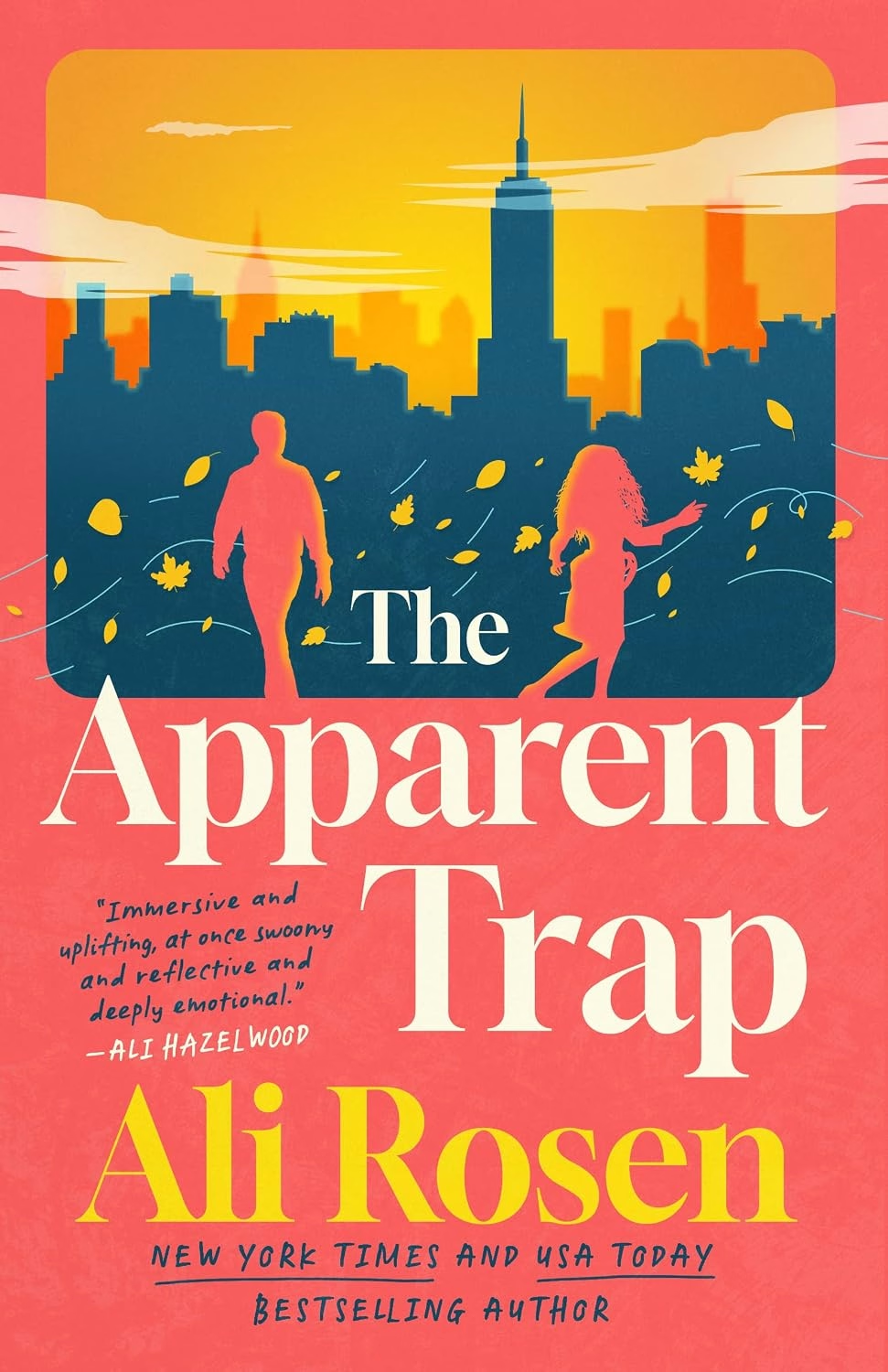
Ali Rosen's The Apparent Trap is a workplace romance that swings wildly between delightful and frustrating—sometimes within the same chapter. This New York Times bestselling author attempts to juggle two age-gap relationships, workplace chemistry, and unresolved grief, but the execution proves messier than the premise promises. If you're hunting for a breezy contemporary romance with genuine emotional depth, this book offers moments of brilliance sandwiched between stretches of narrative bloat and questionable character development.
What It's About
Ezzie Halevi, a morning show producer, has spent 17 years in emotional stasis following her mother's death at age 14. Her carefully controlled life shatters when her widowed father begins dating Carmen, a 26-year-old coanchor newly hired at the show. The complication: Carmen is the estranged daughter of Lee Morgan, a charming chef who leads a cooking segment—the same man who ghosted Ezzie weeks earlier. What follows is a reluctant alliance between Ezzie and Lee to sabotage the budding romance between their parents, with predictable results: their own chemistry becomes impossible to ignore.
The premise itself is genuinely clever, offering the kind of high-concept setup that makes readers curious. A 31-year-old woman and a 42-year-old man scheming against a 55-year-old man and 26-year-old woman creates narrative tension worth exploring. Rosen clearly understands the potential here, and the opening chapters deliver on that promise with wit and momentum.
Writing & Style: Snappy Dialogue, Thin Character Work
Rosen's greatest strength lies in her dialogue. Conversations between Ezzie and Lee crackle with energy, particularly early on when they're plotting their ridiculous schemes. The banter feels natural, the comedic timing lands, and readers can sense why these characters might actually work together. The pacing in the first act moves briskly—you'll tear through the opening section wondering what's coming next.
However, the character development doesn't match the dialogue quality. Lee, in particular, suffers from severe underdevelopment. He's described as extremely handsome, charming, and successful—he owns multiple restaurants and maintains a media presence—yet he never appears to have actual responsibilities. No staff emergencies, no business complications, no paparazzi encounters. He exists primarily as a collection of physical attributes: dimples, muscles, a knife tattoo, and an inexplicable talent for making BLTs. Speaking of BLTs, Rosen mentions them 52 times throughout the novel. This isn't hyperbole; it becomes the primary expression of Ezzie's emotional connection to Lee, which raises uncomfortable questions about what this romance actually rests on.
Ezzie fares somewhat better but remains frustratingly underdeveloped. Beyond her grief and her love of sandwiches, the reader learns surprisingly little about who she actually is. What are her ambitions? What does she want from life beyond pizza nights with her father? The novel mentions her mother's death 75 times, grief-related language appears 26 times, yet this emotional throughline often overshadows rather than enriches the romance.
What Works: Grief as Real Complication
Here's where The Apparent Trap actually distinguishes itself from typical contemporary romance: it refuses to treat parental grief as a subplot. Ezzie's unprocessed trauma isn't solved by falling in love; it's woven through her inability to trust, her resistance to change, and her need to control outcomes. This is genuinely mature territory for the genre. The Sweden subplot, mentioned positively by multiple readers, provides a refreshing change of scenery and allows the romance to breathe outside the workplace setting.
The final 15 percent of the novel—after the scheming plot collapses—finds its footing. When Rosen abandons the contrived sabotage attempts and lets her characters sit with actual emotions, the book becomes more compelling. The resolution acknowledges that grief doesn't vanish when you fall in love; it coexists with joy, and that's okay.
What Doesn't Work: Contrived Plotting and Hollow Schemes
The central plot device—two intelligent adults spending half the book trying to tank a relationship that's actually working—strains credibility. Their schemes are predictably ineffective, and readers will likely anticipate long before the characters do that their sabotage is doomed and probably wrong. One reader perfectly articulated this tension: there's no reason two smart people wouldn't reach the obvious ethical conclusion much earlier, making the extended plotting feel like narrative filler.
The bedroom scenes add little to the story and, according to multiple readers, veer into cringey territory rather than steamy. For a contemporary romance, the sexual content feels oddly out of place—neither substantial enough to drive the narrative nor tasteful enough to enhance it.
Most problematically, the novel buries its actual thesis in the synopsis. The Goodreads blurb mentions grief only in the final sentence, while Amazon's description omits it entirely. This misdirection suggests even the marketing team recognized that grief, not romance, is the book's real subject. That's not inherently a problem, but readers picking up a workplace romance expecting primarily comedy and chemistry will feel bait-and-switched when confronted with 17 years of unprocessed maternal loss.
Who Should Read This
Perfect for: Readers who've grown tired of weightless contemporary romance and want emotional stakes. If you loved Sally Thorne's The Hating Game for its banter but wished it grappled with real trauma, this might hit differently. Romance readers seeking something that acknowledges grief as an ongoing process rather than a problem to solve will find validation here. Anyone who appreciates workplace dynamics and found premises will appreciate the setup.
Skip it if: You want pure escapism without heavy emotional labor. If you need your romantic leads to feel like fully realized people with interests beyond their love interest, Lee's hollowness will frustrate you. Readers who find excessive food references distracting (the BLT saturation is real) should look elsewhere. And if you prefer romance where the plot mechanics actually make sense, the sabotage subplot will feel like wasted pages.
The Verdict: Interesting Ingredients, Uneven Recipe
The Apparent Trap review reveals a book caught between genres—part romantic comedy, part grief memoir, part workplace drama. It succeeds most when it commits to being about emotional growth and least when it relies on contrived romantic scheming. Ali Rosen's The Apparent Trap has genuine moments of warmth and authentic dialogue, but uneven character development and a plot structure that doesn't quite serve the story's thematic ambitions hold it back from being the book its premise suggests it could be.
Is The Apparent Trap worth reading? Yes, if you're willing to accept an imperfect but occasionally moving exploration of how grief shapes our capacity for love. No, if you're seeking a tightly plotted romance where every element serves the central relationship. It's a book that works in fragments—the opening hook, the Sweden sequence, the final emotional reckoning—but struggles to cohere into something greater than the sum of its parts.
For context, this sits somewhere between the comfort-read accessibility of contemporary romance and the emotional weight of literary fiction, which is exactly where it wants to be. That ambition is admirable, even if the execution doesn't entirely land.