Category:
Book ReviewsThe Anxious Generation Review: Haidt's Urgent Wake-Up Call
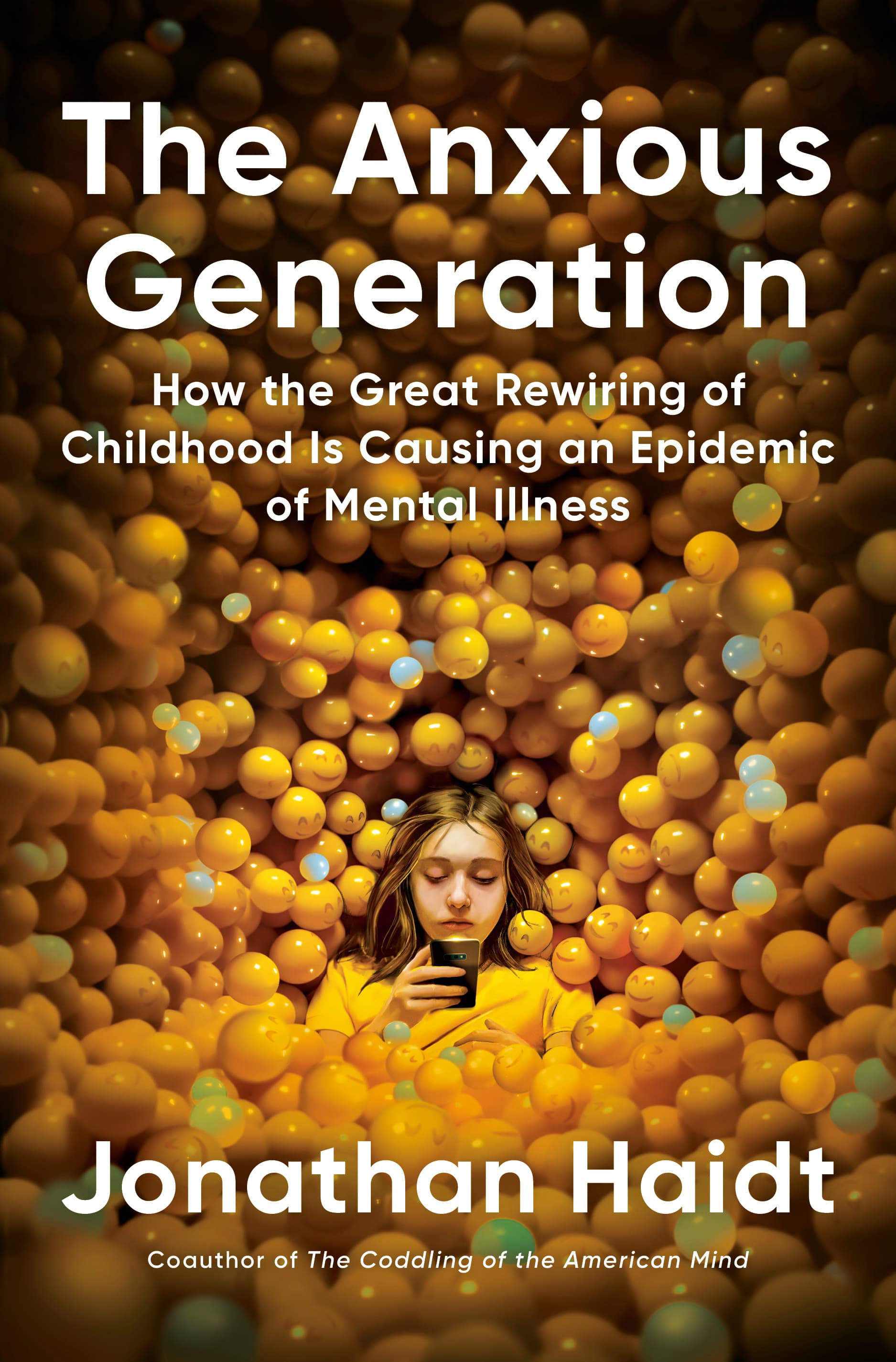
Prices can sometimes be lower on bigger marketplaces, but this link helps independent bookstores and local reading communities.
Jonathan Haidt's The Anxious Generation arrives at a critical moment in the mental health crisis affecting young people worldwide. This sweeping investigation into why adolescent depression, anxiety, and self-harm rates doubled in the early 2010s combines rigorous social psychology with a deeply troubling thesis: our children's smartphones have fundamentally rewired their brains in ways we're only beginning to understand. Haidt's argument is both compelling and controversial, making this one of the most divisive parenting and psychology books in recent years.
Haidt, the social psychologist behind the bestselling Coddling of the American Mind, brings his characteristic data-driven approach to a question that keeps parents awake at night. The verdict is stark: the shift from play-based childhoods to phone-based childhoods represents a civilizational turning point with measurable psychological consequences. Whether you find his analysis revelatory or reductive will likely depend on how you already feel about technology's role in modern life.
What This Book Actually Argues
Haidt's central claim is deceptively simple but the evidence supporting it is dense. The mental health crisis didn't emerge gradually—it arrived suddenly around 2010-2012 across multiple countries simultaneously. This synchronicity points to a specific culprit: the widespread adoption of smartphones and social media platforms optimized for maximum engagement.
The book methodically traces how childhood itself transformed. In the 1980s and 1990s, kids played unsupervised, took risks, and developed resilience through natural consequences. By the early 2010s, helicopter parenting had already restricted outdoor play, but the smartphone delivered the final blow. Haidt identifies over a dozen mechanisms through which this "great rewiring" damages developing minds: sleep deprivation from late-night scrolling, attention fragmentation, algorithmic addiction, social comparison, FOMO-driven perfectionism, and what he calls "social contagion" in mental health crises.
The gendered dimensions are particularly striking. Haidt argues that social media damages girls more severely through comparison and validation-seeking behaviors, while boys have increasingly withdrawn into gaming and virtual worlds, creating a troubling divergence in how each gender experiences adolescence.
The Strengths: Data-Driven and Actionable
This Anxious Generation review must acknowledge what Haidt does exceptionally well. The book synthesizes an overwhelming body of research into a coherent narrative. He doesn't cherry-pick studies; he engages with competing explanations and explains why the phone-based childhood theory better accounts for the timing and geography of the crisis than alternatives like economic anxiety or pandemic effects.
Moreover, Haidt doesn't end with apocalyptic hand-wringing. The final section proposes concrete, implementable solutions: phone-free childhood until age 16, no social media until 18, phone-free schools, and substantial unsupervised time outdoors. These aren't abstract ideals—they're specific behavioral changes supported by developmental psychology research.
The writing is accessible without being simplistic. Haidt translates complex neuroscience into language that parents and educators can actually understand. His explanation of how adolescent brains are uniquely vulnerable to social media's design—particularly the reward systems that reinforce compulsive checking—feels both scientifically grounded and immediately relevant.
Where This Book Stumbles
No balanced The Anxious Generation review can ignore its significant limitations. The most glaring weakness appears in Chapter 6, where Haidt addresses gender identity and "rapid onset gender dysphoria" in roughly four paragraphs. His treatment here feels underdeveloped compared to the meticulous analysis elsewhere in the book.
Haidt relies heavily on a single debunked study about rapid onset gender dysphoria while failing to interview any transgender individuals, despite conducting interviews throughout the book with cisgender subjects. This represents a methodological inconsistency that undermines his credibility on this particular topic. The implication that increased transgender identification is primarily a social contagion effect oversimplifies a complex phenomenon and echoes talking points used to justify restrictions on gender-affirming care—a sensitive issue given that LGBTQ+ youth already experience disproportionately high rates of anxiety, depression, and suicidality.
Beyond this specific controversy, the book occasionally conflates correlation with causation. Yes, mental health declined as phone adoption increased, but Haidt doesn't fully account for how smartphones also enabled better mental health diagnosis and disclosure. Young people today are more likely to seek help and name their struggles—a positive development that complicates the simple "phones bad" narrative.
Additionally, while Haidt's proposed solutions are specific, they're also somewhat utopian. Convincing tech companies to redesign their platforms for less engagement, getting 95% of parents to delay smartphones, and creating phone-free schools simultaneously requires a level of collective action that his own framework suggests is nearly impossible.
The Comparison Question: How Does It Stack Up?
Readers familiar with Coddling of the American Mind will recognize Haidt's voice and methodology. That earlier book examined campus culture wars through a psychological lens; this one zooms out to examine an entire generation's mental health. It's more data-dense and more urgent than Coddling, though occasionally less nuanced in its treatment of counterarguments.
Compared to other recent books on tech and childhood—like The Tech-Wise Family or The Smartphone Society—Haidt's work is more academically rigorous but less personal. He's not sharing his own parenting struggles; he's presenting epidemiological evidence. This makes it more persuasive to skeptics but perhaps less relatable to parents seeking emotional validation.
Who Should (and Shouldn't) Read This
This book is essential reading for parents of teenagers, educators, school administrators, and policymakers. If you're struggling to understand why your teenager seems more anxious than you were, or why classroom attention spans have collapsed, Haidt provides a compelling explanatory framework backed by substantial evidence.
Parents already convinced that smartphones are problematic will find this book validating—perhaps too validating. It confirms existing beliefs without pushing back hard enough on counterarguments. Tech industry defenders will find the analysis one-sided, though Haidt does acknowledge that phones have genuine benefits.
Transgender readers and advocates may find Chapter 6 offensive or dismissive. LGBTQ+ youth and their families should be aware that this section doesn't represent the book's overall quality of analysis and may want to approach it with critical distance.
The Real Question: Is This Worth Reading?
Yes, but with caveats. The Anxious Generation is worth reading because the mental health crisis affecting Gen Z is real, measurable, and urgent. Haidt's explanation for why it happened has more explanatory power than most alternatives. His proposed solutions, while challenging, are grounded in developmental psychology rather than nostalgia.
The book is not worth reading if you're looking for a balanced exploration of technology's role in modern life, or if you need nuanced discussion of gender identity issues. It's also not a substitute for professional mental health support—Haidt is diagnosing a societal problem, not individual anxiety disorders.
Final Verdict
Jonathan Haidt's The Anxious Generation is a necessary intervention in a critical moment, though an imperfect one. The core thesis—that smartphone-based childhoods have damaged adolescent mental health through identifiable psychological mechanisms—is compelling and well-supported by evidence. The proposed solutions are concrete and actionable. Yet the book's treatment of gender identity feels rushed and problematic, and some of its more utopian recommendations may underestimate the difficulty of collective behavioral change.
This is a book that will influence policy discussions, parenting decisions, and school policies. Whether that influence is entirely positive depends on how seriously we take both its strengths and its blind spots. Read it, but read it critically. The mental health crisis is real. Haidt's diagnosis is largely credible. His prescription, however, may require more nuance than the book itself provides.
Rating: 7.5/10 — Essential reading on a crucial topic that occasionally sacrifices nuance for narrative clarity.