Category:
Book ReviewsThe Anthropocene Reviewed Review: Profound Essays That Restore Hope
Prices can sometimes be lower on bigger marketplaces, but this link helps independent bookstores and local reading communities.
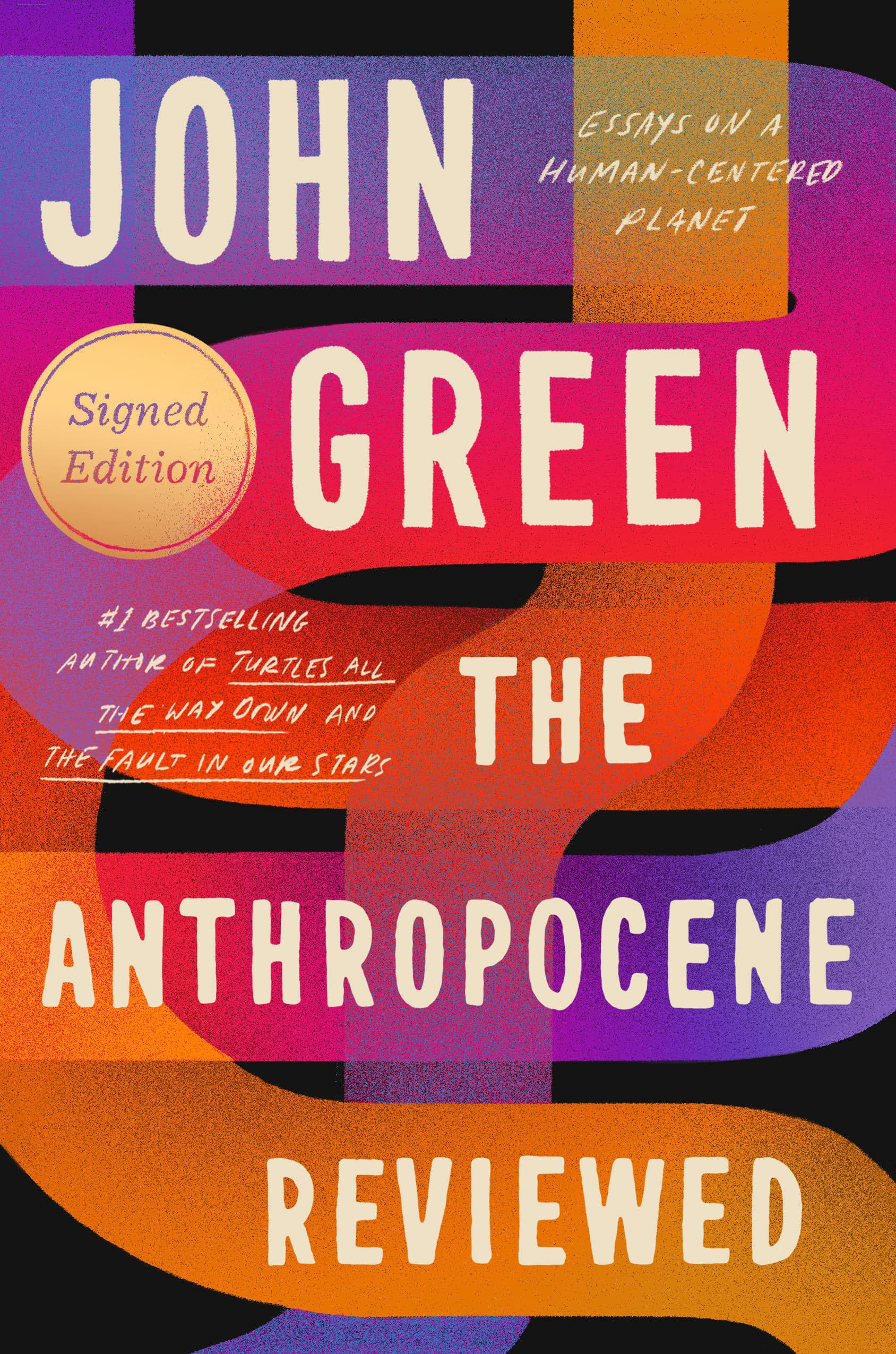
John Green's The Anthropocene Reviewed is a rare non-fiction achievement: a collection of personal essays that manages to be simultaneously intellectually rigorous and deeply moving. This is Green's first venture into non-fiction after decades of bestselling novels, and it succeeds spectacularly—not despite its unusual premise, but because of it. The book adapts and expands essays from Green's critically acclaimed podcast of the same name, each reviewing various facets of human civilization on a five-star scale. What emerges is far more than a gimmick; it's a meditation on what it means to be human in an age where our species has fundamentally reshaped the planet.
What's Actually Here
The Anthropocene is the current geological epoch defined by profound human influence on Earth's systems and biodiversity. Green uses this framework to examine subjects ranging from the absurdly mundane—the QWERTY keyboard, hot dog eating contests, Dr. Pepper—to the deeply philosophical: loneliness, mortality, pandemic anxiety, and sibling relationships. Each essay ostensibly assigns a star rating to its subject, yet the ratings often become almost irrelevant. What matters is the journey Green takes you on to justify each score.
The collection includes beloved essays from the podcast alongside six entirely new pieces written exclusively for this book. This hybrid approach gives readers both the familiar comfort of established favorites and the fresh perspective of work created specifically for the printed page. The audiobook version, narrated by Green himself, adds another dimension—his voice carries the vulnerability and humor that might otherwise be lost in silent reading.
The Writing: Accessible Without Being Simplistic
Green's greatest strength as an essayist is his ability to weave personal memoir with broader cultural observation. He'll begin discussing the history of the QWERTY keyboard, pivot to his own relationship with technology, then arrive at something profound about human connection and obsolescence. The prose is conversational but never sloppy—every sentence does work.
What distinguishes The Anthropocene Reviewed from typical essay collections is its thematic coherence. Rather than feeling like a random grab-bag of pieces, the book maintains a consistent meditation on contradiction: the wonder and misery of existence, the beauty and absurdity of human invention, the loneliness and connection we experience simultaneously. This through-line transforms what could have been a collection of entertaining diversions into something genuinely cohesive.
Green's accessibility is particularly important here. Readers unfamiliar with his previous work or the original podcast won't feel lost. He explains concepts clearly, grounds abstract ideas in concrete examples, and trusts his audience's intelligence without ever condescending. This is non-fiction writing that prioritizes clarity without sacrificing depth.
Where It Excels
The book's emotional resonance is its greatest achievement. Readers consistently report that Green's reflections on pandemic isolation, family relationships (particularly his bond with his brother Hank), and the meaning-making we attempt in an indifferent universe genuinely moved them. These aren't lightweight observations—they're the kind of personal truths that make you pause and reconsider your own life.
The essay on the pandemic is particularly significant. Published in 2021, The Anthropocene Reviewed was among the first major books to grapple seriously with the psychological weight of living through COVID-19. Rather than offering platitudes, Green examines the peculiar loneliness of isolation, the strange temporality of lockdown, and what it means to be disconnected from the physical world. This timeliness gives the book an additional layer of relevance.
Green also demonstrates genuine expertise in his research. Whether discussing the physics of Halley's Comet, the history of Monopoly, or the biology of penguins, he provides substantive information without becoming pedantic. The macro-level cultural and historical context is presented with the same skill as the micro-level personal vulnerability.
The postscript is particularly effective, where Green reflects on his own contradictions—his awareness that he's "too full of quotes" while being unable to stop quoting, his recognition of the book's privilege and limitations. This metacritical honesty prevents the work from ever feeling self-satisfied.
What Doesn't Quite Work
If there's a limitation, it's that the five-star rating framework occasionally feels arbitrary or forced. Some essays would have benefited from more straightforward analysis without the scaffolding of star assignments. The ratings don't always logically follow the arguments presented, though this may be intentional—a comment on how we impose structure on inherently unstructurable human experiences.
Additionally, while Green's voice is distinctive and engaging, readers looking for radical formal experimentation or provocative contrarianism in their essays might find this collection somewhat conventional. It's beautifully written and genuinely moving, but it operates within fairly traditional essay structures. There's no formal innovation here, and some readers seeking that might feel the book doesn't take enough risks.
The collection also skews heavily toward Green's personal perspective and experiences. While this is the point of memoir-inflected essays, readers seeking more diverse viewpoints or less author-centric observations might find the consistent focus on Green's consciousness limiting.
Who This Book Is Perfect For
The Anthropocene Reviewed is ideal for readers who loved Green's novels but want to experience his thinking in a more direct, essayistic form. It's perfect for people who enjoy collections like David Foster Wallace's essays or the work of contemporary essayists who blend personal narrative with cultural criticism. Fans of the podcast will treasure the expanded material and new essays. Readers seeking hope and meaning without toxic positivity will find it here—Green acknowledges suffering while refusing despair.
The book also works beautifully for audiobook listeners. Green's narration creates an intimate experience, as if a thoughtful friend is sharing observations late at night.
Who Might Not Connect
Skepics of Green's previous work—those who find his philosophical optimism saccharine or his narrative voice self-indulgent—will likely maintain those reservations here. Readers seeking straightforward information or argument without personal memoir woven throughout may find the essay form frustrating. Those looking for essays that challenge their worldview rather than affirm it might feel this collection preaches to the converted.
The Verdict: Is It Worth Reading?
Yes. The Anthropocene Reviewed is genuinely worth your time, whether you encounter it as a physical book, audiobook, or even as individual podcast episodes. This isn't a perfect work—the star-rating framework occasionally misfires, and the perspective is necessarily limited by Green's own experience—but it succeeds at what it attempts: making you see the world with renewed wonder while acknowledging its genuine darkness.
The book's 4.34-star rating from hundreds of thousands of readers reflects its broad appeal without suggesting unanimous enthusiasm, which is honest. Some readers will find it transformative; others will appreciate it without being changed. Both responses are valid.
What's undeniable is that The Anthropocene Reviewed represents something increasingly rare: a genuinely thoughtful, beautifully written work of non-fiction that takes its readers seriously. In an age of algorithmic content and disposable entertainment, Green has created something worth sitting with, worth returning to, worth discussing with others.
Final Takeaway
If you've ever found yourself wondering about the stories behind ordinary things, or felt the strange pull of connection across human experience, this book will resonate. If you're looking for a reminder that meaning-making matters even in an indifferent universe, The Anthropocene Reviewed delivers. It won't solve your problems, but it might help you see them—and yourself—a little differently.