Category:
Book ReviewsTen Words to Live By Review: A Radical Reframing
Prices can sometimes be lower on bigger marketplaces, but this link helps independent bookstores and local reading communities.
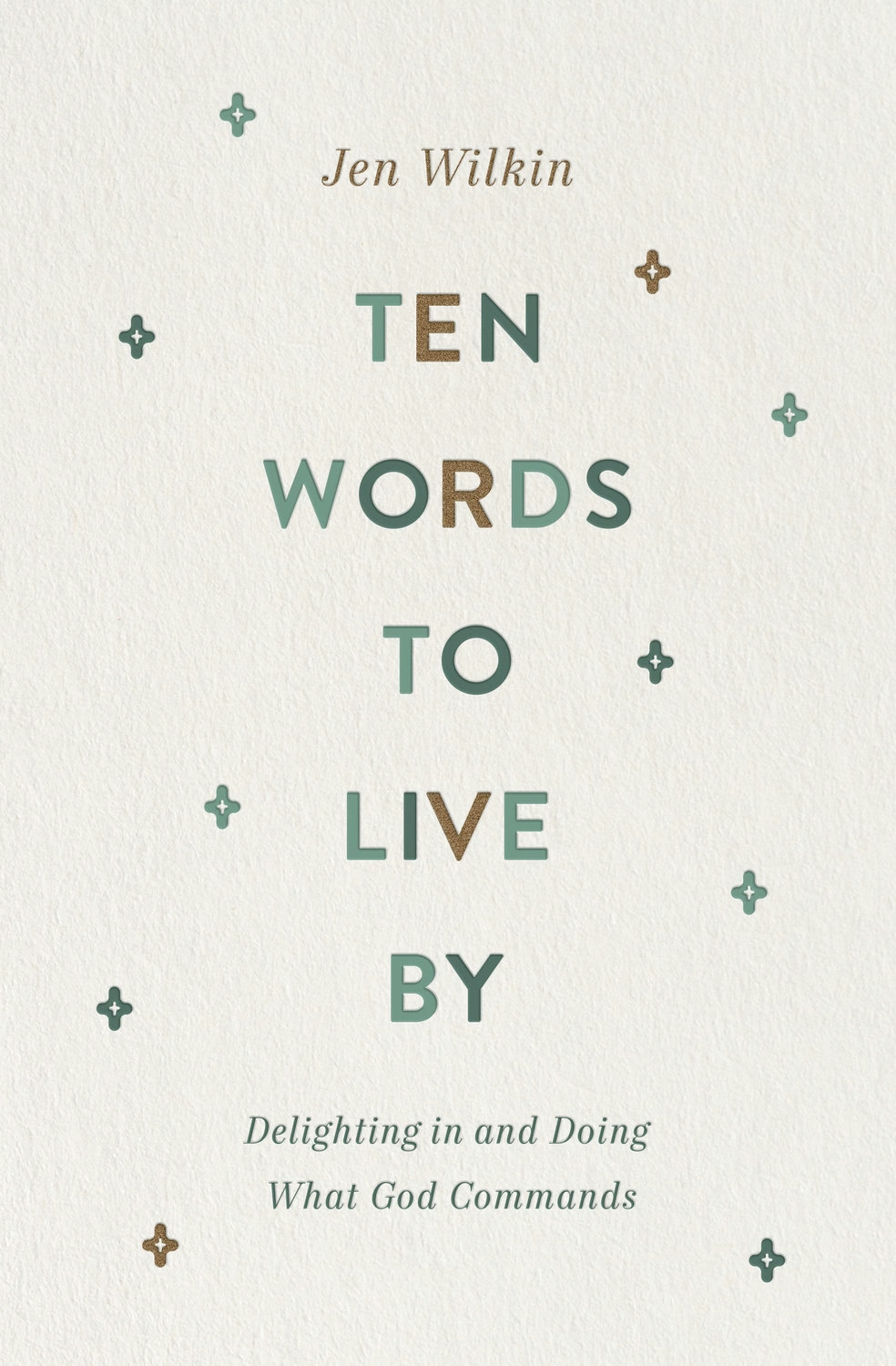
Jen Wilkin's Ten Words to Live By: Delighting in and Doing What God Commands arrives at a cultural moment when the phrase "Christianity is about relationship, not rules" has become so ubiquitous it's practically liturgical. This book doesn't just challenge that sentiment—it dismantles it entirely, arguing that God's law isn't the enemy of grace but its natural expression. The result is a provocative, intellectually rigorous examination of the Ten Commandments that will either transform your spiritual life or frustrate you with its refusal to let you off the hook.
Wilkin's central thesis is deceptively simple: the law is a gift, not a burden, and our modern discomfort with it reveals more about our cultural moment than about Scripture. In an era where Christian teaching often treats obedience as optional and grace as a get-out-of-jail-free card, this Ten Words to Live By review tackles a genuinely countercultural argument—one that most contemporary Christian authors have abandoned.
What This Book Actually Does
Unlike devotionals that offer comfort or theological primers that prioritize accessibility, Wilkin's approach is forensic. She takes each of the Ten Commandments and expands it far beyond the surface prohibition. The command "You shall not bear false witness" doesn't just mean don't lie about people in court. Wilkin unpacks it to include abstaining from reviling, flattery, inappropriate silence, and misattribution. This framework—what readers call "expansive obedience"—runs throughout the entire book.
The structure is deliberately modest. Each chapter is short enough to avoid intimidation, yet dense enough to demand real engagement. Wilkin includes probing reflection questions and prayers at the end of each section, positioning the book as a tool for spiritual transformation rather than mere intellectual consumption. This practical dimension separates it from pure theology and makes it function like a guided retreat on the page.
Wilkin also addresses a tension that mainstream Christian culture rarely acknowledges: the Pharisees weren't lovers of the law; they were lovers of themselves. They used the law as a tool for self-righteousness. The distinction matters enormously. True obedience, in Wilkin's framework, flows from love of Jesus and desire to align yourself with his values—not from fear or reputation management.
Where the Book Shines
The most striking strength of this book is its intellectual honesty about cultural compromise. When Wilkin addresses sexual immorality, she doesn't offer the typical evangelical soft-pedaling. She notes that lust has been normalized even within church spaces, treated as something to "manage" rather than "slay." This directness—citing Colossians 3:5 and refusing the modern therapeutic framing—will resonate powerfully with readers tired of feel-good Christianity that never actually challenges behavior.
Wilkin's writing is also remarkably clear. She avoids jargon while maintaining theological sophistication. Complex concepts about the relationship between law and grace are explained through concrete examples and careful biblical reasoning. The book reads like you're having a conversation with someone genuinely knowledgeable, not being lectured by an authority figure.
The integration of Scripture throughout is another strong point. This isn't a book that uses Bible verses as decoration. Every major argument is built on careful exegesis, and Wilkin shows her work. Readers consistently report that they found themselves "highlighting from the second page," a sign that the material is both quotable and substantive.
For book club discussions, the reflection questions are genuinely generative. They're not the shallow "How did this make you feel?" variety. Instead, they ask readers to examine their own hearts, identify where they resist specific commandments, and consider what that resistance reveals about their allegiances. This makes the book inherently communal and discussion-friendly.
The Limitations and Tensions
If there's a significant weakness in Ten Words to Live By, it's that the book operates within a particular theological framework without adequately addressing counterarguments. Readers coming from traditions that emphasize radical grace or that view Old Testament law as entirely superseded by Christ might find Wilkin's approach too prescriptive. She doesn't extensively engage with the Reformation concept of Christian freedom or with contemporary discussions about how the law functions differently under the New Covenant.
The book also assumes a level of spiritual maturity and biblical literacy that not all readers will possess. While Wilkin writes clearly, she doesn't always pause to explain why certain theological moves matter. Someone unfamiliar with concepts like "expansive obedience" or the distinction between ceremonial and moral law might need supplementary resources.
There's also a potential tension between Wilkin's emphasis on heart transformation and the concrete behavioral expectations she outlines. Readers seeking a more balanced discussion of grace, failure, and the role of forgiveness might feel the book tilts too heavily toward striving. This isn't a fatal flaw—many will find it refreshing—but it's worth noting for those seeking a gentler approach to spiritual growth.
Who This Book Is For (and Who It Isn't)
This is essential reading for several audiences: evangelical women seeking deeper biblical engagement beyond surface-level devotionals, church leaders wanting to reclaim a robust theology of God's law, and anyone frustrated with the "Christianity is just about being nice" reduction that dominates contemporary pulpits.
It's particularly valuable for book clubs, small groups, and anyone in a season of serious spiritual formation. The reflection questions and prayer structure make it naturally suited to communal engagement.
Where it won't land: readers seeking comfort over challenge will find it demanding. Those from traditions that emphasize radical grace might experience it as legalistic, even though Wilkin explicitly argues against legalism. Seekers looking for a gentle introduction to Christianity should probably start elsewhere. And readers who've been wounded by rigid religious structures might need to approach this carefully, as the emphasis on obedience could trigger old trauma.
How It Compares
In the landscape of contemporary Christian non-fiction, Ten Words to Live By occupies a distinct space. Compared to something like Timothy Keller's The Reason for God, which prioritizes intellectual apologetics, Wilkin's book is more devotional and practical. Compared to Beth Moore's work, which often emphasizes emotional connection, Wilkin is more theologically rigorous and less focused on personal story. The closest parallel might be John Piper's work, which similarly refuses to let readers off the hook and demands rigorous engagement with Scripture—but Wilkin's writing is more accessible and her focus specifically on the Ten Commandments gives the book a clearer through-line.
The Verdict
Is Ten Words to Live By worth reading? Yes, with the caveat that it's not for everyone. If you're looking for a book that will challenge your assumptions about God's law, deepen your understanding of the Ten Commandments, and offer practical pathways toward genuine transformation, this is a strong choice. The writing is clear, the theology is sound, and the practical structure makes it genuinely useful.
Wilkin succeeds in her central aim: presenting the law not as angry restriction but as loving guidance—a feast for the soul rather than a burden. Whether you'll experience it that way depends largely on where you're starting from spiritually. But for readers ready to engage seriously with Scripture and willing to be challenged, this book delivers real substance.