Category:
Book ReviewsTell Me What You Did Review: Polarizing Thriller
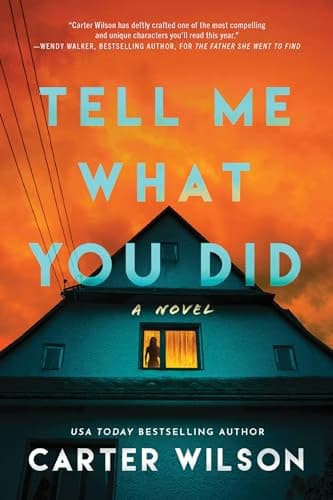
Prices can sometimes be lower on bigger marketplaces, but this link helps independent bookstores and local reading communities.
Carter Wilson's Tell Me What You Did is a psychological thriller that splits readers down the middle—and for surprisingly different reasons than you'd expect. Some find it a genuinely terrifying descent into manipulation and moral ambiguity. Others see it as a 400-page exercise in frustration, built on a premise revealed in the book's own synopsis. This Tell Me What You Did review examines why this USA Today bestseller generates such wildly divergent reactions, and whether it's actually worth your time.
Quick Verdict
This is a thriller that works better as a concept than an execution. Wilson crafts an intriguing hook—a true crime podcaster forced to confront someone claiming to be her mother's murderer—but struggles to sustain tension across the full narrative. The result is a book that's simultaneously too predictable and too contrived, depending on which reader you ask.
What It's About
Poe Webb hosts "Tell Me What You Did," a popular true crime podcast where anonymous confessors reveal their crimes to a live audience. It's a clever premise: guaranteed anonymity combined with instant notoriety creates an irresistible draw for the guilty.
Seven years before the novel begins, Poe killed Leonard Hutchins—the man who murdered her mother. She's buried this secret and moved on. Then a skeletal, unsettling man named Ian Hindley appears on her show, claiming he's the one who actually killed her mother seventeen years ago. He knows details the police never released. Worse, he seems to know what Poe did.
What unfolds is a twisted cat-and-mouse game where Hindley coerces Poe into a live Halloween special, threatening to expose her secret unless she participates. The question driving the narrative: is Hindley telling the truth, or is he manipulating her?
The Central Problem: Spoilers in the Synopsis
Here's where Tell Me What You Did encounters its first major obstacle. The book's official description essentially reveals the entire setup: Poe killed her mother's murderer, and now someone is claiming to be the real killer. For readers who've read the back cover (or any marketing material), the core mystery isn't really mysterious.
This matters because Wilson seems to be betting on a twist to carry the narrative forward. But if you've absorbed the premise, you'll likely predict that twist before reaching the halfway point. The book then becomes a question of how rather than what—a solid foundation for a thriller, but only if the execution justifies the page count.
Writing & Style: Uneven Pacing
Wilson's prose is functional and direct, which suits a thriller. The podcast framework is clever, allowing him to explore Poe's character through her on-air persona versus her private thoughts. In theory, this creates a built-in tension: the public mask versus the hidden self.
But the pacing is where things derail. The novel spends considerable time in setup and character establishment without building proportional momentum. Long stretches feel exploratory rather than propulsive. For readers seeking relentless tension (think Gone Girl or The Silent Patient), this deliberate pace registers as slow. For readers who appreciate character development, the slow burn still doesn't quite deliver enough depth to justify the runtime.
What Works: The Villain
Ian Hindley is genuinely unsettling. Wilson nails the creepy-thin-man archetype—there's something about Hindley's physicality and demeanor that registers as wrong throughout the novel. He has the quality of a real-life predator: intelligent, patient, and utterly indifferent to normal human empathy.
The psychological manipulation at the novel's core—Hindley forcing Poe to confess intimate details on a live stream—does create authentic dread. These scenes work because they tap into a real fear: being coerced into public vulnerability by someone holding leverage over you. Wilson handles this dynamic with genuine menace.
What Doesn't Work: Character Inconsistency and Logic Gaps
Poe Webb is the novel's fundamental weakness. She oscillates between two characterizations without a clear internal logic connecting them. In some scenes, she's a morally conflicted woman wracked by guilt over her past. In others, she's a "badass" who makes reckless decisions purely for dramatic effect.
This inconsistency becomes especially glaring during the climax. Poe's choices in the final act defy her established character and basic self-preservation instinct. She refuses to call police or seek help—not because she's trapped or genuinely unable to, but because the plot requires her to be alone with the antagonist. It reads as authorial convenience rather than character motivation.
There are also unresolved plot holes. How does Hindley bypass Poe's security system? Why does she volunteer certain information during the livestream coercion that he never requested? These aren't minor details—they're foundational to understanding how Hindley maintains control.
The podcast scenes themselves strain credibility. When Poe is forced to confess intimate details on air, she describes events with an almost literary flourish—like an author enjoying the prose rather than a woman under duress improvising under pressure. The dialogue reads as written, not spoken.
Comparison to Similar Thrillers
If you're familiar with The Silent Patient by Alex Michaelides, you know how a psychological thriller can sustain mystery through unreliable narration and delayed revelation. Wilson attempts something similar but without the narrative misdirection that makes Michaelides' twist land.
Compare it also to Gone Girl by Gillian Flynn, which uses a divided narrative structure to create genuine surprise. Tell Me What You Did relies on a single POV, which limits its ability to surprise once the setup is clear.
Who Should Read This Book
Perfect for:
- Readers who haven't seen the synopsis and can experience the premise fresh
- True crime podcast fans who enjoy meta-commentary on the genre
- Those who prioritize villain characterization over plot innovation
- Readers comfortable with slower-burn narratives
- Anyone who wants to be genuinely unsettled by a predatory character
Will likely frustrate:
- Plot-driven thriller readers seeking constant momentum
- Readers who value logical consistency and watertight plotting
- Those seeking unreliable narrator twists or narrative misdirection
- Anyone who dislikes protagonists making illogical choices for dramatic purposes
- Readers seeking deep character development alongside suspense
The Verdict: Is It Worth Reading?
Tell Me What You Did is worth reading if you enter with tempered expectations. It's a competent thriller with a memorable villain and some genuinely uncomfortable moments. But it's not the page-turner its marketing suggests, and it's not the innovative psychological thriller the premise promises.
Wilson has written better books. The Dead Girl in 2A and The New Neighbor demonstrate his ability to sustain tension more effectively. Tell Me What You Did feels like a step backward—a book that's more interesting as a concept than as an execution.
The real problem isn't that the book is bad. It's that it's predictable without being satisfying, slow without being contemplative, and contrived without being clever. It occupies an uncomfortable middle ground where it fails to fully satisfy readers seeking either plot-driven thrills or character-driven depth.
Final Score
6/10 — A competent thriller with a creepy antagonist that can't overcome its predictable setup and inconsistent character work.