Category:
Book ReviewsSweet Pea Review: A Masterclass in Quiet Resilience
Prices can sometimes be lower on bigger marketplaces, but this link helps independent bookstores and local reading communities.
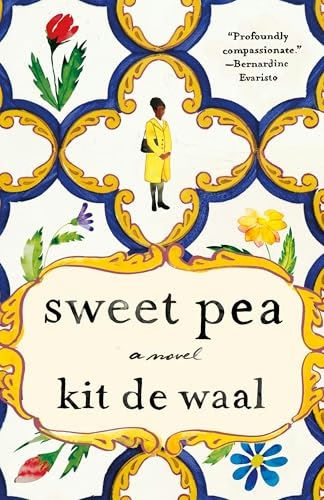
Kit de Waal's Sweet Pea is a deceptively simple novel that operates as a profound meditation on grief, forgiveness, and the radical act of choosing kindness in a world designed to break you. This 2024 literary fiction debut announces itself as a character study of extraordinary emotional depth, and it largely delivers on that promise—though not without some structural compromises that prevent it from reaching the highest tier of contemporary fiction.
The novel follows Paulette, a Black woman who immigrated to England from St. Kitts as a child, carrying with her a grandmother's wisdom about love, forgiveness, and the importance of avoiding temptation. By twenty-nine, Paulette has constructed a meticulous vision of her future: marriage to the charming Denton, a house of her own, and motherhood. She's a healthcare worker with discipline, hope, and an almost stubborn belief in the possibility of happiness. Then tragedy collapses everything.
When Denton's absence leaves Paulette pregnant by his best friend, Garfield, the life she methodically planned evaporates. What emerges instead is something messier, more complicated, and ultimately more honest. She raises her son Bird alone, finding purpose in motherhood and work. Years later, she encounters Frank, the man responsible for the original tragedy that shattered her dreams—and his grandson, Nellie, a boy who needs mothering as desperately as Bird once did.
What Makes This Book Matter
The central tension of Sweet Pea review discussions centers on this: Is this a story about forgiveness, or is it something more radical—a story about transcending the need for forgiveness altogether? De Waal doesn't let Paulette perform a neat redemption arc where she learns to forgive and move on. Instead, Paulette's journey involves recognizing Frank's own brokenness, understanding that her anger, while justified, doesn't serve her healing. This is uncomfortable territory for contemporary fiction, which often demands clear moral positioning.
The novel spans roughly two decades, watching Paulette navigate motherhood, work, unexpected friendships, and the slow construction of a found family. Her capacity to extend maternal care to Nellie—the grandson of the man who caused her pain—becomes the emotional crux of the narrative. This isn't saintliness; it's survival. Paulette recognizes in Frank and Nellie a mirror of her own fractured family, and in caring for them, she reclaims agency over her own narrative.
The Prose That Carries You
De Waal's writing style is deliberately restrained, almost spare. There's no baroque sentimentality here, no purple prose trying to convince you of emotions you should feel. Instead, the author trusts readers to excavate meaning from quiet moments: Paulette cooking, Paulette observing the boys grow up together, Paulette working night shifts and returning home exhausted but present. This minimalist approach creates a particular kind of intimacy—you're not being told how to feel; you're inhabiting Paulette's interior world directly.
The dialogue carries significant weight. Conversations between characters reveal character rather than advancing plot, which some readers find meditative and others find glacially slow. The pacing reflects Paulette's own life—not dramatic, but textured and real. This is literary fiction in the truest sense: prioritizing psychological authenticity over narrative momentum.
Where the Novel Excels
Paulette herself is the novel's greatest achievement. She's neither a victim nor a saint—she's a woman doing the work of living. She's loving without being doormat-ish, strong without being invulnerable, and complex in ways that feel genuinely earned rather than performatively literary. The way de Waal renders her interior life, particularly her relationship with work, class anxiety, and belonging, feels specific and true.
The exploration of motherhood—both biological and chosen—is nuanced. Paulette's love for Bird is unconditional, but the novel doesn't pretend motherhood is always joyful or that single parenthood is romantic. She's tired, she worries, she sometimes resents the limitations placed on her life. Simultaneously, her decision to extend care to Nellie isn't framed as obligation but as a genuine emotional connection that enriches her own life.
The historical setting of 1970s Birmingham provides crucial context. Post-colonial England was a fractured society, and Paulette's experience as a Black woman navigating healthcare work, housing, and social belonging adds weight to her personal story. The novel never lectures about racism, but it's woven into the texture of Paulette's daily existence—the small indignities, the barriers to belonging, the way she has to work harder to maintain what others take for granted.
What Doesn't Quite Land
The novel's greatest weakness is its structure. The twenty-year span, while thematically appropriate, creates pacing issues. Large chunks of time pass in brief passages, and the narrative sometimes feels more like a series of vignettes than a cohesive arc. Key relationships develop off-page, leaving readers to infer emotional trajectories rather than experience them directly.
The characterization of Frank, the man responsible for the original tragedy, occasionally strains credibility. His presence in the narrative asks readers to accept his redemption arc somewhat quickly, and some will find this emotionally unsatisfying. The novel is asking for a sophisticated response—that we can understand Frank's suffering without absolving him—but this nuance isn't always executed with the same precision de Waal brings to Paulette's psychology.
Additionally, the ending, while emotionally resonant, feels slightly undercooked. Without spoiling specifics, the resolution of Paulette's journey raises questions about agency and choice that the novel doesn't fully explore. Some readers will find this ambiguity enriching; others will feel the narrative retreats from its own implications.
Who Should Read This
Sweet Pea is essential reading for fans of character-driven literary fiction—readers who loved Pachinko by Min Jin Lee or The Seven Husbands of Evelyn Hugo by Taylor Jenkins Reid, but want something quieter and more introspective. It's perfect for book clubs interested in discussing themes of forgiveness, belonging, and resilience. Readers who appreciate understated prose and slow-burn emotional development will find much to love.
This book is not for readers seeking plot-driven narratives or clear moral resolutions. If you need constant forward momentum or prefer your emotional arcs neatly tied up, Sweet Pea will feel slow and sometimes frustratingly ambiguous. Similarly, readers uncomfortable with narratives that ask for empathy toward characters who've caused harm may find the Frank subplot challenging.
The Verdict
Sweet Pea by Kit de Waal is genuinely worth reading if you're seeking a novel that trusts you to sit with complexity and discomfort. It's a book about ordinary people navigating extraordinary pain, and it refuses easy answers. The prose is beautiful precisely because it's restrained, and Paulette is one of contemporary fiction's most compelling protagonists.
Is Sweet Pea perfect? No. The structural choices create pacing issues, and some character arcs feel rushed. But it's a deeply moving exploration of what it means to choose kindness when the world has given you little reason to be kind. It's a novel that will stay with you, not because it delivers dramatic plot twists, but because it captures something true about human resilience and the quiet ways we heal ourselves and each other.
Final Score: 8/10 — A luminous, emotionally intelligent novel that earns its place among contemporary literary fiction's finest achievements despite some structural limitations.