Category:
Book ReviewsSupercommunicators Review: Brilliant Framework, Repetitive Execution
Prices can sometimes be lower on bigger marketplaces, but this link helps independent bookstores and local reading communities.
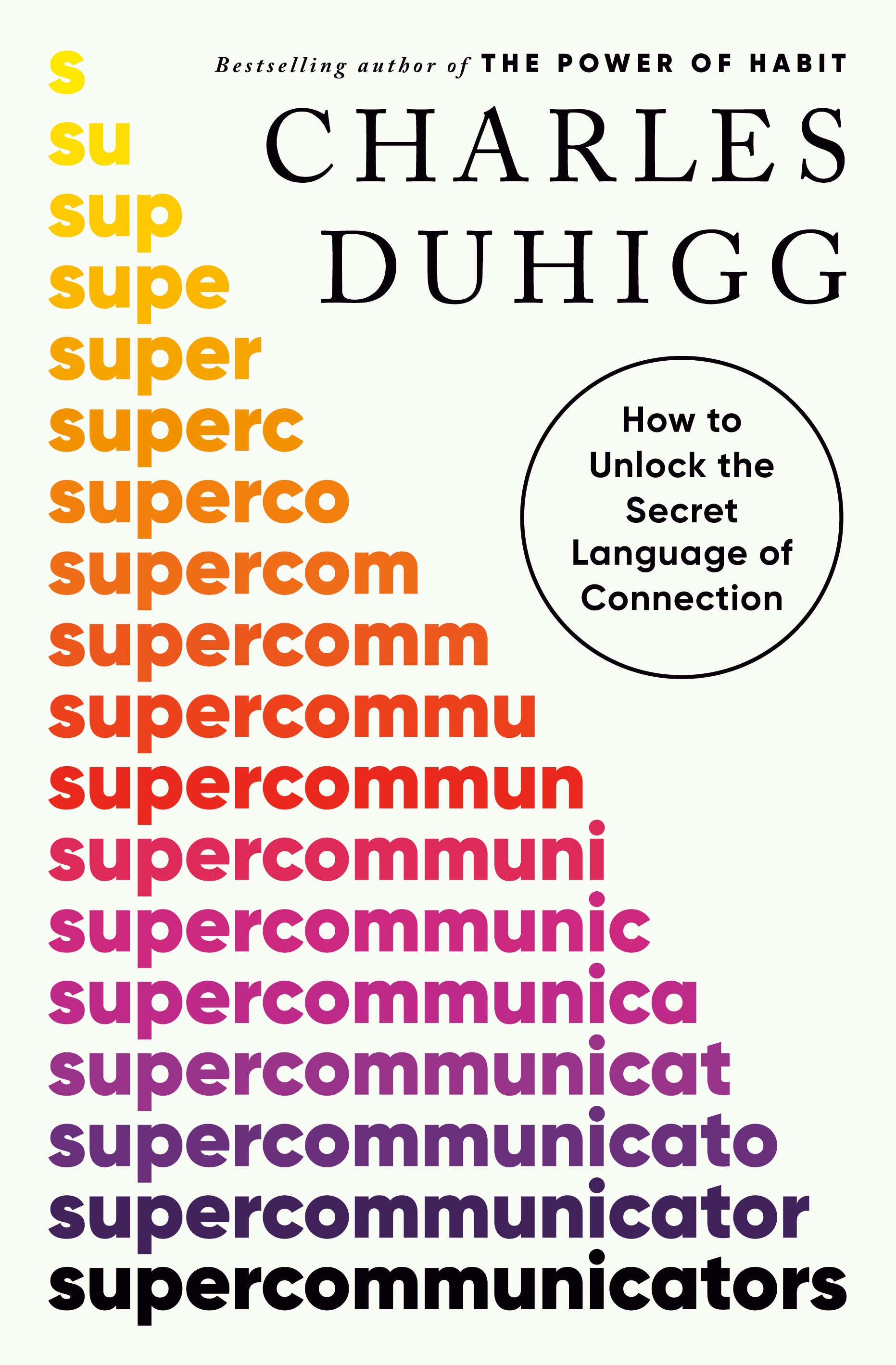
Charles Duhigg's Supercommunicators: How to Unlock the Secret Language of Connection arrives with considerable fanfare—the author of the bestselling The Power of Habit promises to decode the mysterious art of exceptional communication. Yet here's the uncomfortable truth: this book delivers a genuinely useful framework wrapped in unnecessary padding, making it simultaneously revelatory for novices and frustratingly redundant for anyone who's spent time in the communication skills space.
The core premise is compelling. Duhigg argues that supercommunicators—the CIA operatives, executives, and community leaders he interviews—succeed not through charisma or rhetorical brilliance, but through mastering three deceptively simple questions: What's this really about? How do we feel? Who are we? These questions form the backbone of every case study, from negotiating with reluctant intelligence assets to navigating vaccine hesitancy in medical settings. The framework is elegant, actionable, and grounded in neuroscience research about how our amygdala hijacks conversations when emotions run high.
The Three-Question Framework That Actually Works
Duhigg's central insight deserves attention. Most conversations fail because participants operate on different wavelengths about what the conversation is fundamentally for. One person thinks they're discussing logistics; another believes they're having an emotional check-in. By explicitly addressing these three elements early, supercommunicators create alignment before misunderstanding calcifies.
The research backing this approach is solid. Duhigg cites neuroscience studies on emotional regulation and draws from interviews with genuine experts—not theoretical communication gurus, but people who've actually had to persuade, negotiate, and connect under high stakes. A CIA operative convincing a spy to defect, a jury member reframing an "open-and-shut" case, a doctor engaging a vaccine skeptic—these aren't hypothetical scenarios. They're real situations where communication determined outcomes.
What makes this framework valuable is its specificity. Rather than vague advice to "listen more," Duhigg teaches you how to listen strategically. Rather than suggesting you "be empathetic," he shows you the exact conversational moves that signal empathy and create psychological safety.
Where the Book Loses Momentum
Here's where Supercommunicators stumbles: it treats 150 pages of material like it needs 400. The Netflix culture case study, while interesting, meanders. The anecdotes often feel longer than necessary to make their point. A reader familiar with Never Split the Difference by Chris Voss or Dare to Lead by Brené Brown will recognize substantial overlap—the emphasis on asking questions over making statements, the focus on emotional intelligence, the importance of psychological safety.
Duhigg isn't wrong about any of this. He's just not breaking new ground for readers who've already explored this territory. The book reads less like a paradigm shift and more like a well-researched synthesis of existing communication psychology, repackaged through Duhigg's signature storytelling approach.
The pacing issues are real. Some case studies could be distilled to two paragraphs without losing their essential lesson. Instead, Duhigg develops them across pages, creating a rhythm that occasionally feels self-indulgent rather than purposeful. For audiobook listeners, this might feel even more pronounced—the narration can't help you skim the parts that don't serve you.
The Cultural Limitations Nobody Mentions
One critical flaw that deserves highlighting: this book is fundamentally American in its assumptions. The communication patterns, social norms, and "tactical advice" Duhigg prescribes work well in American corporate and civic contexts. But the strategies outlined here don't necessarily translate to European, Middle Eastern, or East Asian communication cultures, where directness, emotional expression, and relationship-building operate under different rules.
For a book claiming to unlock universal principles of connection, the lack of cultural nuance is a significant blind spot. Duhigg acknowledges that context matters, but he doesn't adequately address how profoundly culture shapes what "good communication" actually looks like. The three-question framework might be culturally adaptable, but the specific examples and recommended conversational moves often aren't.
Who Should Actually Read This
Read this if: You're new to communication skills literature. You work in high-stakes environments where difficult conversations are frequent (management, healthcare, negotiation). You want a well-researched, story-driven introduction to why listening matters more than talking. You appreciate Duhigg's narrative style and want his perspective on a new topic.
Skip this if: You've already read Voss, Brown, or similar authors in the emotional intelligence space. You're looking for genuinely novel frameworks rather than well-executed synthesis. You work in non-American cultural contexts and need communication advice tailored to your environment. You value concision over storytelling.
The Verdict: Useful, But Not Revolutionary
Supercommunicators is a competently written, research-backed guide to understanding why some conversations succeed and others fail. Duhigg's three-question framework has genuine utility, and his case studies effectively illustrate the principles at work. The book will help readers understand communication at a deeper level than surface-level advice typically allows.
But it's not the breakthrough Duhigg's track record might suggest. It's a solid 7 out of 10—valuable for the right audience, but not the transformative read the marketing implies. The framework works. The execution is readable. The insights are sound. What's missing is the originality or depth that would make this essential rather than merely useful.
Is Supercommunicators worth reading? Yes, if you're building communication skills from the ground up or you're a Duhigg completist. It's a worthwhile investment for professionals in high-communication fields. But if you're already versed in emotional intelligence and active listening frameworks, you'll find yourself nodding along to familiar territory rather than discovering something that fundamentally changes how you think about connection.
The book's real strength isn't in breaking new ground—it's in making existing communication science accessible and memorable through narrative. That's valuable. Just not revolutionary.