Category:
Book ReviewsStrong Female Character Review: Brutally Honest Autism Memoir
Prices can sometimes be lower on bigger marketplaces, but this link helps independent bookstores and local reading communities.
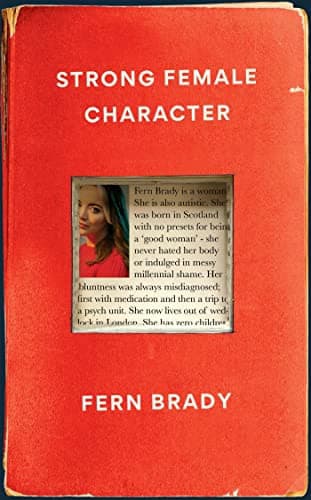
Fern Brady's Strong Female Character is a memoir that arrives with a deceptively simple premise but delivers something far more complex and necessary. Published in 2023, this audiobook-friendly narrative charts Brady's journey from an undiagnosed autistic child in a working-class Catholic Scottish family through homelessness, self-harm, substance abuse, and eventual comedy stardom—all while the medical establishment repeatedly told her she couldn't possibly be autistic because she made eye contact and had relationships.
The book's central tension is what makes it genuinely valuable: it explores how womanhood obscures autism diagnosis, and how autism obscures expectations of femininity. This isn't a feel-good inspiration narrative. It's a sharp, unflinching account of what happens when neurodivergence goes unrecognised in a system designed to miss it.
Quick Verdict
This is essential reading for anyone wanting to understand how autism presents differently in women—but it's not without flaws. Brady's raw honesty about her experiences is compelling and often darkly funny, yet her handling of body image and weight-based humour reveals blind spots that undermine some of her critical commentary. Still, at 4.39/5 stars across 45,000+ ratings, the overwhelming consensus is clear: Strong Female Character is one of the most important UK memoirs in recent years.
What This Book Actually Is
This isn't a self-help guide dressed up as memoir. Brady doesn't offer coping strategies or inspirational lessons about overcoming adversity. Instead, she documents how being undiagnosed shaped her survival strategies—some adaptive, many destructive. She describes the sensation of existing in a world where everyone seems to be in a WhatsApp group you don't know about, a metaphor that captures autistic social experience more accurately than pages of clinical explanation.
The narrative spans from childhood suicidal ideation at age eight through various forms of self-medication, sexual vulnerability, and eventually finding work as a comedian and television personality. What emerges isn't a redemption arc but something more honest: a portrait of someone who built a functional life despite systematic failures to recognise her neurodivergence.
The Writing and Brady's Voice
Brady writes with the precision of someone trained in comedy—every anecdote lands, every observation cuts. She employs footnotes to ground personal experience in research about autism in women, which is a smart structural choice that adds authority without becoming academic. The audiobook version, which many readers praise specifically, benefits from Brady narrating her own work, adding layers of tone that illuminate her self-awareness.
Her explanations of autistic experience avoid both clinical detachment and melodrama. When she describes the constant cognitive load of masking, or the way undiagnosed autism can make someone seem "difficult" or "bad" rather than disabled, she's articulating something that autistic women have needed validated in mainstream publishing.
What Works Brilliantly
The memoir's greatest strength is its specificity. Brady doesn't generalise about autism—she grounds everything in her particular life while making clear how her gender, class, and cultural background shaped her experience. This specificity is exactly what makes it resonate with autistic women readers who've been told they "don't look autistic."
The book also excels at capturing how undiagnosed neurodivergence intersects with other vulnerabilities. Her account of grooming by an elderly man she trusted, her episodes of homelessness, her work in the sex industry—these aren't included for shock value but to demonstrate how lack of diagnosis can leave women exposed to exploitation. The narrative never exploits these experiences; instead, it contextualises them as predictable outcomes of a system that failed her.
Brady's willingness to be unflattering about herself is refreshing. She doesn't present herself as a hero of her own story—she presents herself as someone who survived, often through luck and stubbornness rather than virtue.
Where It Stumbles
The most significant criticism appears consistently across reader reviews: Brady's use of derogatory descriptions of people's bodies and appearances, particularly weight-based humour. These moments sit uncomfortably because Brady is simultaneously critiquing how society failed to see her accurately, yet she's doing something similar to other people. The book doesn't adequately reflect on this contradiction.
This isn't a minor stylistic quibble—it's a genuine tension between the book's stated politics and its execution. Readers who appreciate Brady's unflinching honesty elsewhere find these passages jarring precisely because they are unexamined in a way that undermines her credibility as a social critic.
Additionally, some readers note that the memoir's structure occasionally prioritises comedy timing over narrative coherence. This works more often than it doesn't, but there are moments where you're unsure whether Brady is exploring something or performing it.
Who Should Read This
This book is essential for anyone with a diagnosis of autism spectrum disorder, particularly women and AFAB individuals. It's invaluable for parents, educators, and healthcare providers who need to understand how autism presents differently across genders. It's also crucial reading for anyone interested in neurodiversity, disability justice, or memoir that refuses to be palatable.
The book works beautifully for readers who appreciate dark comedy mixed with serious subject matter—people who enjoyed memoirs like Crying in H Mart or The Year of the Witching will find similar unflinching honesty here.
Who Might Struggle
If you're seeking an uplifting disability narrative with clear lessons and character growth, this isn't it. Brady's story doesn't culminate in everything being okay—it culminates in her being diagnosed in her mid-thirties and then attempting to "cure" herself with Xanax addiction. That's the reality she's documenting.
Readers uncomfortable with explicit discussion of sex work, self-harm, substance abuse, and grooming should approach cautiously. The book doesn't sensationalise these topics, but it doesn't soften them either.
The Bigger Picture
Autism diagnoses in women have increased dramatically in recent years, yet the diagnostic criteria were developed primarily by observing autistic men. Brady's memoir arrives at a cultural moment when this gap is finally being acknowledged, but the book also makes clear how recent this recognition is. She was dismissed by mental health professionals who should have known better, told she couldn't be autistic because she performed femininity adequately enough.
What makes Strong Female Character particularly valuable is that it doesn't position autism as something to overcome or cure. Instead, it documents how masking autism—performing neurotypicality—is what caused Brady's most serious mental health crises. Her eventual diagnosis wasn't a fix; it was context that allowed her to stop trying to be something she isn't.
Is It Worth Reading?
Yes, absolutely. Strong Female Character review conversations consistently highlight the same thing: this is a book that changes how readers understand neurodivergence, gender, and the gap between how people appear and who they actually are. Even readers who found elements problematic rate it highly because its core contribution—making autistic women's experiences visible and credible—is genuinely important.
The book's only real limitation is that it's specific to Brady's experience rather than a comprehensive guide to autism. But that's precisely its strength. Memoir works through particularity, and Brady's particular story illuminates something universal about how systems fail to see women accurately.
Final Score
8/10 — A necessary, brilliantly written memoir that advances crucial conversations about autism and gender, though it's undermined by unexamined biases in its own execution.